
tools“>What Happens When Your Power Steering Fluid Is Low?
There are currently two different types of power steering systems, electric and hydraulic. The hydraulically-driven power steering is the one we will be discussing today, since it is the only type of assisted steering system that uses power steering fluid and therefore needs to be checked occasionally. The consequences of letting your power steering fluid get low can result in problems with your car’s drivability and its reliability.
The most obvious symptom of low power steering fluid is usually increased difficulty when you attempt to move the steering wheel, one of the signs you need to service your power steering system. This may also be accompanied by noises when you turn the wheel. These noises can mimic a “groaning” sound that can indicate that outside air is mixing with the low power steering fluid level. The usual cause of low power steering fluid is a leak somewhere in the power steering system, since under normal conditions, there should be no fluid loss.
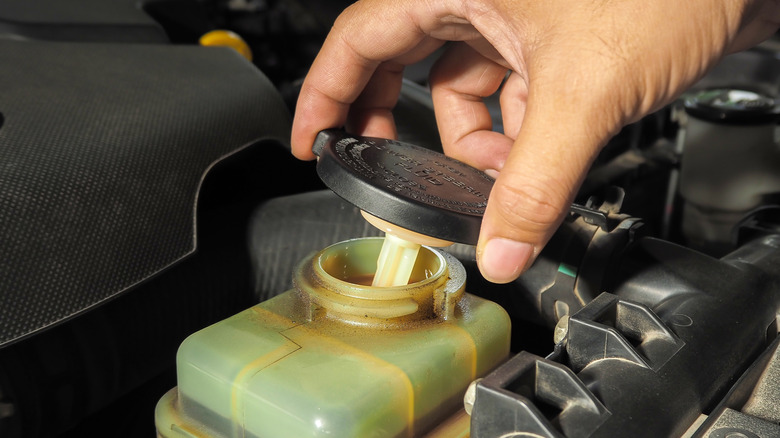
The best way to approach a low power steering fluid issue is to check your power steering fluid reservoir level, following the instructions set forth in your owner’s manual. If the fluid is below the “minimum” mark, top it up with fresh fluid that has not been opened for too long and that is the specific type recommended for your vehicle — and do not overfill it. Drive the car for a while and see whether the steering difficulty and/or noises return. If they do, make a date with your mechanic for some power steering repairs.
What else should you know about your power steering system?
Your hydraulic power steering system consists of an engine-driven pump powered by a drive belt. The power steering pump pressurizes the power steering fluid that is then sent to the steering rack, providing a hydraulically-powered assist that reduces the amount of effort it takes to steer the vehicle along its intended path. The fluid circulates through the system’s hydraulic lines, which send the fluid under high pressure to the steering and return it to the pump at a lower pressure. A fluid reservoir holds additional power steering fluid and enables you to check the proper level of the fluid, which may be one of several different colors.
The first hydraulic power steering system that was similar to the one we have today was invented by Francis W. Davis in 1926. It was initially used in World War II to make heavy military vehicles easier to steer. After the war, the first production car to be fitted with power steering was the 1951 Chrysler Imperial. An extra benefit of power steering was that since the steering effort was reduced, the speed with which the car responded to steering inputs could also be increased, allowing vehicles to be much more responsive and handle better.
Today, the increasing emphasis on fuel economy has driven the auto industry to use electric power steering, or EPS, on an increasing number of vehicles. EPS not only improves fuel efficiency and eliminates the maintenance issues of a hydraulic system, its electronically-based nature also facilitates the use of driver assistance tech like lane-changing and automated parking.