
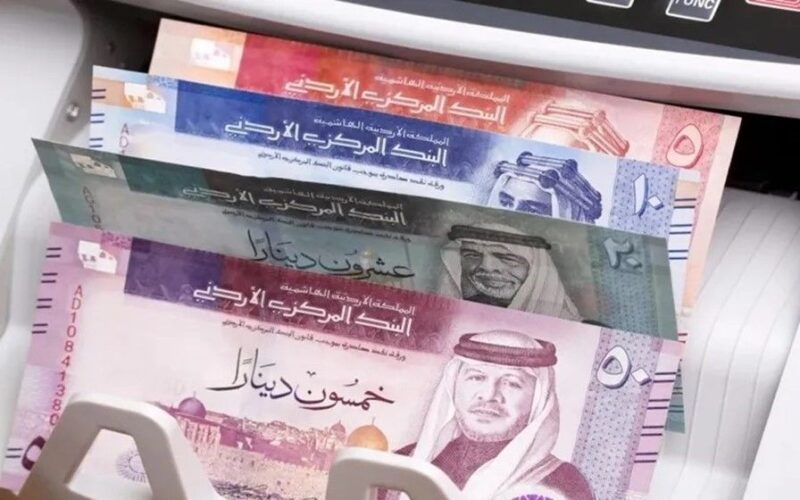
Jordan has maintained strong monetary stability despite successive regional and international crises, supported by prudent monetary policies and resilient economic institutions.
An international economic report found that Jordan achieved positive results in the 2026 Economic Freedom of the World report, supporting monetary stability and the business environment.
According to the report, Jordan’s strongest results were recorded in the area of sound money, as well as in regulation and international trade freedom, providing a positive picture of several aspects of the Kingdom’s monetary, regulatory and trade environment.
The report, issued by Canada’s Fraser Institute in cooperation with the Cato Institute and international research partners, is based on 2024 data and covers 165 countries and territories, providing an international framework for comparing economic policies and institutions.
Two banking and financial experts said Jordan’s third-place global ranking in the “sound money” category is an important indicator of the strength of the Kingdom’s monetary and banking framework and its ability to maintain confidence in the Jordanian dinar amid successive regional and international challenges.
Speaking to the Jordan Gazette Agency (Petra), they said the result confirms the success of economic policies and the efforts of the government and the Central Bank of Jordan to strengthen monetary stability. They also pointed to foreign reserves and stable inflation rates as factors that provide Jordan with an important competitive advantage in attracting investment and strengthening the confidence of financial institutions and investors.
Banking expert Dr. Mohsen Abu Awad said Jordan’s third-place global ranking in the sound money category of the 2026 Economic Freedom of the World report, with a score of 9.59 out of 10, is an important indicator of the strength of Jordan’s monetary and banking framework and its ability to maintain confidence in the dinar despite successive regional and international crises.
He said the achievement reflects the importance of prudent monetary policies that have helped reinforce monetary stability, strengthen confidence in the dinar and reduce uncertainty, creating a more favorable environment for saving, investment and long-term economic planning.
Abu Awad said the real value of the achievement should not stop at the international ranking, but should serve as a starting point for maximizing the benefits of monetary stability by stimulating productive investment, expanding the production base, increasing exports, enhancing the competitiveness of the national economy and creating jobs.
“From here, the importance of integration between monetary policy and economic, fiscal and investment policies becomes clear, alongside continued development of the legislative and regulatory environment, improving financing efficiency and directing it toward productive, value-added sectors, in a way that strengthens the Jordanian economy’s ability to achieve higher and more sustainable growth rates,” he said.
He stressed that maintaining monetary stability is a key pillar of economic confidence, but the real challenge lies in turning that confidence into investment opportunities and productive projects and using it as a driver of sustainable economic growth and development.
Abu Awad noted that monetary stability is not an end in itself, but a solid foundation for building a more productive and competitive economy capable of withstanding shocks.
Financial and economic expert Dr. Mohammad Al-Hadab Al-Sarhan said Jordan’s third-place global ranking in the sound money category represents an international achievement reflecting the strength of the country’s monetary and banking system.
He said the result confirms the success of government economic policies and the efforts of the Central Bank of Jordan to reinforce monetary stability and confidence in the dinar despite successive regional and international crises.
Al-Sarhan said the result also demonstrates the ability of national economic institutions to maintain stability in a global environment characterized by growing risks and volatility.
He said the prudent monetary policies pursued by the Central Bank of Jordan, together with government efforts to preserve economic and financial stability, have helped build a strong foundation of confidence in the national economy.
He pointed to foreign reserves of about $28.47 billion at the end of September and stable inflation as evidence of the strength of Jordan’s monetary indicators and its ability to manage external pressures, preserve price stability and limit the erosion of citizens’ purchasing power.
He said the importance of the achievement goes beyond the international ranking, giving Jordan an important competitive advantage in attracting investment and strengthening the confidence of financial institutions and investors. Currency and price stability reduce risks facing projects and give companies greater capacity to plan and expand.
Al-Sarhan stressed that this stability is one of Jordan’s key economic strengths, particularly given its geographic location and the challenges facing the region. He highlighted the importance of using this advantage to attract productive investment, increase exports and create jobs.
He added that Jordan’s advanced ranking reflects the strength of its economic institutions and the continuity of a responsible approach to monetary and fiscal policy. He also praised the efforts of the Central Bank of Jordan and the government to protect economic gains and strengthen the Kingdom’s ability to withstand crises.
According to the report, Jordan ranked third globally in the sound money category, behind Switzerland and Finland. The category measures several indicators related to monetary stability, including inflation and its volatility, growth in the money supply and the ability to use bank accounts in foreign currencies.
This result represents one of the strongest points in Jordan’s overall ranking and highlights the importance of monetary stability in creating a more predictable environment for economic and commercial activity.
According to the report, Jordan’s performance in the sound money category is particularly significant given the role monetary stability plays in reducing uncertainty surrounding prices and financial transactions.
Jordan ranked 25th globally in the regulation category, scoring 7.38 out of 10. This category examines regulatory frameworks governing credit, labor and business markets, including certain aspects of business formation, licensing, administrative procedures and the regulation of economic activity.
The ranking places Jordan relatively high among the countries covered by the report in this area and provides an indicator that can be used to assess the country’s business regulatory environment.
Jordan scored 8.13 points in the international trade freedom category, ranking 52nd globally. The category measures various restrictions affecting cross-border trade, including tariffs, regulatory barriers and certain restrictions related to capital flows.
The result highlights the importance of Jordan’s openness to international trade, given its links to regional and global markets and its reliance on trade across several economic sectors.
Jordan also scored 7.38 points in the overall index, ranking 50th globally among the 165 countries and territories covered by the report. The index combines results across five main areas: size of government, legal system and property rights, sound money, freedom to trade internationally, and regulation.
The overall ranking reflects Jordan’s position among countries recording moderate to advanced results in the index, while also showing variations across the different categories.
The Fraser Institute, established in 1974, is an independent Canadian think tank and research organization focusing on public policy and economic and social research.
Source: Petra

