If You See A Decimal Point On A Speed Limit Sign, There’s A Good Reason Why
U.S. roads are designed to make driving feel as seamless as possible, which is great for frequent drivers. The downside is that it causes many drivers to slip into highway hypnosis, a state where the mind simply zones out, especially on familiar routes. When that happens, important signs like speed limits are a lot more likely to get ignored. In Appleton, Minnesota, authorities have started getting creative to catch drivers’ attention on the road and prevent this from happening.
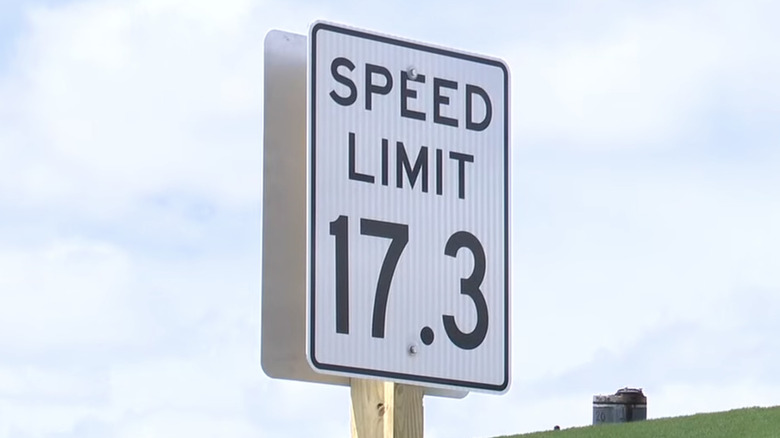
A facility in the town, about 107 miles north of Milwaukee, recently issued a new speed limit inside its property: 17.3 mph. The facility sees a lot of through-traffic, including big haulers, which is why the team wanted something more eye-catching than the usual 15-mph sign. The strategy has apparently been working, too, with the site’s solid waste superintendent telling Supercar Blondie that residents who use the site daily, tour groups, and commercial users have all started moving through the facility differently. Conversations about safety have reportedly also picked up.
Other weird speed limit signs out there
The U.S. may have no shortage of confusing traffic signs, but decimal point speed limits are still pretty uncommon. Nevertheless, there are other examples of these sorts of signs outside of Minnesota. One shopping center in Colorado Springs, for example, has an 8.2 mph speed limit sign that has similarly caught drivers’ attention. It has even sparked some online discussions about safety.
Other jurisdictions use similar eye-catching numbers, even if they are not decimals. In Nashville, the Opry Mills Mall set its speed limit at 24 mph, instead of the usual 25, on the road leading to it. Colorado property owners have gone even weirder, with one Denver parking lot displaying an official speed limit of 6 ⅞ mph. Trenton, Tennessee has had a 31 mph speed limit since the 1960s, although that wasn’t really about catching attention — even if it ends up doing so anyway. The story goes that there was a disagreement between city officials over two figures, so they went with a middle ground. Decades later, that sign is still up.
Beyond signage, traffic planners also lean on physical changes like speed bumps, roundabouts, and curb bulb-outs to get people to pay attention and slow down. It’s worth noting, however, that these oddball speed limits seem to typically be found on smaller roads near shopping centers, parking lots, and private facilities. It probably wouldn’t work out too well on major roads or highways, as drivers expect certain figures there and it could lead to confusion.