
Fuel Laws Quietly Changed Your Engine Oil – Here’s What That Means For Your Tank
Nowadays, diesel engines are known for their fuel economy, reliability, and versatility. That hasn’t always been the case, however, with emission problems from these engines becoming clear during Volkswagen’s infamous Dieselgate scandal. One reason diesel engines have become cleaner over recent decades has to do with the fuel that drivers are required to use by law.
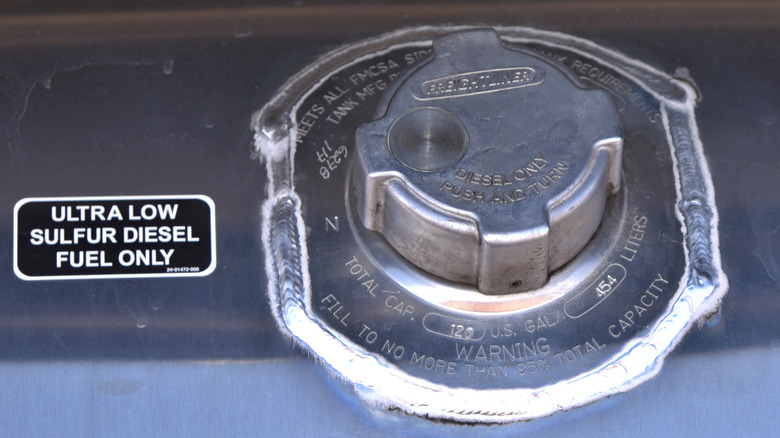
In 2006, the Environmental Protection Agency (EPA) introduced ultra-low sulfur diesel (ULSD). As the name suggests, this fuel contains 97% less sulfur than older diesels and was designed to help reduce emissions. By 2010, the EPA had required all highway-supplied fuel to be ULSD.
While this had the obvious effect of reducing sulfur emissions, ULSD fuel also enabled other emission controls that weren’t possible with earlier diesels. When used in conjunction with systems like diesel particulate filters, ULSD fuels can also substantially reduce particulate matter and nitrogen oxide emissions. This also meant that diesel engines were operating in a different chemical environment, which changed everything from fuel system lubrication to how engine oils handled heat, soot, and emissions contaminants.
Why fuel laws affected more than just emissions
While the adoption of ULSD was intended to reduce the bad stuff coming out of a diesel engine’s tailpipe, it also changed the environment within the engine itself. To put it simply, older fuels produced larger amounts of sulfur-related byproducts, including strong sulfuric acid. Low-sulfur fuels — as you’d expect — produce less of them.
Although ULSD fuels burn cleaner, they come with their own set of challenges. The chemistry used to create ULSD fuels has the unfortunate side-effect of removing some of the natural lubricants found in older fuels. To compensate for this, fuel manufacturers have developed additives to reintroduce the lost lubricity.
Additionally, modern fuels still produce particulates, which must be dealt with. While these particulates used to be expelled through the exhaust system, modern emissions systems retain them. This means modern-day oils have to handle them. Essentially, modern diesel oils are highly engineered products that are tailored to work in tandem with ULSD fuels. This is all very well and good when both sides of the equation are pulling their weight. However, it does mean that newer diesel engines can be more sensitive to fuel quality issues.
The importance of fuel quality
Modern common-rail diesel engines operate under extremely high temperatures and rely on both the fuel and the engine oil to meet very specific lubrication and cleanliness standards. For the motorist, this means that paying attention to the quality of the fuel you use is important. Although relatively rare, it’s possible that the fuel you put into your vehicle might not be up to scratch. This could be because diesel fuel has not been properly desulfurized or withheld to strict refining standards. Additionally, poorly storing fuel or storing it for too long can also impact quality.
There are various ways to make sure that the fuel you put in your tank is of the standard you’d expect, including using Top Tier-certified diesel fuel. Unlike basic fuels that may not meet the minimum standards, Top Tier diesel brands use enhanced detergent packages designed to help keep fuel injectors and fuel systems cleaner.
Station choice matters, too. If a gas station has inadequate storage facilities, for instance, you may be pumping water in along with your fuel. While a fuel and water mix is never a good idea, the hygroscopic nature of diesel means it’s more prone to water contamination. As such, water in your diesel can cause some worrying symptoms. While it isn’t always easy to spot such problems, clues like how clean a station looks, how busy it is, and how well-maintained it is can all help to identify stations that are probably best to avoid.