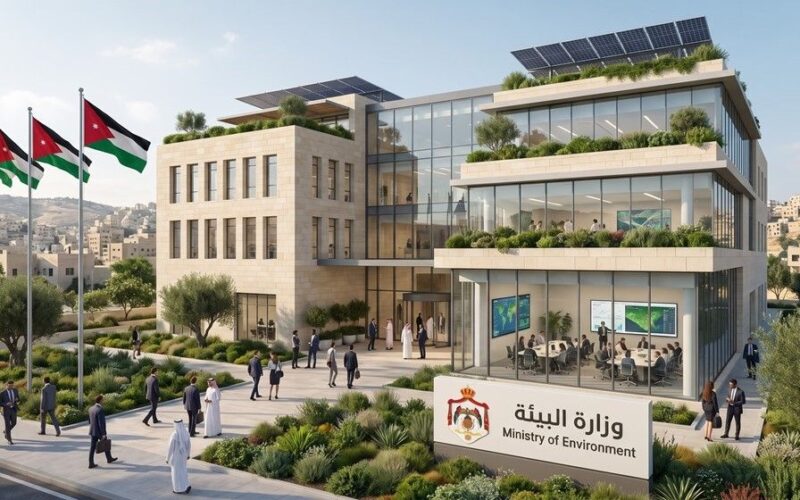
Jordan’s Ministry of Environment is no longer moving within the traditional files it has long been confined to. A change is taking shape in how it manages the environmental file, in its presence within state institutions, and in its ability to turn national challenges into a negotiating agenda and international partnerships. What has been happening for more than a year looks closer to an attempt to revive an institutional role that for too long fell short of the challenges it is meant to confront.
Since the announcement of the ministry’s restructuring in September 2025, and through the draft new administrative organisation system, the ministry has been moving to rebuild its internal tools rather than simply change its titles. Four main departments and specialised units covering policy and green growth, agreements and international cooperation, achievement monitoring, data analysis, digital transformation and artificial intelligence, and climate action are all signs of a move towards a more specialised institution, better able to make decisions and follow up on their implementation.
More important still, this administrative shift coincides with a clearer Jordanian role on the international stage, embodied in the Kingdom’s participation in the COP31 climate conference in Antalya. Jordan’s agenda went beyond mere attendance and carried three key messages: calling for adaptation finance for water-scarce, debt-burdened countries in the form of grants rather than loans; strengthening the link between climate implementation and adaptation to the impacts of climate change; and making it easier for developing countries to access climate finance and speeding up its procedures.
These messages are not passing negotiating demands. They reflect a Jordanian understanding of the nature of the climate battle. The countries most affected do not lack an awareness of the scale of the risks or a plan to address them, so much as they lack affordable finance and the capacity to turn plans into projects. Jordan, facing water scarcity and development pressures, has a direct interest in pushing this direction.
This course carries additional weight in light of direct royal attention. On 7 September last year, His Majesty King Abdullah II chaired a meeting devoted to green and climate finance and directed the government to prepare a comprehensive and unified national climate finance strategy in cooperation with the private sector, stressing the importance of providing technical support to both the public and private sectors. The meeting was not simply a follow-up on a technical file. It was a clear signal that climate finance has become a national priority tied to development, investment, water security and the economy.
This is where the role the ministry is trying to regain becomes important. It is no longer concerned only with monitoring environmental agreements. It is now leading coordination between institutions, preparing projects, opening channels for finance and partnership, and linking international commitments to national priorities.
The clearest difference between the current picture and previous years is the shift from a state of stillness and fragmentation that marked parts of the management of the environmental file, to one of institutional momentum, clear priorities and multiple lines of work. Files that for years circulated in the corridors of meetings and recommendations are beginning to find their way into reorganisation, follow-up and partnership building.
That does not mean the task is complete, or that the new structure alone will bring about change. But the ministry now appears more present in leading its files, better able to bring parties together around them, and more aware of what international work can achieve when used well.
The real test is no longer the ministry’s ability to take part in an international conference or launch a new strategy. It is whether it can sustain this momentum and turn it into results. What distinguishes its current leadership is that the ministry has begun to move from being a follower of environmental files to leading them, from an institution waiting for files to move to one that moves them. That, in itself, is the most important change after years of stagnation.
Former Commissioner for Environment and Tourism, Aqaba Special Economic Zone Authority
Related Stories

Three scenarios facing Jordan and the Palestinians