U.S. economic sanctions on Iran are entering a broader and harsher phase, having moved beyond directly targeting Iran’s economy to pressuring trade, finance, and shipping networks, as well as the countries, companies, and intermediaries that continue dealing with Tehran.
But the more important question is no longer about the number of new sanctions or how broad their lists are, but about the actual capacity to enforce them and turn them into an effective economic siege — and here China emerges as the most decisive factor.
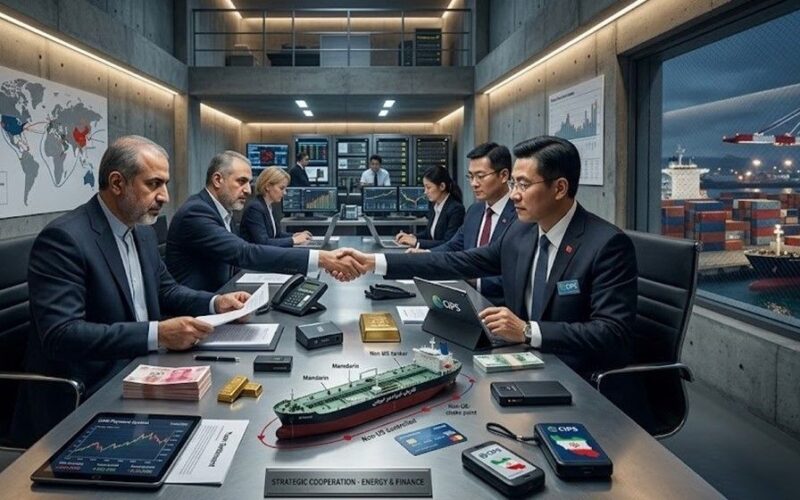
China is Iran’s most important economic partner and the largest buyer of its oil, and it possesses a financial and trade infrastructure capable of absorbing much of the impact of U.S. sanctions. The Chinese government is not expected to adopt the American position politically, as it rejects unilateral sanctions in principle and opposes their use outside the framework of international legitimacy. But this political stance does not mean that all Chinese institutions will act with the same degree of defiance.
Based on past experience, major financial institutions and large corporations — those most closely tied to international markets and the dollar — are likely to deal very cautiously with any activity that could expose them to secondary sanctions. Smaller companies, independent oil refineries, and trading intermediaries, on the other hand, will remain more willing to take on risk, especially when returns are high due to the discounts Iran offers on oil and other goods.
In this context, Iran has a range of tools that allow it to soften the impact of financial isolation, including settlements in yuan and the use of China’s CIPS payment system, alongside barter arrangements, cryptocurrency for some transfers, overland trade routes through neighboring countries, as well as intermediary companies, re-export methods, and indirect financial settlements.
Here it’s important to note a basic reality of the international economy: no sanctions regime is ever airtight. At every stage of economic pressure, parallel payment and trade channels emerge — some legal, some operating in gray areas, and some functioning almost covertly. These channels are not fixed; they constantly evolve in response to new restrictions, shifting from one country to another, from one company to another, and from one payment method to another.
Nor will the positions of Iran’s partner countries be uniform. Some will reject the sanctions politically while hedging financially; others will comply partially to protect their interests with the United States; while private companies and intermediaries in various countries will look for margins that allow trade to continue. All of this means Washington can raise the cost of dealing with Iran, but it will find it very difficult to shut down all pathways at once.
Even so, this should not lead to underestimating the scale of the expected impact. Iran — government and society alike — will face major economic pressures from falling oil revenues, difficulty accessing foreign currency, rising costs of imports and transfers, a declining rial exchange rate, rising inflation, and shrinking investment. Iran’s economy will become increasingly dependent on what could be described as a “survival economy” — managing the minimum level of resources, trade, and finance needed to keep the state and markets functioning, but with lower efficiency, higher costs, and weaker living standards.
Still, the shift from inflicting economic harm to actually changing Iran’s political and strategic posture remains a different matter altogether. Most strategic assessments suggest that economic pressure, no matter how intense, is unlikely to produce qualitative shifts in Tehran’s choices — particularly on issues it views as tied to its security, regional standing, and defense capabilities.
The real test of the sanctions, therefore, will not lie only in how much pain they cause, but in Washington’s ability to push China and other partners to shut down alternative channels. As long as Iran retains a window for trade, oil, payment mechanisms, and parallel tools, it will remain able to manage its economy — albeit at a rising economic and social cost. Forcing a strategic shift in its political stance, however, will remain far harder than simply weakening its economy.
Related Stories

How Jafar Hassan Is Reshaping Government Away from Political Pressures

Justice Has No Gender