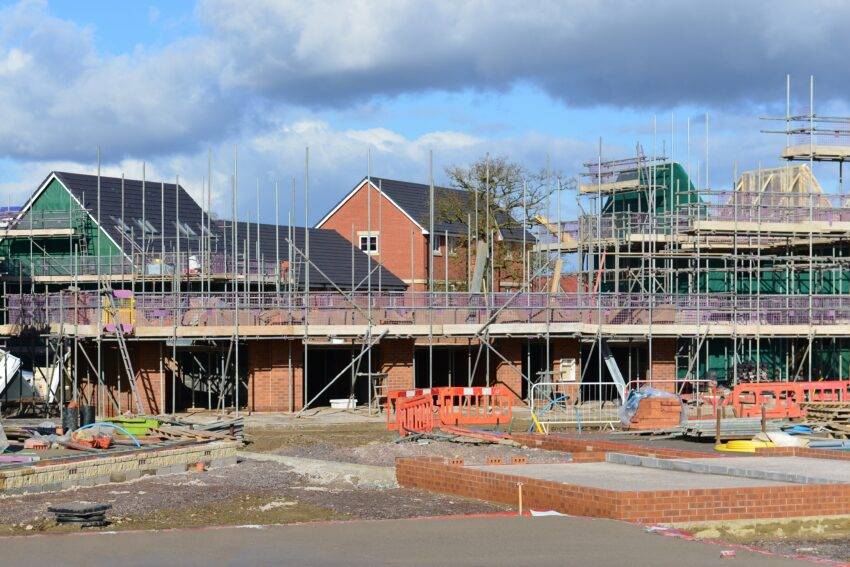
Britain’s largest housebuilder is tightening its grip on the chequebook, slashing land acquisition spend by as much as £200 million in response to what its board has branded a “less certain backdrop” triggered by the ongoing conflict in Iran, even as sales on the ground continue to hold up.
Barratt Redrow, formed from the £2.5 billion takeover of Redrow by Barratt Developments in 2024, told the market on Wednesday that trading between January and March had proved “resilient”, keeping it on course to deliver full-year pre-tax profits of roughly £568 million in line with City forecasts. Its financial year runs until the end of June.
Yet beneath the reassuring headline numbers, management made little secret of its caution about the coming twelve months. While the group does not expect the Middle East crisis and the subsequent spike in mortgage rates to derail its current financial year, directors warned that “visibility beyond the current financial year remains more uncertain”.
For property investors, the implications are twofold. Higher-for-longer borrowing costs threaten to cool buyer demand just as energy-driven inflation starts to feed into building material prices, a classic squeeze on developer margins.
In response, the FTSE 100 group is adopting what its chief executive David Thomas described as a “disciplined approach to capital allocation, selective land investment and rigorous cost control”. Since the start of July, Barratt Redrow has secured land capable of supporting just over 4,000 new homes, a dramatic reduction from the more than 15,300 plots it had snapped up at the same point last year.
Across the full financial year, the developer now expects to add between 7,000 and 9,000 plots to its land bank, well below the previous guidance range of 10,000 to 12,000. Total land spend is being pared back to between £700 million and £800 million, compared with the £900 million previously earmarked.
The sales picture, for now, remains more encouraging. Between January and March, Barratt Redrow’s roughly 400 active sites delivered an average reservation rate of 0.67 homes per week, a 6 per cent improvement on the same three months of 2025, a period flattered by a last-minute rush ahead of stamp duty changes. The forward order book has swollen to £3.54 billion, 13 per cent ahead of a year earlier, and the group has already banked 94 per cent of the sales it expects to complete before the June year-end.
That strong forward cover is precisely why bosses believe the fallout from the Iran war will be “limited” in the current year. Over the twelve months to June 2025, the group built 16,565 houses and flats, more than any other developer in Britain, and is guiding towards completions of between 17,200 and 17,800 homes this year.
Sales incentives, such as upgraded kitchens and deposit contributions, remain stubbornly higher than the wider industry would prefer, although Barratt Redrow stressed it has at least resisted the need to sweeten offers further in recent months.
The bigger worry for the 2027 financial year is build cost inflation, with energy prices having climbed sharply since the start of March. The company said it would provide “better visibility on build cost inflation for next year” at its next trading update in July.
“Barratt Redrow had a solid third quarter, with a resilient reservation rate underpinned by good customer demand,” Mr Thomas said. “Despite heightened macroeconomic uncertainty, we expect the Middle East conflict to have limited impact on 2026 performance, given our strong forward sales position and advanced build programme.”
The group’s roots stretch back to 1953, when Sir Lawrie Barratt, a young Newcastle accountant frustrated at being unable to afford the home he wanted, decided to build one himself. More than seven decades later, his successors are navigating an altogether different set of headwinds.
Shares in Barratt Redrow, which have shed 38 per cent of their value over the past year, rose 2.2 per cent to 264p in Wednesday trading, suggesting investors took modest comfort from the resilient near-term outlook even as the longer-term picture clouds over.