
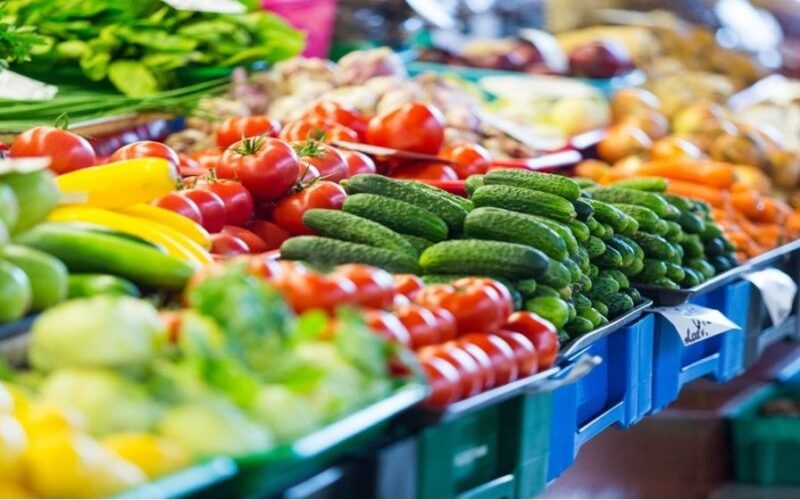
Jordan’s tomato crop stands out as the country’s leading vegetable export, with annual production of 400,000–500,000 tonnes, while the food sector ranks 10th globally with a value of $136 billion, according to a global food commodities ranking published by Visual Capitalist.
The report, based on data from the Food and Agriculture Organization (FAO), said the poultry sector is the largest pillar of domestic animal production, with investments exceeding JOD 1 billion. The sector ranks sixth globally in the same classification, with a value of approximately $264 billion.
Domestic production of cow’s and sheep’s milk covers a very high proportion of the needs of local dairy and cheese factories. The global dairy sector ranks first in production, valued at $379 billion.
Olive oil and olives, classified among oilseed and tree crops, also meet domestic demand, with surplus production directed toward exports.
Jordan is seeking to become a regional food security hub connecting countries across the region while implementing the Economic Modernization Vision 2022–2033. The country aims to secure a share of the total production value of the world’s top 40 food commodities, whose combined value exceeded $4.3 trillion last year.
Jordan ranks highly in production efficiency and competitiveness for several crops, contributing to its position in the Global Food Security Index. According to the latest figures from Economist Impact, Jordan ranks 47th globally and seventh among Arab countries, with particularly high scores for food quality and safety and the availability of outlets and strategic reserves.
In the Global Hunger Index, Jordan ranks 52nd globally, with a “low” level of severity and a score of approximately 10.6 points.
The agricultural sector directly contributes 4.5% of GDP and, indirectly through food processing industries and related logistics services, contributes more than 15–20%.
Jordan is also among the world’s top 10 tomato exporters and exports certain vegetables from the Jordan Valley during the peak winter season, when neighboring and European markets face shortages of fresh produce.
According to recent data from the Ministry of Agriculture and the Department of Statistics, Jordan’s self-sufficiency rate for olive oil stands at 120–130%, generating a surplus that is exported to markets in the Gulf, the United States and Europe.
Self-sufficiency in table eggs stands at 100–105%, while poultry meat reaches 85–90% and fresh dairy and cheese products 80–85%, most of which comes from local cattle and livestock farms.
By contrast, self-sufficiency in wheat, rice and corn remains below 5%, with Jordan relying almost entirely on imports while maintaining strategic grain reserves in silos sufficient for approximately 10–12 months.
Jordan’s National Food Security Strategy 2021–2030 and National Sustainable Agriculture Plan identify key strategic objectives, including transforming the Kingdom into a regional food security hub by establishing a regional food logistics complex, capitalizing on Jordan’s geographic location and facilitating the storage and re-export of essential commodities.
The strategy also aims to increase self-sufficiency in red meat and fish by expanding aquaculture and livestock-fattening projects to reduce the import gap.
It also calls for expanding hydroponic farming technologies to improve irrigation-water efficiency by 30–40%, allowing the production of high-value crops with lower water consumption.
The strategy further seeks to secure and expand strategic storage capacity by building new silos and expanding food-storage facilities in Aqaba and Amman, ensuring safe reserves of wheat and other strategic commodities for periods exceeding one year.
It also targets reducing agricultural crop losses and waste across the supply chain by 30% by 2030.