
By Dr. Mamoun Ahmad Al-Omari
Stability is no longer merely a
political precondition for economic activity. It has become an economic asset
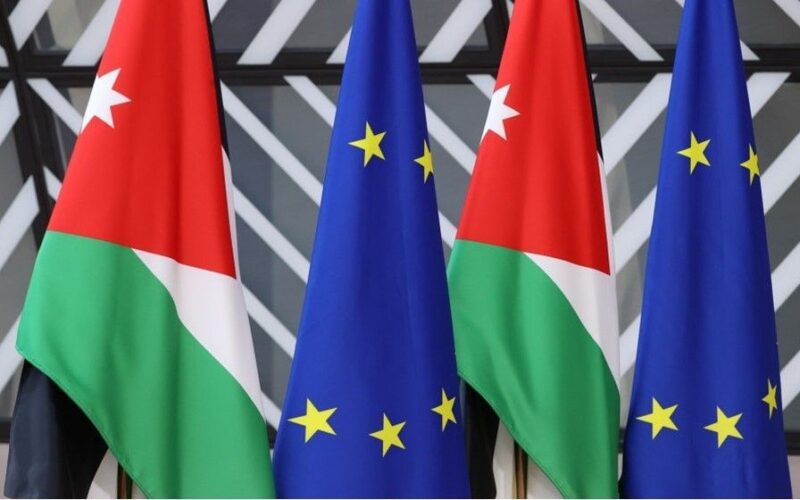
in its own right. Ahead of the Jordan-EU Investment Conference on November 19,
that idea should shape how Jordan presents itself to investors.
The global economy can no longer be
understood separately from geopolitics. Wars no longer stay within the borders
of the countries where they occur.
Their economic effects travel quickly,
affecting energy and food prices, trade and investment flows, transport and
insurance costs, and even monetary policy.
His Majesty King Abdullah II made
this point in his address to the United Nations General Assembly.
A crisis in
our part of the world does not remain there, he argued, and its costs can
appear in energy and grocery bills far beyond the region. The war in Iran, he
noted, showed how quickly instability can disrupt trade, investment and lives
beyond the region.
For Jordan, this matters particularly
because the economy is exposed to regional developments through trade, energy,
tourism, remittances and investment.
Regional stability is therefore not simply
a foreign-policy concern. It is an economic variable that affects investment,
external balances, growth and jobs.
Yet the data show a real capacity to
absorb shocks. Real GDP growth reached 2.9 percent in the first quarter of
2026, while inflation averaged 2.2 percent during the first eight months of the
year.
The current account deficit stood at 2.2 percent of GDP in the first
quarter. Foreign reserves reached about $28.4 billion in August, covering more
than eight months of imports.
Resilience, however, means more than
short-term monetary stability. It means sustaining growth, investment and
employment when conditions deteriorate. That requires an economy structurally
prepared for shocks, not one that only reacts to them.
This is where the Jordan-EU
Investment Conference becomes important. The European Union has already
committed substantial financial and investment support to Jordan, including a
€3 billion package for 2025–2027, combining financial assistance, grants and
investment mobilisation.
The question for Jordan is therefore not simply how
much capital it can attract, but what kind of capital that investment will
bring and what it will build.
Economic complexity offers a useful lens.
Economies with a broad and
sophisticated productive base are generally better positioned to diversify
exports, develop new capabilities and reduce dependence on a narrow range of
activities.
For Jordan, raising economic complexity means moving toward higher-value
industry, technology and services, while linking local producers more deeply to
European supply chains and markets.
In practical terms, that means
attracting investment that does more than add capital. It means projects that
introduce advanced manufacturing, digital and technology capabilities, regional
logistics and supply-chain capacity, and higher-value energy-related
industries.
These are the kinds of activities that can transfer technology,
develop skills, raise productivity and connect Jordanian businesses to wider
markets.
This builds on the direction King
Abdullah II outlined at the United Nations General Assembly, where he said
Jordan is strengthening connections from the Gulf to the Mediterranean as a hub
for trade, industry and technology.
The investment conference offers a timely
opportunity to turn that direction into concrete projects.
The more sophisticated Jordan’s
productive base becomes, the more it can offer European investors: capable
local partners, integrated supply chains, skilled talent and a platform
connecting Europe with regional markets.
An investor deciding on a new project
looks beyond tax rates, interest rates and market size.
They also weigh
regional stability, supply-chain security, transport costs, energy security and
policy predictability. Jordan’s macroeconomic stability strengthens its
investment proposition.
Economic complexity can add another dimension: greater
diversification, deeper capabilities and more opportunities for long-term
growth.
For the conference to succeed, Jordan
should therefore bring a clear message. Its priority should be investment that
builds capabilities: technology transfer, skills development, export-oriented
industry and partnerships that raise productivity.
Capital can increase the scale of an economy. Complexity can increase its
capacity.
Jordan cannot control the
geopolitical developments around it. It can, however, build an economy better
equipped to absorb shocks and emerge from them stronger. In a world of frequent
geopolitical disruption, economic resilience is becoming an increasingly
important part of economic security.
The Jordan-EU Investment Conference
offers an opportunity to demonstrate that Jordan’s response to uncertainty is
not simply to seek more investment, but to seek investment that makes the
economy more diversified, more productive and more capable.
That is how stability becomes more than a political advantage. It becomes
an economic asset.