
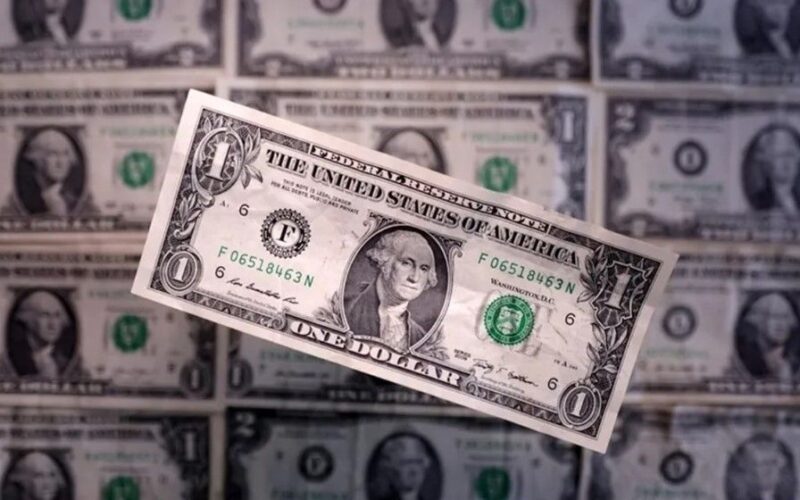
The US dollar edged higher on Monday, remaining near a two-month high, supported by rising oil prices amid continued tensions between the United States and Iran. Investors are also looking ahead to a busy week of economic data for signals on the path of inflation and monetary policy.
The euro and British pound each fell 0.1% against the dollar to $1.1379 and $1.3232, respectively, keeping both currencies near their lowest levels in several months against the US currency.
The US Dollar Index, which measures the performance of the dollar against a basket of major currencies, edged up to 101.15 points. It is on track for a 1.7% gain in September, which would mark its strongest monthly performance since June.
Oil prices rose more than 1% on Monday, with Brent crude surpassing $106 a barrel, after US President Donald Trump rejected a peace deal with Iran aimed at ending the conflict and reopening the Strait of Hormuz.
Rising energy supply risks and strong US economic fundamentals have heightened inflation concerns and prompted traders to price in a more hawkish path for the Federal Reserve. Higher long-term US Treasury yields have also supported the dollar.
“The dollar could exceed its short-term expected levels if tensions in energy markets persist and inflation risks increase,” said Sim Moh Siong, a foreign-exchange strategist at OCBC.
He added that the bank’s baseline scenario remains for a moderate rise in the dollar through the end of the year.
Markets are turning their attention to US economic data as the week progresses, particularly the Personal Consumption Expenditures (PCE) index, due Wednesday, and the nonfarm payrolls report, due Friday. Expectations are that the readings will be consistent with continued monetary tightening.
Markets are currently pricing in a 65% probability of a Federal Reserve rate hike at its next meeting at the end of October, according to CME Group’s FedWatch Tool.
Other data expected this week include China’s purchasing managers’ indexes (PMIs) on Wednesday, ahead of the week-long National Day holiday, as well as inflation data from Japan and the eurozone on Friday.
Yen Under Pressure
The yen fell 0.3% to 157.7 per dollar. It had risen on Friday following a call between Japanese Finance Minister Satsuki Katayama and US Treasury Secretary Scott Bessent, during which they reiterated that the yen’s depreciation was a concern and expressed a desire for greater cooperation between the two countries.
The Australian dollar fell 0.07% to $0.7017, while the New Zealand dollar was steady at $0.5661.
The Reserve Bank of Australia is expected to raise interest rates by 25 basis points to 4.60% on Tuesday, the highest level in around 15 years. The increase is expected to be the final hike in the current tightening cycle.
In Asian currency markets, the offshore Chinese yuan weakened to 6.7235 per dollar, after a three-day summit between Trump and Chinese President Xi Jinping failed to produce major publicly announced breakthroughs on several contentious issues.