
Why The US Navy’s Nuclear Aircraft Carriers Can’t Become Museums
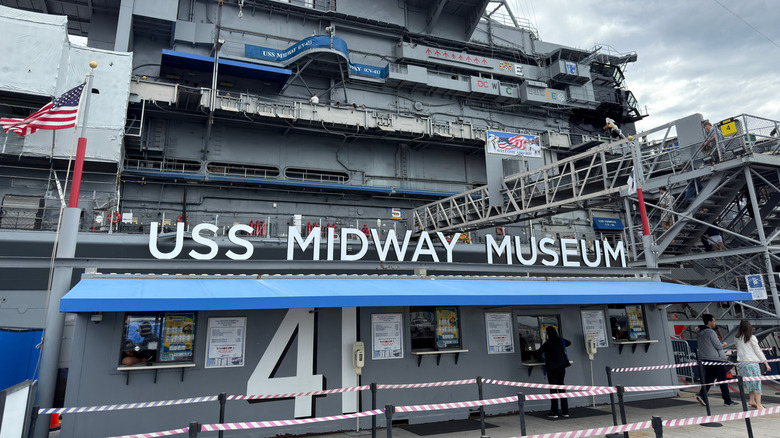
Scattered around the country are five U.S. aircraft carriers that have been converted into museums. Those ships are the USS Midway (CV-41) in San Diego, the USS Intrepid (CV-11) in New York City, the USS Hornet (CV-12) in Alameda, California, the USS Lexington (CV-16) in Texas, and the USS Yorktown (CV-10) in South Carolina. All were conventionally powered and thus not subject to the stringent federal and environmental laws governing the dismantling and long-term storage of nuclear reactors.
<a href="https://www.slashgear.com/1626420/us-navy-aircraft-carrier-list/” target=”_blank”>Nuclear reactors power all 11 carriers currently in the U.S. fleet. Unfortunately, none of them will ever become floating museums thanks to their highly radioactive payload. The very first nuclear-powered aircraft carrier was the USS Enterprise (CVN-65), which had eight reactors – two for each of its four propellers — and served admirably for over 50 years before it was decommissioned in 2012. The $500 million warship still hasn’t even been dismantled.
In a 2012 interview with the Daily Press, then Rear Admiral Thomas Moore said, “Inactivation of nuclear-powered aircraft carriers requires removing large sections of ship structure to facilitate reactor compartment removal and disposal.” Modern carriers are built around their reactors, so just getting to them — buried deep inside the vessel — requires most of the ship to be ripped apart. What’s left is more like a scattered pile of Lego pieces than an actual warship, and putting them back together would simply cost far too much.
No nuclear museums
The reactors powering Navy aircraft carriers and submarines are housed in a shielded compartment protecting sailors from radiation and leave behind residual radiological waste, preventing them from being used in a sinking exercise (SINKEX). They must be carefully removed, sealed, and loaded onto barges, where the Navy follows strict Department of Transportation regulations while escorting them to approved disposal sites. Some of the material is stored at a special waste facility in Hanford, Washington, and disposed of by the Department of Energy. Nuclear fuel is sent to the Naval Reactors Facility in Idaho. Whatever’s left is stored at the Puget Sound Naval Shipyard in Bremerton, Washington.
Even though the USS Enterprise was defueled years ago, it’s been docked at Newport News, Virginia, collecting dust. In 2025, a contract was awarded to dismantle the Enterprise; however, a glitch occurred with the Procurement Integrated Enterprise Environment website used to bid for those rights. Subsequently, one company filed an appeal, claiming the error prevented them from submitting a bid. In February 2026, a judge ordered bidding reopened, so the Enterprise is still awaiting its final order.