Walk into almost any independent salon, spa, or clinic across the Gulf and you’ll see the same setup: a booking app on a tablet by the door, a card machine from one bank, a WhatsApp thread full of appointment confirmations, and a notebook sometimes still paper, sometimes a spreadsheet holding years of client history. Every piece works. None of them talk to each other. And the owner is the one stitching it together, one app switch at a time, between clients.
I’ve spent the last decade building technology inside some of the region’s biggest platforms Etisalat, Talabat, MaxAB and the pattern that eventually led me to start WAJ wasn’t a gap in the market. It was a gap in how the market was being served.
The opportunity is real; and it’s bigger than most people think
The Middle East’s health and wellness sector isn’t a niche
Industry estimates put the regional market at roughly $178 billion in 2025, on track to approach $305 billion by 2034 driven in large part by rising health consciousness and the same wave of technology adoption reshaping every other consumer category in the Gulf. Beauty, personal care, and wellness spending across the GCC is following the same trajectory.
That growth is exactly why fragmentation is such an expensive problem. It’s not holding back a small, stagnant industry. It’s the friction sitting inside one of the fastest-growing consumer sectors in the region.
Fragmentation isn’t an inconvenience. It’s a revenue leak.
Ask any salon or clinic owner where their money quietly disappears, and it’s rarely the cost of product or rent. It’s the client who never got a follow-up message. The appointment slot went empty because no one sent a reminder. The regular who switched to a competitor because nobody noticed they hadn’t booked in three months.
The numbers back this up
Industry research aggregating over a hundred studies puts the average no-show rate across appointment-based businesses at roughly 23%, <a href="https://jordangazette.com/european-stocks-rise-with-modest-gains/”>with salons, barbershops, and spas typically in the 14–15% range and clinics running even higher. For a single salon booking 25 appointments a week, a 15% no-show rate alone can translate into more than $30,000 in lost revenue a year. Scale that across hundreds of thousands of independent operators in the region, and you’re looking at a multi-billion-dollar leak not because demand is soft, but because the tools meant to capture that demand don’t share information with each other.
A booking app can tell you someone has an appointment tomorrow. It can’t tell you that a client also skipped their last two visits, or that they’re overdue for a loyalty reward, or that a quick reminder message historically cuts their no-show risk in half. That intelligence only exists if the booking, the payment, and the client history all live in the same system and for most service businesses in the region today, they don’t.
Why point solutions keep falling short
Part of the problem is that most software sold into this space was built elsewhere, for a different kind of business. It assumes payment rails, working weeks, and customer habits that don’t map cleanly onto how businesses in Amman, Riyadh, Muscat, or Doha actually operate. So operators end up doing what any resourceful person does when the tools don’t fit: they buy three or four narrower ones and glue them together with manual work.
That’s a rational response to bad options
But it means the owner, not the software, is doing the job of connecting bookings to payments to customer history to marketing. And that’s precisely the job software should be doing for them.
The fix isn’t a better booking app or a slicker payment terminal. It’s collapsing the stack: one system that handles bookings, point-of-sale, client records, marketing, and increasingly clinical workflows too, so that every part of the business is working off the same picture of the customer.
What “going digital” actually means for this industry
For MENA’s beauty, wellness, and healthcare operators, digital transformation has rarely been about whether to adopt technology most already have, in pieces. The real shift underway now is consolidation: moving from five disconnected tools to one operating layer that remembers the customer across every visit and every channel.
That’s the bet I made when I started WAJ, and it’s why we’ve since extended the same thinking into healthcare through Nabd, our clinical system for clinics managing patient records, prescriptions, and appointments under one roof instead of three. The specific product matters less than the principle: in a region where a single loyal client can be worth thousands of dirhams or riyals over a decade, the businesses that win won’t be the ones with the most apps. They’ll be the ones with the most complete picture of the people who keep walking through their door.
For an industry projected to nearly double in size over the next decade, that’s not a minor efficiency gain. It’s the difference between growth that compounds and growth that quietly leaks away, one missed follow-up at a time.
Frequently Asked Questions
How much revenue do no-shows actually cost a salon or clinic? Industry data shows no-show rates of roughly 14–18% for salons, spas, and clinics, and around 23% on average across appointment-based businesses generally. For a salon booking 25 appointments a week, that can mean over $30,000 in lost revenue a year before counting the wasted staff hours and missed rebooking opportunities.
What does “going digital” mean for a beauty, wellness, or healthcare business in MENA? For most operators in the region, it’s no longer about adopting a single new app; most already use several. It means consolidating bookings, payments, client records, and marketing into one connected system instead of a handful of disconnected tools.
What is Nabd? Nabd is WAJ’s AI-powered clinical system, extending the same all-in-one approach used for salons and spas into clinics unifying patient records, prescriptions, and appointment management in one platform.
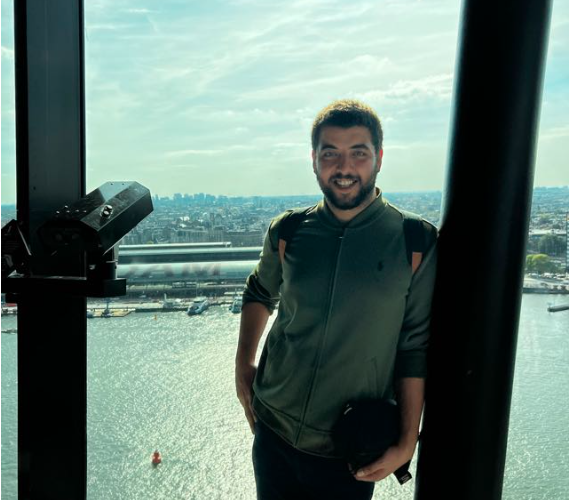
Who is Assem Ammar? Assem Ammar is the Founder and CEO of WAJ, the AI-powered operating system for MENA’s beauty, wellness, and healthcare businesses. He previously built and scaled products at Etisalat, Talabat, and MaxAB.