
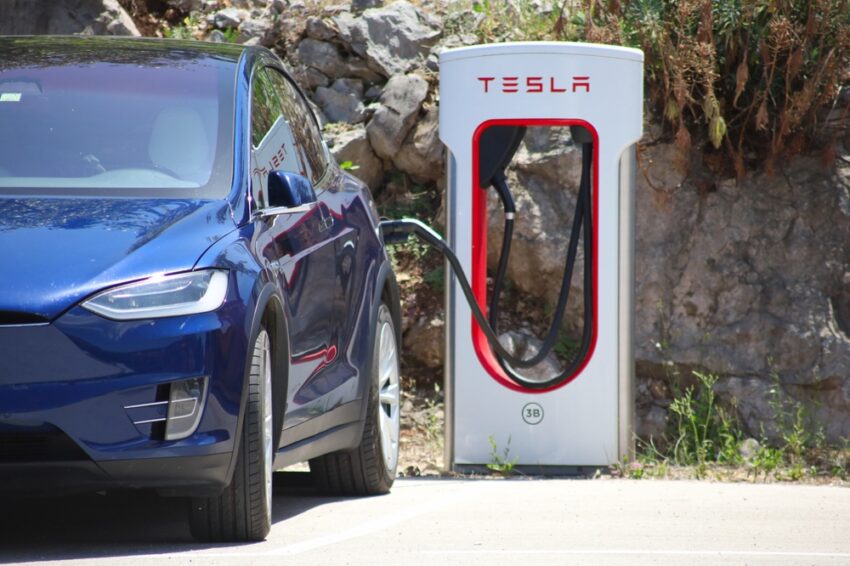
Tesla has staged a dramatic comeback in Europe, posting an 84 per cent surge in March sales as electric vehicles cemented their position as a mainstream choice for the continent’s motorists, new industry figures reveal.
The resurgence of Elon Musk’s car maker, which endured a bruising 2025, comes against the backdrop of a broader electric boom across Europe, where zero-emission models now account for more than one in five new registrations. For small and medium-sized businesses operating fleets, the shift marks a turning point in the economics of going electric.
Data from the European Automobile Manufacturers’ Association (ACEA) shows total new car sales across the continent, including non-EU markets, climbed 11 per cent year-on-year in March to 1.42 million units. First-quarter volumes reached 3.52 million, up 4 per cent on the same period in 2025.
Battery-electric vehicles were the standout performer. March sales leapt 41 per cent to 344,000 units, taking the quarterly tally to 723,000, a 36 per cent increase. EVs commanded 24 per cent of the March market and more than 20 per cent across the full quarter.
Tesla’s own March tally rose 84 per cent, albeit against a weak comparator, with quarterly volumes up 45 per cent to 78,300 units. The American marque’s return to growth comes as Chinese rival BYD continues its aggressive European push. The Shenzhen-based manufacturer, which sells both pure-electric and hybrid models, saw its first-quarter deliveries leap more than 150 per cent to 73,800 units, narrowing the gap on Tesla significantly.
The ACEA credited the boom to consumer-friendly fiscal measures. “The market was supported by robust consumer activity bolstered by new and revised tax benefits and incentive schemes across major European countries,” the trade body said. Rising forecourt prices, driven by the ongoing Iran conflict, are also thought to be nudging buyers towards battery power.
For Britain, however, the figures make sobering reading. The UK’s 22.3 per cent electric share has now been overtaken by Germany, where EVs accounted for 22.7 per cent of the first-quarter market. Germany and France have posted electric growth roughly three times the British rate, raising fresh questions about whether Westminster is doing enough to support SME adoption and the charging infrastructure small firms rely on.
Eastern Europe, long regarded as the region the electric revolution forgot, is finally catching up. Poland, the continent’s sixth-largest car market, reported a near 50 per cent rise in EV sales, though penetration remains below 6 per cent. From admittedly low bases, Croatia recorded a 442 per cent jump in March, with Romania up 148 per cent and Slovenia 142 per cent.
Italy and Spain, traditional laggards among the larger Western European economies, also showed signs of life with EV volumes rising 72 per cent and 46 per cent respectively.
The figures will encourage UK SME owners weighing whether to electrify vans and company cars, but they also underscore a widening gulf between British uptake and that of its major European competitors, a gap that policymakers and business leaders will be watching closely in the months ahead.