
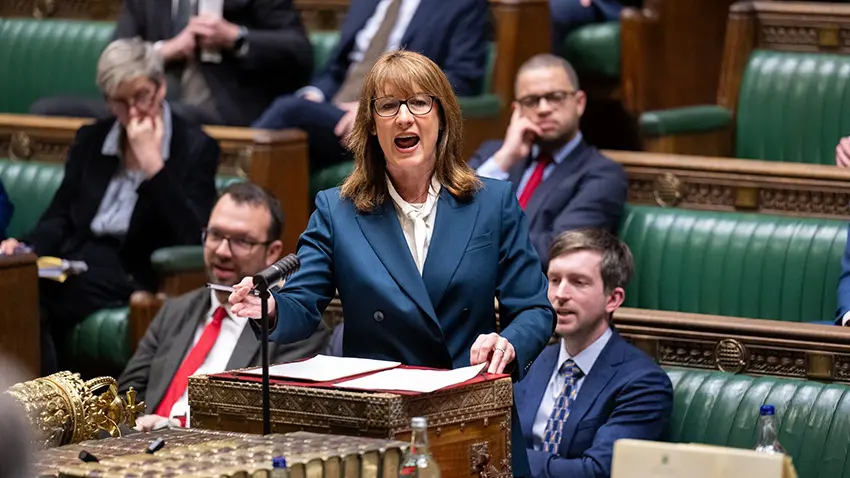
Rachel Reeves has tightened the squeeze on renewable energy generators, raising the windfall tax on wind and solar producers from 45 per cent to 55 per cent in a move the Chancellor insists will stop the sector “cashing in” on the latest Middle East oil and gas shock.
The increase to the electricity generators levy (EGL), announced on Tuesday, has been timed to land alongside a sweeping set of power market reforms from Ed Miliband, the Energy Secretary, designed to “break the link” between volatile gas prices and the cost of electricity paid by households and businesses.
For Britain’s small and medium-sized employers, still nursing the scars of the 2022 energy crisis, the stakes could scarcely be higher. Industry figures, however, have been quick to brand the package a “sham”, warning it risks locking consumers and businesses into higher bills for decades and chilling the investment climate for renewables just as ministers are trying to court record capital inflows.
Under the existing system, many wind and solar farms still sell power on the wholesale market while drawing a top-up subsidy through the legacy renewables obligation (RO) scheme. The Treasury’s new design offers a carrot alongside the stick: generators who voluntarily switch to fixed-price contracts for difference (CfDs) will be exempt from the higher levy.
Ministers argue this will decouple renewables revenues from wholesale electricity prices, which are still set by the most expensive marginal plant on the system — almost invariably gas. Under the current merit-order pricing, even when the vast majority of power is coming from wind or solar, all generators are paid the gas-set price whenever a gas plant is called on.
“Hardworking British families and businesses should not bear the brunt of global gas price shocks while electricity generators are making exceptional profits,” Ms Reeves said. She added that moving generators onto CfDs, combined with the 55 per cent levy, would “offer households and businesses stronger protection against future energy shocks”.
But the numbers lay bare why the voluntary switch may prove a hard sell. An RO certificate is currently worth £69.34. An onshore wind farm under the RO receives one certificate per megawatt hour (MWh) generated, on top of the wholesale price. At 5pm on Monday, with wholesale prices at £99 per MWh, that produced a total return of £168.43 per MWh. Offshore wind, which earns up to 1.9 certificates per MWh, could have banked as much as £230.75 per MWh at the same moment.
One senior energy industry source warned that handing such generators fresh 20-year CfDs on top of their existing RO entitlements amounted to a “double subsidy”, and could keep consumer bills elevated well beyond the RO’s planned 2027-to-2037 phase-out.
Dale Vince, the green energy entrepreneur and Labour donor, went further
“The Government are not breaking the link. I’m very disappointed with that,” he said. “Something real has to be done because we’re in the second energy crisis of this decade.”
Kathryn Porter, the independent energy analyst, cautioned that the levy could also hasten the retirement of Britain’s ageing nuclear fleet, which falls within the windfall tax’s scope. “The whole thing is a mess. This entire plan might end up smoothing costs at a higher level than they are now,” she said.
Tara Singh, chief executive of RenewableUK, struck a more diplomatic note, saying the industry supported weakening the gas-electricity link and would “work constructively” with officials. But she warned that investor confidence was on the line. “At a time when ministers are hoping to attract record levels of investment into renewables, uncertainty over changes to taxation needs to be clarified immediately so it does not drive up the cost of investment.”
Ministers also signalled they would tackle the rising sums paid to wind farms to switch off when grid capacity is constrained, a cost ultimately borne by bill-payers, including the nation’s 5.5 million SMEs.
For Mr Miliband, the wider message is a political one
“As we face the second fossil fuel shock in less than five years, the lesson for our country is clear,” he said. “The era of fossil fuel security is over, and the era of clean energy security must come of age.”
The Government will now consult on the detail of the market overhaul. For British business owners watching their energy bills with nervous eyes, the question is no longer whether reform is needed, but whether Ms Reeves and Mr Miliband have hit on the right formula, or merely swapped one distortion for another.