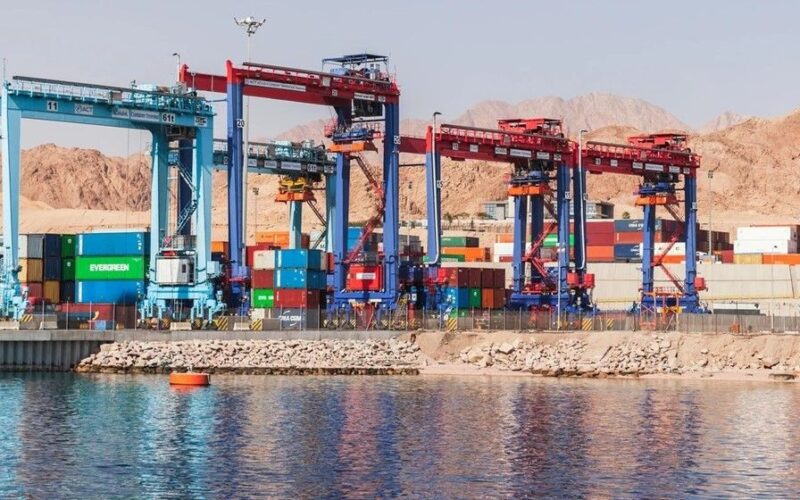
Jordan’s national exports to European Union countries increased by 11.4% during the first eight months of 2026, reaching 411 million dinars, as additional export opportunities worth an estimated $926 million remain available in European markets, ahead of the Jordan-EU Investment Conference scheduled for Thursday at the Dead Sea.
According to foreign trade data released by the Department of Statistics, Jordanian national exports to the EU totalled 411 million dinars in the first eight months of 2026, compared with 369 million dinars during the same period in 2025, an increase of 42 million dinars.
The growth reflects the expanding presence of Jordanian products in European markets, which comprise 27 countries and offer opportunities for domestic industries to increase exports, diversify products and develop partnerships with European companies and importers.
Fathi Al-Jaghbir, chairman of the Jordan and Amman Chambers of Industry, said the export growth reflected improvements in the production capabilities and competitiveness of Jordanian industry, as well as its ability to meet European market requirements in terms of quality and technical standards.
He said Jordanian exports recorded growth in several major European markets during the first eight months of the year, particularly Belgium, where exports rose by 46%, the Netherlands by 45.9% and Germany by 16.3%.
Growth also extended to other European markets, with exports to Denmark increasing by 280.2%, Poland by 243.2% and Romania by 143.8% compared with the same period last year.
These figures point to opportunities to expand the presence of Jordanian products in both established and emerging markets, while highlighting the importance of distinguishing between export growth rates and the actual value of exports to individual countries.
$926 Million in Additional Export Opportunities
Al-Jaghbir said estimates indicate that Jordanian industries have untapped export potential worth approximately $926 million across EU markets, covering sectors and products with competitive production advantages.
These opportunities include garments and textiles, chemical industries, pharmaceuticals and medical supplies, engineering and electrical industries, as well as food products.
According to figures previously presented by the Jordan Chamber of Industry, the largest estimated export opportunities include $284 million in the garments sector, $128 million in chemical industries, $105 million in jewellery and precious metals, and $37 million in fertilisers, in addition to other industrial products.
By destination, the estimated opportunities include approximately $122 million in the Netherlands, $99 million in Belgium and $81 million in Italy, alongside further opportunities in Spain and Central and Eastern European countries.
These figures represent estimates of potential export capacity and demand in targeted markets, rather than additional exports already achieved or commercial contracts signed.
Al-Jaghbir stressed the importance of developing direct marketing mechanisms for Jordanian products, identifying the sectors and products best positioned to compete in each market, and strengthening communication between Jordanian factories and European companies.
He also highlighted the need to invest in technology and innovation and improve productivity to help Jordanian industries expand their market share in Europe and make greater use of the Jordan-EU Association Agreement.
European Industrial Partnerships
The Jordan-EU Investment Conference will dedicate a session on Wednesday, November 18, from 11 a.m. to 12:30 p.m., to discussing Jordanian-European industrial partnerships, existing experiences and future cooperation opportunities.
The session will showcase the experiences of European importers of Jordanian products, European companies that have invested in the Kingdom, and Jordanian manufacturers with established export experience in European markets.
Discussions will also address opportunities to expand cooperation in manufacturing, supply chains and technology transfer, while connecting Jordanian companies with European value chains, particularly in higher-value-added industries.
Ahmad Al-Khudari, chairman of the Jordan Exporters Association, said the agreement simplifying rules of origin with the European Union had helped improve access for Jordanian products to European markets, particularly food products.
He stressed the importance of participating in international exhibitions and trade missions to develop relationships with importers, agents and distributors, promote Jordanian products and increase their presence in foreign markets.
Meanwhile, Mohammad Al-Sumadi, chairman of the European Chamber of Commerce in Jordan, highlighted the importance of translating trade growth between the two sides into broader industrial and investment partnerships that facilitate technology and expertise transfer and strengthen the integration of Jordanian companies into European value chains.
Promising areas of cooperation include pharmaceuticals, medical supplies, chemicals, fertilisers, garments and textiles, food industries and cosmetics, as well as information technology and digital services.
European Investment and the Economic Modernisation Vision
Export expansion opportunities are gaining additional significance as Jordan prepares to present 41 investment opportunities worth approximately $15 billion at the Jordan-EU Investment Conference. The projects cover industry, technology, energy, transport and logistics services.
The investment portfolio includes projects involving pharmaceutical and medical supplies manufacturing, electric vehicle and component assembly, and the production of chemicals and semiconductors, opening the door to new production and export partnerships with European companies.
These opportunities are linked to the high-value industries driver of Jordan’s Economic Modernisation Vision, which seeks to strengthen the competitiveness of national industry, increase productivity, diversify exports and develop value chains.
The conference follows King Abdullah II’s emphasis, in the Speech from the Throne delivered before Parliament on November 2, on accelerating the implementation of major economic projects, strengthening the national economy and ensuring that development translates into tangible improvements in citizens’ lives, opportunities and future prospects.
Jordan’s investment environment offers advantages including institutional stability, geographical location and trade agreements, alongside tax and customs incentives for eligible industrial and export-oriented projects, supporting the expansion of productive activities.
The conference aims to capitalise on these advantages to transform trade relations into long-term industrial and investment partnerships and increase access for Jordanian products to European markets.
The economic significance of these partnerships lies in their potential to expand domestic production, increase exports, enhance added value and create new employment opportunities, supporting the objectives of the Economic Modernisation Vision and strengthening the presence of Jordanian industry in global markets.
Source: Original report (source not specified in the supplied text).