The Ministry of Tourism and Antiquities has put forward, as part of Jordan’s investment opportunities, a proposed project to establish a tourist cable car in Madaba Governorate, linking the historic Machaerus Castle with the Dead Sea through a two-stage route.
The project aims to promote religious, historical and nature-based tourism, attract more visitors and stimulate local economic activity.
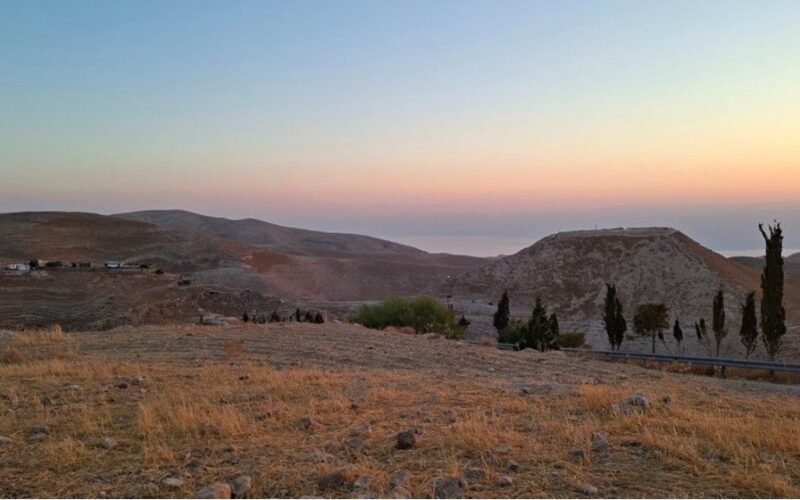
According to an investment opportunity profile, the project, known as the “Machaerus Cable Car,” would begin at a bus parking area near the historic castle and extend toward the Dead Sea, offering visitors views of the surrounding hills, valleys and landscapes, including the Dead Sea and Jordan Valley.
The document said the project seeks to strengthen tourism links between historical and religious sites, identifying Machaerus, Tell Mar Elias and Anjara among the targeted locations. It aims to capitalize on the cultural and religious heritage of these areas to attract tourists, particularly Christian pilgrims.
The project is intended to increase the number of tourists and extend their stays in Madaba Governorate, boost revenues for commercial and service establishments, and create jobs during both the construction and operational phases.
The project includes modern cable car stations near Machaerus Castle and the Dead Sea, as well as a visitor center providing historical information, rest areas and shops selling gifts and souvenirs.
It would also include restaurants, cafes, parking facilities and shuttle services connecting the project with nearby tourist sites and hotels.
The project also envisions organized tours led by specialized guides to introduce visitors to the historical and religious significance of the sites, while taking environmental sustainability and preservation of the surrounding natural landscape into account.
Modern engineering technologies would be used to ensure passenger safety and operational efficiency.
On the investment side, the document states that investors would provide the capital required to develop and equip the project for operation, with the possibility of participating in decisions related to marketing, pricing and partnership development.
The document did not specify the proposed project’s investment cost, cable car route length or capacity, nor did it provide a timetable for the start or completion of implementation.
Visitors During the First Eight Months
The number of visitors to the Machaerus archaeological site reached 9,406 during the first eight months of the current year, from January through August, compared with 9,616 visitors during the same period last year, representing a 2.2% decline, according to preliminary data from the Ministry of Tourism and Antiquities reviewed by Al-Mamlaka on Monday.
Foreign visitors to the site totaled approximately 7,587 between January and August 2026, compared with 8,772 during the same period in 2025, a decline of 13.5%.
Machaerus holds major historical and religious significance due to its castle, historically known as “Machaerus,” and its association with the final chapter of the life of John the Baptist.
The area contains archaeological remains dating back to different historical periods, including the remains of Byzantine churches and mosaic floors, strengthening its position as a destination for Christian pilgrimage and cultural tourism in Jordan.
Efforts to develop Machaerus form part of a broader strategy to strengthen religious and cultural tourism in Jordan, alongside preparations to mark the 2,000th anniversary of the baptism of Jesus Christ at Bethany Beyond the Jordan in 2030.
The investment project comes amid efforts to develop the Machaerus site and strengthen its position on the religious and cultural tourism map, through cooperation between Jordan, the European Union and Italy.
In July 2024, Jordan and the European Union signed a €10 million program to rehabilitate the Machaerus and Abila (Quwailbeh) sites, in cooperation with the Italian Agency for Development Cooperation and civil society organizations.
The program includes improving access to Machaerus Castle, preserving its archaeological features and historic caves along the road leading to the site, and developing visitor facilities.
It also includes archaeological surveying, restoration, fencing and the installation of interpretive signs.
The project, implemented by the Italian Agency for Development Cooperation under delegated cooperation from the European Union, has a budget of approximately €5.885 million, including a €535,000 contribution from the agency. It will be implemented over 36 months and covers both Machaerus and Abila, with technical support from the University of Perugia in Italy.
European Union Ambassador to Jordan Pierre-Christophe Chatzisavas said in September that the coming months would see intensive work with the Jordanian government and the Italian side to develop the Machaerus site, protect its archaeological features and strengthen its presence as a global tourist destination.