
When the holy month of Ramadan approaches, the Muslim world looks to the skies.
In 2026, the UAE did the same: but with drones, artificial intelligence and a tightly coordinated national system working alongside centuries-old religious tradition.
The Ramadan Crescent Sighting Committee for 1447 AH, formed under the UAE Council for Fatwa, convened on Tuesday, February 17, 2026, at the historic Qasr Al Hosn in Abu Dhabi.
Chaired by Sheikh Abdullah bin Sheikh Mahfouz bin Bayyah, the committee met after Maghrib prayer to examine crescent sighting reports and determine the official start of the holy month.
The meeting was part of the council’s formal mandate to oversee crescent observation and issue official proclamations.
After Maghrib prayer, reports from field observation teams and officially accredited observatories across the UAE were reviewed, alongside testimonies submitted from different regions of the country. All inputs were assessed in line with established Sharīʿah principles and approved procedures, before a final decision was issued through official channels.
Drones and AI take centre stage
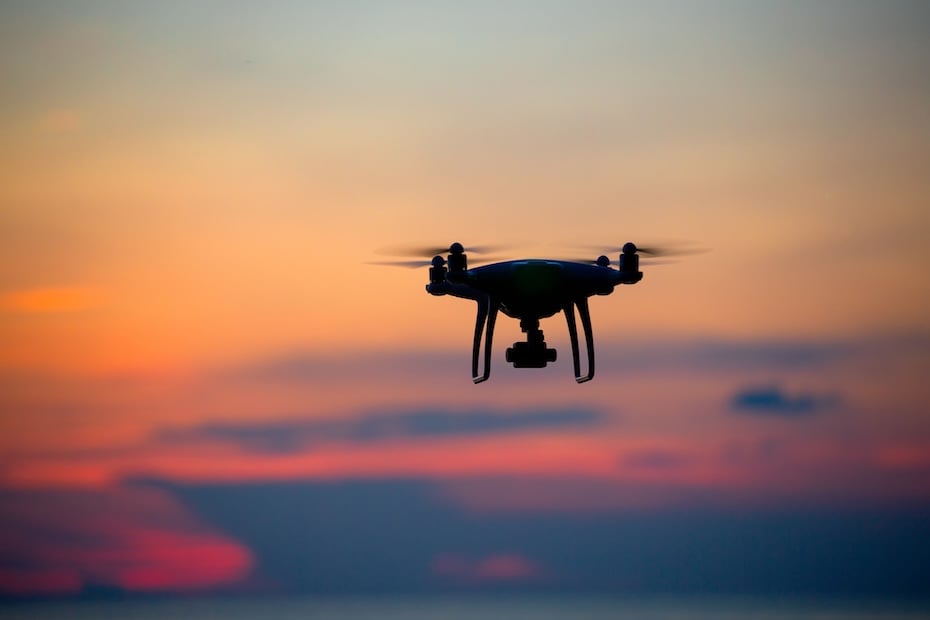
According to the Emirates News Agency (WAM), the Ramadan Crescent Sighting Committee utilised drones equipped with advanced scientific features, alongside AI systems, to analyse images captured from observatories across the country.
The technology allows for high-resolution image analysis, improving accuracy and reducing uncertainty in challenging visibility conditions — while still operating within a Sharīʿah-compliant framework.
Speaking to WAM, Dr Omar Habtoor Al Darei, chairman of the General Authority of Islamic Affairs, Endowments and Zakat, said the move reflects the committee’s commitment to the highest standards of accuracy.
The approach, he explained, combines the Shariah-based principle rooted in the Prophet Muhammad’s (PBUH) saying — “Fast upon sighting it and break your fast upon sighting it” — with the benefits of modern science and advanced technology.
“The committee’s work involved coordination between specialists and astronomers and relied on data from six observatories across the UAE, underscoring the country’s commitment to transparency and precision,” he added.
Public participation remains a key part of the process. Ahead of the meeting, the UAE Council for Fatwa invited members of the community to observe the Ramadan crescent and submit testimonies via an official electronic platform.
Crescent sighting has always symbolised unity, marking the beginning of fasting for millions.
Ramadan is also observed by nearly 2 billion people, roughly a quarter of the global population, and serves as one of the most widely practised religious rituals in Islam.
Fasting from dawn until sunset during the month is among the core acts of worship for believers, with surveys showing that the vast majority of Muslims participate in the fast and associated spiritual observances each year.