
The
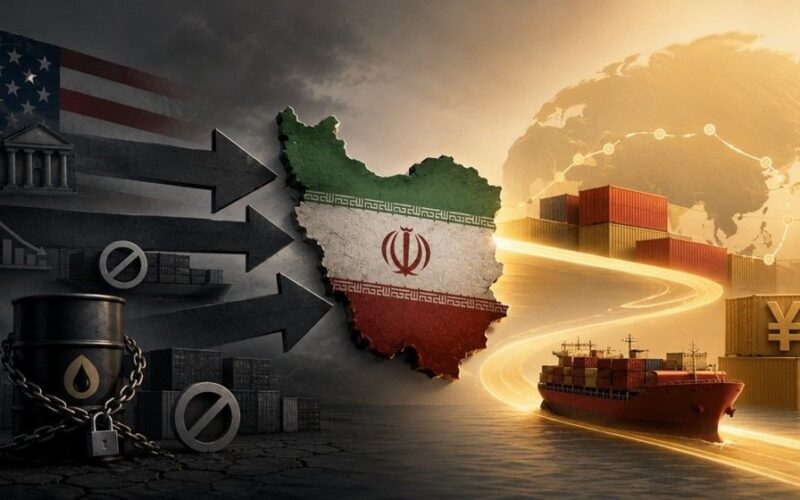
U.S. economic war on Iran is entering a broader and more intensive phase. It
has moved beyond directly targeting the Iranian economy to placing pressure on
trade, financial and shipping networks, as well as on countries, companies and
intermediaries that continue to do business with Tehran.
The
most important question, however, is no longer how many new restrictive
measures Washington imposes or how extensive its sanctions list becomes, but
rather how effectively these tools can be enforced and translated into a
meaningful economic blockade. This is where China emerges as the most decisive
factor.
China
is Iran’s most important economic partner and the largest buyer of its oil. It
also possesses a financial and commercial infrastructure capable of mitigating
a significant share of the impact of the U.S. economic war. The Chinese
government is unlikely to adopt Washington’s political position, as Beijing
opposes unilateral sanctions in principle and rejects their use outside the
framework of international legitimacy. Yet this political position does not
mean that all Chinese institutions will display the same willingness to
challenge U.S. pressure.
Based
on previous experience, major financial institutions and corporations that are
deeply integrated into international markets and the dollar-based financial
system are likely to exercise considerable caution toward any activity that
could expose them to secondary sanctions. By contrast, smaller companies,
independent oil refiners and commercial intermediaries are likely to remain
more willing to accept such risks, particularly when potential returns are
enhanced by the discounts Iran offers on oil and other commodities.
In
this context, Iran has a range of tools that can help mitigate the effects of
financial isolation and the broader economic war. These include settlements in
Chinese yuan and the use of China’s Cross-Border Interbank Payment System
(CIPS), as well as barter arrangements, cryptocurrencies for some transactions
and overland trade routes through neighbouring countries. Iran can also rely on
intermediary companies, re-export mechanisms and indirect financial settlement
arrangements.
A
fundamental reality of the international economy must be recognised here: no
economic war based on sanctions and financial restrictions can produce a
completely airtight blockade. At every stage of intensified economic pressure,
alternative trade and payment channels emerge. Some are legal, others operate
in regulatory grey areas, while still others function in a largely concealed
manner. These channels are not static. They continuously evolve in response to
new restrictions, shifting from one country to another, from one company to
another and from one payment mechanism to another.
Nor
will the positions of Iran’s economic partners be uniform. Some countries may
politically reject the U.S. economic war while remaining financially cautious.
Others may comply partially with Washington’s restrictions to protect their
interests with the United States. At the same time, private companies and
intermediaries in different countries will continue searching for openings that
allow trade to proceed. All of this means that Washington can significantly
raise the cost of doing business with Iran, but it will face considerable
difficulty in shutting down every available channel simultaneously.
This
should not, however, lead to an underestimation of the likely economic impact.
Both the Iranian government and society will face significant pressures
resulting from lower oil revenues, restricted access to foreign currency,
higher import and transaction costs, depreciation of the Iranian rial, rising
inflation and declining investment.
The
Iranian economy is therefore likely to become increasingly dependent on what
might be described as a “survival economy”, managing a minimum level of
resources, trade and financing sufficient to keep the state and markets
functioning, but with lower efficiency, higher costs and deteriorating living
standards.
Even
so, moving from inflicting economic damage through an economic war to changing
Iran’s political and strategic positions is an entirely different matter. Most
strategic assessments do not suggest that economic pressure, however severe,
will necessarily produce fundamental shifts in Tehran’s choices, particularly
on issues it regards as directly linked to its national security, regional
standing and defence capabilities.
The
real test of the U.S. economic war, therefore, will not simply be the scale of
economic pain it causes, but Washington’s ability to persuade China and other
partners to close Iran’s alternative channels. If Tehran retains access to some
outlets for trade and oil exports, along with alternative payment mechanisms
and parallel financial tools, it will remain capable of managing its economy,
albeit at a steadily increasing economic and social cost.
Forcing
a strategic shift in Iran’s political position, however, will remain far more
difficult than weakening its economy.
Related Stories

Parliament and Political Parties… What Are We Missing?

The Storytellers: Who Handed You the Keys to Shaping Public Consciousness?