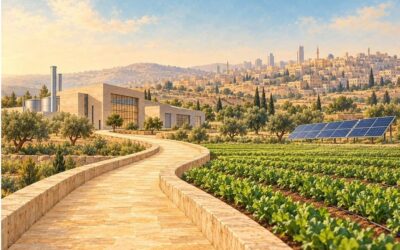

The Jordan-European Investment Conference, held at the Dead Sea, will have its main day on 19 November, preceded by sectoral sessions on 18 November. It confirms Jordan’s commitment to continuing development despite regional turbulence, relying on international partnerships aimed at expanding investment, production and employment, and turning political confidence in the Kingdom into long-term economic interests.
The conference is an extension of the role His Majesty King Abdullah II plays in building international relations and putting them to work for the national economy. This was embodied in the comprehensive strategic partnership with the European Union, launched in January 2025, and the first Jordan-EU summit held in Amman in January 2026.
This partnership rests on a financial and investment package of about €3 billion for 2025–2027. It includes €640 million in grants, €1 billion in concessional loans, and about €1.4 billion in additional investment through European financial instruments. This helps diversify funding sources and supports projects that need long repayment periods to recover their capital.
This funding matters more in a regional environment that raises investment risks. European instruments can help spread those risks and improve financing terms. However, attracting investors still depends on project viability, stable legislation, speed of procedures, the ability of relevant bodies to address obstacles, and clarity of contractual relations.
Within this track, the conference’s official platform presents 41 investment opportunities, with the total stated value of the opportunities exceeding $15 billion. More than 700 officials, investors and business leaders are expected to take part. These figures reflect the scale of the ambition, while success will be measured by turning opportunities into financing, implementation and operation, as these are targeted investments that have not yet been realised.
Economic indicators highlight the importance of speeding up this shift. Real gross domestic product grew by 3% in the second quarter of 2026, while unemployment among Jordanians reached 21% over the same period. This underlines the need for investment that expands job opportunities, raises productivity and wages, and links training to the actual needs of companies.
On trade, national exports rose by 6% in the first eight months of this year, reaching JD6.464 billion. This supports directing partnerships towards expanding the industrial and export base, and making use of European technology and marketing networks, to improve the quality of Jordanian products and increase their presence in foreign markets.
The projects on offer in water, energy, transport and logistics stand out for their potential to address production costs and improve service efficiency. Investment in technology and software can expand exports of knowledge and create jobs for skilled people, provided it is linked to the transfer of expertise, skills development and partnerships with local companies.
To maximise the economic impact, the benefits of investment should extend to small and medium-sized enterprises through supply, maintenance and service contracts, so that opportunities spread across sectors and governorates. This should go hand in hand with preparing Jordanian suppliers to meet quality and contracting requirements, strengthening the added value that stays within the economy.
This requires clear executive responsibility, starting with completing studies and licences and setting out financing and timelines. It also means assessing the commitments and guarantees the treasury takes on in partnership projects, and then tracking the funds actually invested, the sustainable jobs created, exports and local purchases, so that progress can be measured and delays can be addressed at an early stage.
The royal efforts have given Jordan an important space for building economic partnerships in a turbulent region, and it falls to institutions to turn these into results. The true value of the Dead Sea conference will show up in higher production, better services and job creation, and at that point the message that managing crises and sustaining development go hand in hand will become a reality.
Related Stories
Awaiting Additional Waves of Global Inflation
Jordanian Amber and Lebanese Amber: Examining Their Geological Ages