
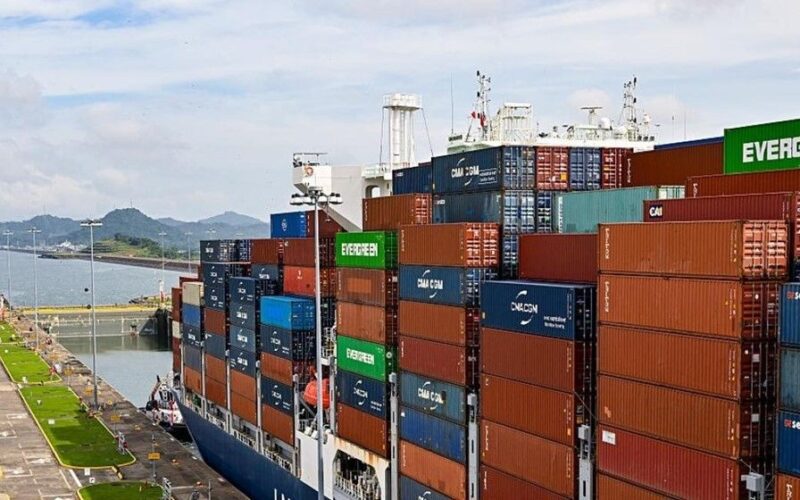
The Panama Canal plans to reduce the number of ships transiting its waters again after taking similar measures earlier this month, amid the impact of the El Niño climate phenomenon.
Panama has declared a nationwide state of emergency due to the phenomenon, which occurs every two to seven years when sea surface temperatures rise across the central and eastern tropical Pacific Ocean. Over several months, this can cause major changes in global wind patterns, atmospheric pressure and rainfall.
The phenomenon has triggered severe drought across Central America, creating significant challenges for the canal, which handles around 5% of global trade. The Panama Canal Authority reduced daily transits from 36 to 32 vessels on September 4 to conserve water resources. It now plans to cut the average number of daily transits further to 29.5 starting in October, according to a draft budget submitted to parliament.
Panama Canal Affairs Minister Jose Ramon Icaza said the approved budget ensures that the canal will continue to operate safely, efficiently and profitably.
Most forecasts indicate that El Niño this year will be the strongest since comparable records began four decades ago. In 2023, the canal authority was forced to reduce daily transits to 22 vessels due to the effects of the same phenomenon.
The development comes as the Panama Canal takes on greater importance amid disruptions to shipping through the Strait of Hormuz due to the war between the United States and Iran. The strait handles roughly one-fifth of global oil and gas trade.
The Panama Canal Authority’s decision to reduce daily transits poses a direct threat to one of the world’s most important trade arteries. Goods worth hundreds of billions of dollars pass through the canal each year, including containers, grains, liquefied natural gas and automobiles. The waterway connects Asia with the US East Coast and Europe, making it a key alternative to longer maritime routes around South America or Africa.
Any reduction in the canal’s capacity has a direct impact on global shipping costs. Shipping companies may either pay additional fees to secure priority passage through the canal’s auction system or seek longer and more expensive alternative routes in terms of fuel and transit time. This drives up freight costs and delays deliveries, ultimately affecting prices in importing markets.
The recurring climate crisis comes at a sensitive time for global maritime trade, coinciding with disruptions affecting other major shipping routes, most notably the Strait of Hormuz, where tanker traffic has been disrupted by escalating military tensions between the United States and Iran, as well as continuing tensions in the Red Sea.
The simultaneous disruption of several strategic waterways increases the vulnerability of global supply chains and raises the risk of imported inflation at a time when major economies, particularly the United States, are seeking to curb price pressures through higher interest rates.
Panama relies heavily on canal revenues as a major source of national income and government financing. Any decline in transit traffic, even when implemented as a precautionary measure to protect water resources, therefore puts short-term pressure on government revenues.
The 2023 drought crisis had already caused significant financial losses for the authority overseeing the canal after it was forced to cut transits by roughly half compared with normal capacity.
The crisis also highlights a broader challenge posed by climate change to infrastructure critical to international trade. Unlike the Suez Canal, the Panama Canal relies on freshwater resources to operate its lock system, making it directly vulnerable to weather fluctuations and droughts associated with El Niño and La Niña.
This is pushing Panamanian authorities to seek long-term structural solutions, including water-storage projects and seawater desalination, to ensure the canal’s sustainable operation as extreme weather events become more frequent.
Source: Agence France-Presse (AFP)
Related Stories