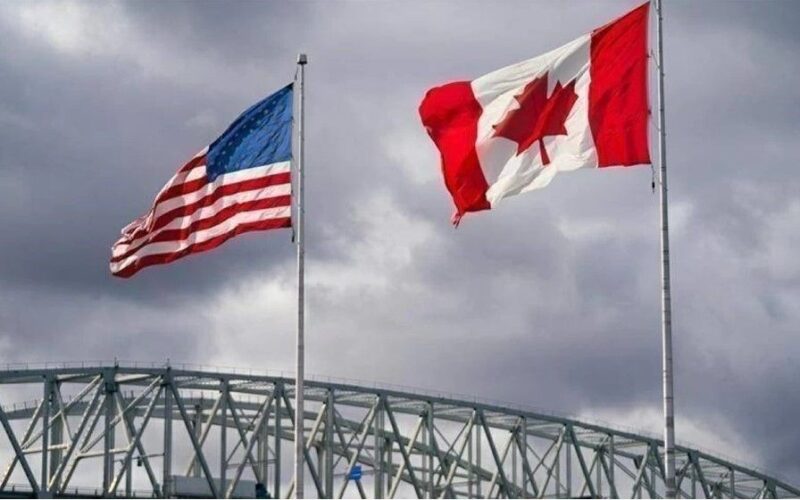
The United States imposed 50 percent tariffs on select Canadian goods on Saturday following the failure of both nations to reach a trade agreement, as the two sides exchanged accusations of blocking days of negotiations.
The tariffs do not mark a radical shift in the economic situation for Canada, the second-largest trading partner of the US after Mexico. The levies came into effect shortly after midnight (0400 GMT) on approximately $20 billion worth of Canadian goods, such as wooden ice hockey sticks, which are rarely used today.
These targeted exports represent no more than five percent of Canada’s total exports to the United States.
However, the new tariffs signal rising tensions between US President Donald Trump and Canadian Prime Minister Mark Carney, and are likely to further complicate broader negotiations aimed at renewing the United States-Mexico-Canada Agreement (USMCA).
Carney announced that he suspended trade negotiations and that Canada would respond in kind to the new tariffs.
“I have decided to suspend trade negotiations with the United States and have directed Canadian negotiators to return to Ottawa,” Carney said in a statement.
“Negotiators worked tirelessly, in good faith, to defend the interests of Canadians throughout these talks until the very last minute… However, last-minute changes introduced to the proposed terms by the US were unfair and uneconomic, casting doubt on the credibility of any agreement,” he added.
Opinion polls indicate that most Canadians oppose making concessions to Trump.
US Trade Representative Jameson Greer stated during a White House press briefing: “Tonight, Canada rejected concluding the trade agreement under the terms agreed upon earlier this week.”
“This is a missed opportunity for Canada to partner with the United States, home to the fastest-growing economy in the G7,” Greer added.
A senior Trump administration official noted that the US offer would have granted Canada the best tariff standing among major exporters to the US, but Canada sought additional concessions, particularly regarding steel, aluminum, automobiles, and softwood lumber.
The official added that no further rounds of talks are scheduled while the new tariffs are being applied.
Trade experts say these tariffs—which fall outside the preferential treatment provided by the USMCA—expose already fragile sectors to significant potential harm, which could lead to job losses and business closures.
The US administration’s decision follows three consecutive days of talks in Washington between Dominic LeBlanc, the Canadian minister responsible for US trade, and Greer.
These new tariffs come on top of existing US levies on steel, lumber, and automobiles, which have taken a heavy toll over the past 18 months, though economic slowdowns have remained largely confined to those specific sectors.
Reuters