Report: Development of Public-Private Partnership (PPP) projects including the Amman Bridge, water loss reduction, and pharmaceutical tracking
The progress report for the first half of 2026 on the Second Executive Program of the Economic Modernization Vision 2026–2029 revealed the continued implementation of a package of measures and projects aimed at developing the investment environment in Jordan and enhancing the Kingdom’s attractiveness to local and international investments.
According to the report, the investment map was updated to include 100 investment opportunities across multiple sectors, with a primary focus on infrastructure, logistics, transport, and technology. Additionally, a comprehensive upgrade was conducted for the “Invest in Jordan” platform to serve as a unified national platform for investment promotion, providing information and opportunities to investors.
During the first half of the year, the Ministry of Investment completed 3,801 incentive and facilitation transactions, issued 1,879 investor cards, and granted investment exemptions to 379 companies.
The same period witnessed the issuance of the Amended Regulation for the Investment Environment for the year 2026, aiming to streamline regulatory procedures, enhance the efficiency of services provided to investors, and boost the competitiveness of the investment climate.
Furthermore, the Ministry activated post-care services for investors, including complaints and grievances, through a framework designed to manage these services, standardize their procedures, and strengthen governance.
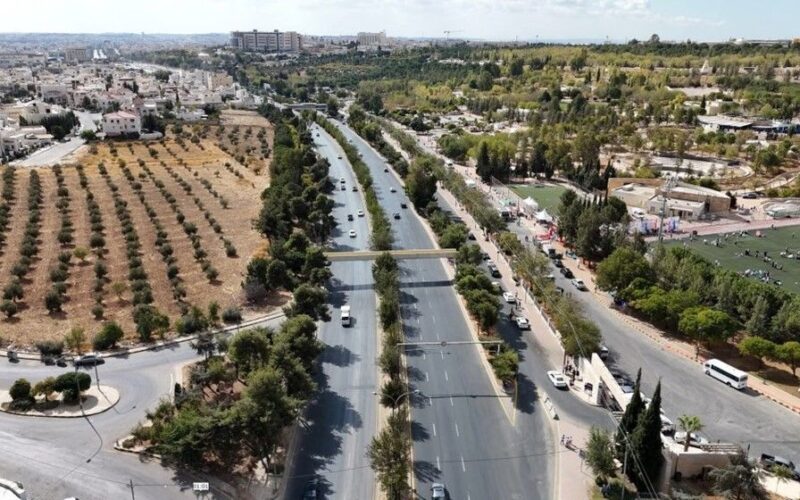
In the field of public-private partnership (PPP) projects, investment packages were developed for several bankable projects, including the Amman Bridge Development Project, the Water Loss Reduction Project, and the Pharmaceutical Tracking Project.
A pre-qualification call was also issued for the Jaber Border Crossing Development Project under a Public-Private Partnership model (Design, Build, Finance, Operate, and Maintain) to rehabilitate the crossing and improve its operational efficiency. Meanwhile, the evaluation of pre-qualification applications for companies applying for the South Amman Water Loss Reduction Project was completed.
In the energy sector, work began on preparing a feasibility study for a pumped-storage hydroelectric energy project in Wadi Mujib to establish a closed-loop 450 MW station, thereby enhancing the flexibility and sustainability of the electrical grid.
In the industrial sector, a tender was awarded to prepare an economic and investment feasibility study for establishing a green industrial development zone, aligned with efforts to promote sustainable industries.
In addition, the National Action Plan to enhance Jordan’s performance in the Business Ready (B-READY) index was adopted, and the Ministry of Investment signed a Memorandum of Understanding with the Economic Cities and Special Zones Authority in Saudi Arabia to cooperate on economic zone development.
Achievements also included signing the agreement for the first phase of the Free School Transportation Project in the Southern Badia, as well as completing the draft regulations for issuing the compliance condition license in preparation for completing its approval procedures and publication in the Official Gazette.
Furthermore, a tender was awarded to prepare a technical and legal study for an investment funds project in line with approved global best practices.
The government announced that 343 out of 394 projects listed under the Second Executive Program of the Economic Modernization Vision were commenced during the first half of this year, confirming that project execution and completion are progressing as planned and within set timelines.
The H1 report on the progress of the Second Executive Program (2026–2029) indicated that projects are subject to regular monitoring to assess progress levels and ensure execution according to specified plans.
The Second Executive Program comprises 394 projects to be implemented over four years, with 343 projects launched during the first six months of this year.
The report also noted that approximately 100 decisions were taken by the government during the first half of this year to support the goals of the Economic Modernization Vision.