
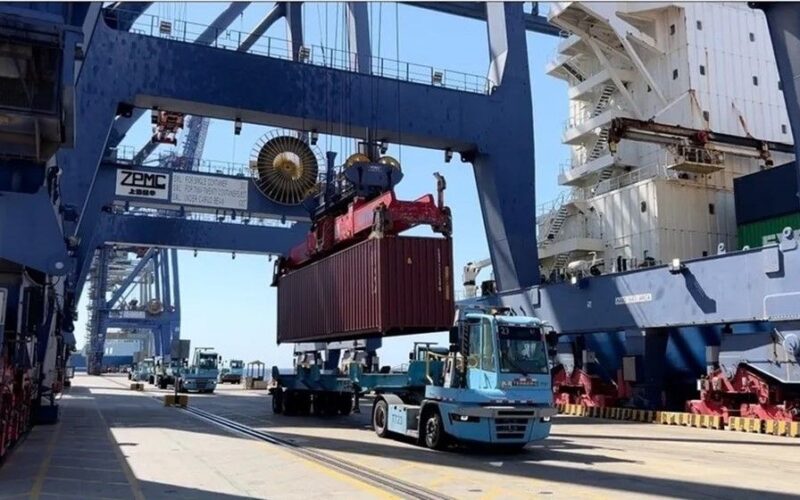
AQABA — Merchants and private sector representatives confirmed that the executive procedures and decisions recently approved by the Aqaba Special Economic Zone Authority (ASEZA) represent a turning point and a true boost for the national economy.
They noted that these decisions—which came as a direct and swift response to Royal directives aimed at strengthening food security and raising the readiness of the national framework—have laid the foundation for a new logistical phase that positions Aqaba at the forefront of the regional trade scene, proving Jordan’s ability to transform global challenges into promising investment opportunities.
Sector representatives emphasized that the defining feature behind the success of this package lies in the deep “participatory approach” uniting all relevant parties. The decisions resulted from an expanded coordination meeting bringing together the Ministers of Industry, Trade, Transport, and Labor, the Chairman of ASEZA, as well as private sector leaders from chambers of commerce and industry, clearance associations, and shipping lines.
Merchants and specialized syndicate representatives explained that this high-level coordination translated into practical decisions addressing complex operational challenges on the ground. They affirmed that this governmental openness and direct engagement with field realities helped dismantle bureaucratic barriers and align efforts to boost logistics readiness, fostering mutual trust as the core pillar for ensuring the uninterrupted flow of goods.
Representing the Clearance and Cargo Transport Companies Syndicate, Mohammad Jalal confirmed that these measures will positively impact the competitiveness of Jordanian ports. He stressed that “the shift toward automating customs services and reducing container dwell time is a demand we have long awaited.”
Jalal noted that faster clearance, expanding storage yards, and streamlining procedures bound for Iraq and Syria directly reduce costs that previously burdened the sector.
For his part, Vice President of the Aqaba Chamber of Commerce, Ahmad Al-Kiswani, described the new package as a “shot of confidence” for the commercial sector, confirming that Aqaba’s logistical readiness now rivals global ports thanks to institutional synergy.
Al-Kiswani pointed out that Royal directives served as the compass driving development effectively. He highlighted that accelerating the rehabilitation of logistics yards and offering concessions to exporters—such as extending demurrage-free storage for export containers to 14 days—are bold decisions that support merchants and provide high flexibility in managing supply chains.
Several merchants operating in the food sector noted that boosting human resources to accelerate clearance and automating inspections will yield substantial savings in time, effort, and money. They explained that reducing operational expenses—by lowering disposal fees and cutting container dwell time—will directly contribute to the price stability of essential commodities in the local market, thereby reinforcing national food security.
Furthermore, they pointed out that these savings will enhance the competitiveness of goods transiting through Jordan into neighboring markets.
Merchant Salameh Al-Ma’aitah noted that the recent decisions directly addressed the concerns of Jordanian traders and solved multiple challenges, including reduced disposal fees and shorter customs clearance times—practical tools to lower operational costs that ultimately impact the consumer.
Related Stories