The
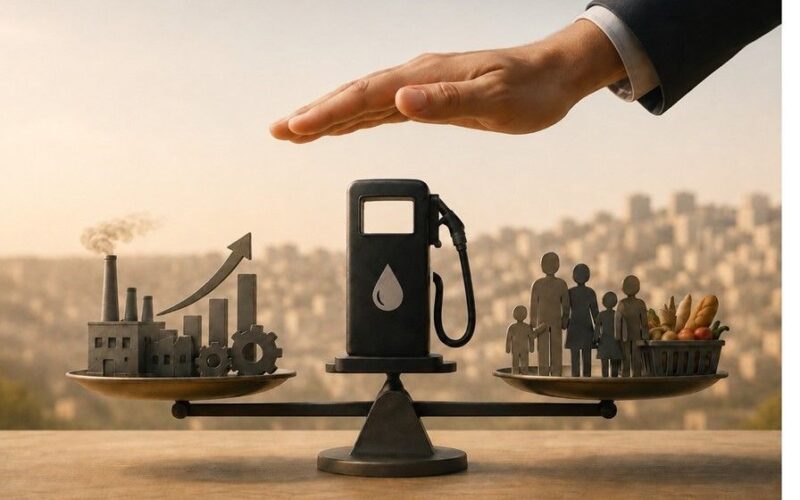
government deserves credit for its prudent decision to freeze fuel prices
during August, despite rising global oil prices and the likelihood of further
increases amid escalating security tensions in the region, growing uncertainty,
and heightened market volatility.
The decision is particularly significant for
Jordan, which imports most of its oil and petroleum-product needs, leaving it
highly vulnerable to fluctuations in global prices and disruptions in supply.
There is no
doubt that freezing fuel prices, rather than passing global price increases
directly on to consumers, may have a temporary negative impact on public
revenues by reducing the expected proceeds from the indirect taxes imposed at
varying rates on petroleum products.
However, assessing the decision solely
from the perspective of immediate revenue would be a narrow reading that
overlooks its broader economic and social effects.
Energy is
embedded in virtually every aspect of economic activity. Any increase in fuel
prices is quickly transmitted to transportation, production, and distribution
costs, before being reflected in the prices of goods and services.
Freezing
prices therefore helps contain the upward trend in inflation that has emerged
in recent months.
Inflation is not merely a statistical indicator; it is an
enemy of the economy. It erodes household purchasing power, weakens domestic
demand, raises production costs, and increases uncertainty for investors.
The decision
also spares households from additional financial burdens, particularly low- and
middle-income families, which spend a large share of their income on
transportation, energy, and basic needs.
The impact of higher fuel prices does
not stop at the petrol pump. It spreads across most goods and services,
including food, transport, and everyday necessities.
Freezing
prices can also strengthen economic and social stability, and consequently
political and security stability, by reducing the living pressures associated
with poverty and declining real incomes. Raising petroleum-product prices under
the current circumstances would have widened the circle of poverty, pushed more
vulnerable households into even greater hardship, and increased social tension.
Protecting citizens’ purchasing power is therefore not merely a social concern;
it is a central component of safeguarding the country’s overall stability.
The private
sector, across enterprises of all sizes, will also benefit from the decision
through lower operating-cost pressures, allowing businesses to remain
resilient, continue operating, and maintain profitability.
This is essential
for protecting enterprises, preserving existing jobs, and preventing more
workers from joining the ranks of the unemployed at a time when unemployment
remains one of Jordan’s most serious economic and social challenges.
Even from the
perspective of public finance, enabling economic activities to continue
operating under less pressure helps sustain higher levels of production, sales,
and profits. This, in turn, supports the continued flow of revenues from income
tax, the general sales tax, and other fees.
The decision
to freeze fuel prices therefore reflects a strategic approach to state
management, one that balances revenue considerations with economic and social
stability, rather than treating citizens and productive sectors according to a
corporate logic focused solely on immediate profit.
A well-governed state
measures the success of its decisions by their ability to protect both the
economy and society.
Related Stories

What Does Tel Aviv Want from Jordan?
Hassan Protects His Government's Integrity