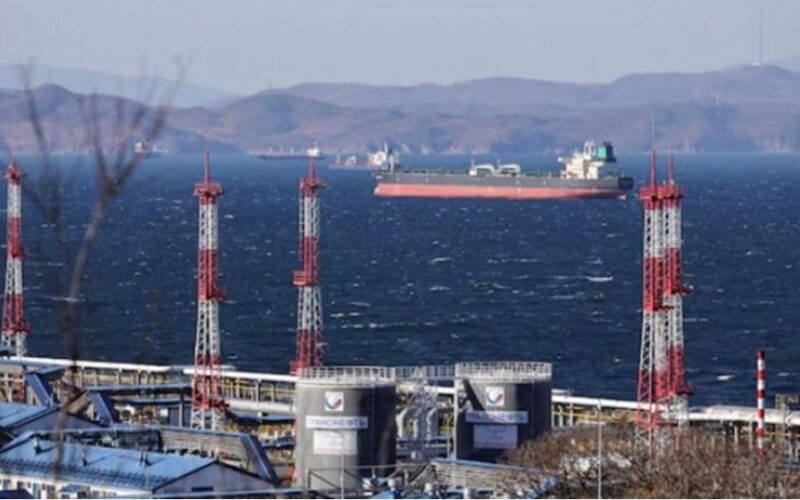
Russia’s decision last week to ban diesel exports has triggered turmoil in global energy markets, as it worsens supply shortages of this industrial fuel and drives prices sharply higher, even in countries that no longer import diesel from Moscow.
Diesel accounts for the largest share of global oil consumption. A surge in its prices reverberates across the global economy due to its wide range of uses, from industrial equipment and agricultural machinery to heavy transport and power generation.
Supplies have been under strain for years as a result of robust post-pandemic demand and production cuts that accompanied the closure of several refineries in Western countries.
The war with Iran has further intensified pressures on the market.
Russia is the world’s second-largest exporter of diesel after the United States, meaning any disruption to its refineries can significantly impact global fuel supplies.
Its exports had already begun to decline prior to the ban due to domestic supply shortages caused by Ukrainian drone attacks.
Data from Kpler showed that average shipments of diesel and gasoil from Russia stood at 234,000 barrels per day from July 1st to July 10th, compared to 400,000 barrels per day in June and an average of nearly 817,000 barrels per day throughout 2025.
Pressures on diesel supplies escalated following a new wave of US strikes on Iran, which came just hours after Russia announced its export ban on Wednesday. This has renewed concerns over vessel movements through the Strait of Hormuz and the impact of tensions there on Middle East exports.
US government data showed on Wednesday that diesel inventories fell by more than 4.5 million barrels the previous week to 97.8 million barrels by July 3rd, a level nearly six percent below the five-year average.
“Developments in the Gulf, combined with the halt in Russian exports and the striking report from the US Energy Information Administration, have caused derivatives sellers to hold back from offering them,” Tom Kloza, an advisor at Gulf Oil, said in a note to clients on Thursday.
While the United States and Europe no longer import fuel from Russia due to its invasion of Ukraine, Moscow’s export ban has nevertheless driven diesel prices up in both regions, reflecting the globally interconnected nature of oil markets.
Reuters