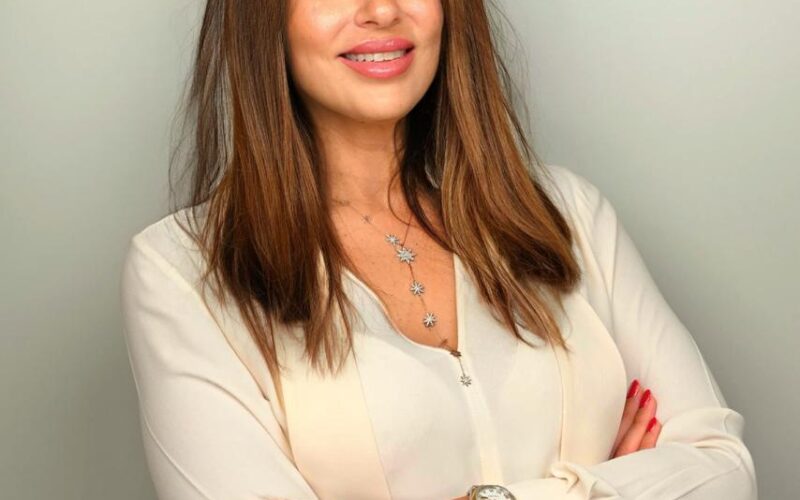
With more than a decade at AW Rostamani Group and a career dedicated to developing people, culture, and leadership, Hala Kabbara has become one of the leading voices in talent development in the UAE. As Group Head of Learning & Development, she oversees leadership development, talent management, succession planning, performance management, culture, wellbeing, and future workforce initiatives across the Group.
Beyond her corporate role, Hala is also the co-founder and host of LEAD Talks Podcast and author of The Talent Edit newsletter, platforms created to spark meaningful conversations about leadership, culture, and the future of work. A Stanford LEAD participant and advocate for lifelong learning, she believes that organizations grow when people grow.
Tell us about your journey in HR, talent development, and leadership development.
My journey has never been about HR in its traditional sense
It has always been about people, potential, and creating environments where individuals can thrive.
I joined AW Rostamani more than 12 years ago and have had the opportunity to grow alongside the organization. Over the years, my role expanded from learning and development into talent management, leadership development, succession planning, performance management, culture transformation, employee wellbeing, and organizational capability building.
What keeps me passionate is seeing the direct impact that investing in people can have on business performance. I have witnessed individuals join as young professionals and later become leaders driving significant parts of the business. Those moments remind me that leadership development is not a program; it is a long-term investment in people and the future of the organization.
How has your Stanford LEAD journey shaped your thinking around leadership and impact?
Stanford LEAD challenged many assumptions I had about leadership
One of the biggest lessons was that leadership is not defined by title, hierarchy, or authority. Leadership is the ability to influence, inspire, and create positive change regardless of your position.
The program exposed me to incredible global perspectives and reinforced the importance of continuous learning. It also deepened my understanding of human behavior, decision-making, power, influence, and the role leaders play in shaping culture.
Most importantly, Stanford helped me shift my mindset from focusing on individual success to thinking about collective impact. The question became less about “How do I grow?” and more about “How do I help others grow and create a multiplier effect?”
What would you consider your biggest career achievement?
While I am proud of the programs, initiatives, and awards throughout my career, my biggest achievement is building leadership pipelines that continue to create impact long after a program ends.
Seeing individuals I have coached, developed, or supported move into larger leadership roles is incredibly rewarding.
I am also proud of helping position talent and leadership development as a strategic business priority rather than a support function. Today, conversations about succession, leadership capability, culture, and future skills are increasingly part of business discussions, and that shift is something I value deeply.
In your current role, what strategic initiatives have you implemented?
My focus has always been on creating sustainable systems that support long-term growth.
Some of the key initiatives include strengthening our succession planning and talent review processes, launching leadership development programs, enhancing performance management practices, building internal learning ecosystems, and supporting culture transformation through our core values.
We have also invested heavily in future-focused capabilities including digital learning, innovation, AI awareness, leadership acceleration, mentoring, and creating stronger internal talent pipelines.
The goal is not simply to deliver training but to build organizational capability that enables business transformation.
Why is the culture of an organization so important?
Culture is what happens when no one is watching.
Organizations often spend significant time defining strategies, visions, and values, but culture determines whether those ambitions become reality.
A strong culture creates trust, alignment, accountability, and engagement
It influences how decisions are made, how leaders behave, and how employees experience the workplace every day.
In my experience, culture is one of the strongest competitive advantages an organization can have because while strategies can be copied, culture cannot.
What is your leadership philosophy?
My leadership philosophy is simple: build people and people will build the business.
I believe leadership is not about being the smartest person in the room
It is about creating an environment where others can succeed.
I strive to lead with authenticity, curiosity, accountability, and empathy. I also believe that leadership requires courage—the courage to make difficult decisions, challenge the status quo, and have honest conversations when needed.
Ultimately, the success of a leader should be measured not by personal achievements but by the success of the people they develop.
What does a future-ready leader look like?
The future-ready leader is adaptable, curious, and continuously learning
The pace of change today is unprecedented. Technology, AI, shifting workforce expectations, and global disruptions require leaders who can navigate uncertainty while keeping people engaged and motivated.
Future-ready leaders combine business acumen with emotional intelligence. They understand data and technology, but they also understand human behavior. They can balance performance with wellbeing, innovation with execution, and short-term results with long-term sustainability.
Most importantly, they remain learners themselves.
What trends are leaders unable to afford ignoring?
AI is undoubtedly one of the biggest shifts we are experiencing.
However, I believe the bigger conversation is not AI replacing people but how humans and AI will work together. Organizations need to rethink skills, workforce planning, leadership capabilities, and how work itself gets done.
Another major trend is the growing importance of skills over titles. The future belongs to organizations that can identify, develop, and deploy skills quickly.
We are also seeing increased focus on employee experience, wellbeing, purpose, and flexibility. Talent today evaluates organizations differently than previous generations, and leaders must adapt accordingly.
Why is talent review often misunderstood?
Many organizations confuse performance with potential.
High performance today does not automatically mean someone has the capability or aspiration to lead tomorrow.
Talent review should not be viewed as a labeling exercise
It should be a strategic discussion about future capability, organizational risk, succession readiness, and development priorities.
When done correctly, talent reviews help organizations make better decisions about where to invest development efforts and how to build stronger leadership pipelines.
How should organizations approach succession planning?
Succession planning should be an ongoing business process, not an annual HR exercise.
The biggest mistake organizations make is waiting until a key leader leaves before discussing successors.
Organizations need to continuously identify critical roles, assess talent readiness, develop future leaders, and create meaningful experiences that prepare people for larger responsibilities.
In today’s environment, succession planning is ultimately a risk management strategy and a growth strategy at the same time.
How has the role of HR evolved?
The role of HR has transformed significantly
Modern HR leaders are expected to understand business strategy, organizational capability, workforce trends, data, technology, and transformation.
The conversation is no longer about policies and processes. It is about enabling business performance through people.
The most effective HR leaders today sit at the intersection of business strategy and human potential.
As a female leader, what challenges have you faced?
I have been fortunate that I was never raised to believe my voice mattered less because I was a woman. Coming from a family that encouraged confidence, independence, and education, I grew up believing that I could contribute, challenge ideas, and create impact just like anyone else.
For me, the conversation has never been about being male or female. Throughout my career, I have found that credibility comes from competence, consistency, and the value you bring to the organization. When people trust your expertise, judgment, and ability to deliver results, they listen.
Like every professional, I have faced challenges, but I have always viewed them through the lens of growth rather than gender. Building authority is not about whether you are a man or a woman—it is about continuously developing your capabilities, staying true to your values, and having the confidence to speak up when you have something meaningful to contribute.
One of the greatest gifts my family gave me was self-belief
That confidence carried into my professional life and helped me navigate opportunities, setbacks, and leadership responsibilities with resilience.
My message to future leaders is simple: focus on building your expertise, creating value, and staying authentic. Talent, contribution, and impact will always speak louder than labels.
What inspired you to create LEAD Talks Podcast and The Talent Edit?
I wanted to create platforms that make leadership conversations more accessible, practical, and authentic.
There are countless leadership theories available, but people often learn best from real experiences and honest conversations.
LEAD Talks Podcast allows me to bring diverse leaders together to share their journeys, lessons, failures, and insights. The Talent Edit was created to provide practical reflections on leadership, talent, culture, and workplace challenges that professionals face every day.
Both platforms are driven by the same purpose: helping people become better leaders.
What legacy do you hope to leave?
I hope to be remembered for the impact I had on people
Titles change. Positions change. Organizations evolve. What remains is the difference we make in the lives of others.
If there is one message I would like readers to take away, it is this: leadership is not about the position you hold. It is about the positive impact you create.
If I can help individuals discover their potential, build confidence, grow into leaders, and create meaningful impact in their own communities, then that will be a legacy worth leaving.
What is next for you?
The next decade is about expanding impact.
I want to continue developing future-ready leaders, contributing to conversations about the future of work, and helping organizations build cultures where people and performance thrive together.
Through corporate leadership, LEAD Talks Podcast, The Talent Edit, and future initiatives, my goal is to keep building platforms that inspire learning, growth, and meaningful leadership.
Because in a world changing faster than ever, the organizations that succeed will not simply be those with the best strategy—they will be those that invest in developing exceptional people.
Connect with Hala Kabbara on LinkedIn: https://www.linkedin.com/in/hala-kabbara/