The iPhone 17 Might Be 2026’s Best-Selling Phone, But These Other Options Offer More
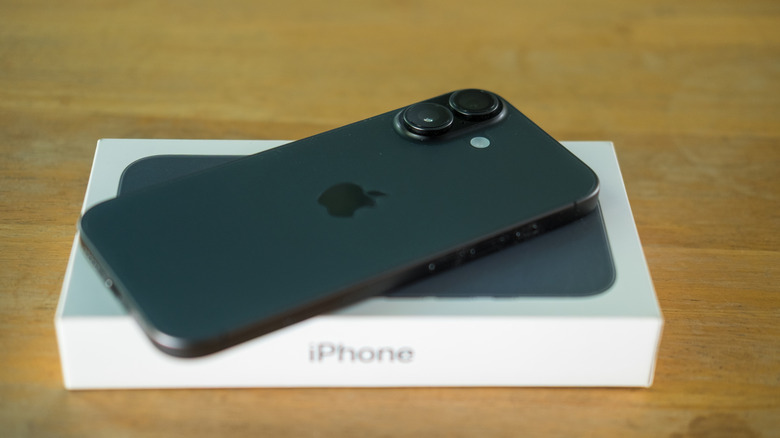
After several years of neglecting the base model, Apple finally launched the iPhone 17 with nearly everything you could ask for. For starters, it now offers the same excellent 120Hz ProMotion display that‘s found on the more expensive iPhone 17 Pro models. You also get upgrades to the two rear-facing shooters and a new Center Stage front-facing camera that lets you capture selfies with a wider field of view, thanks to the square sensor.
Performance, as usual, is fantastic, thanks to Apple’s in-house A19 chip and 8GB of RAM. Despite being priced at the same $800 as last year’s iPhone 16, the iPhone 17 doubles its base storage capacity from 128GB to 256GB. The bottom line is that the iPhone 17 is one of the best smartphones you can buy, and this year, it isn’t held back by limitations Apple has previously imposed to upsell the Pro models. In fact, according to Counterpoint Research, the iPhone 17 was the best-selling smartphone in the first quarter of 2026, beating the more capable iPhone 17 Pro and Samsung’s budget-friendly options.
That said, there are still phones out there that beat the iPhone 17 in other features. From smartphones with multi-day battery life to devices with internals so powerful that they can handle high-octane gaming, here are five iPhone 17 alternatives to consider in 2026.
1
Samsung Galaxy S26 Ruslan Lytvyn/Shutterstock Samsung and Apple have been rivals in the smartphone space for as long as it has existed. Despite Google’s Pixel devices being the closest thing Android has to an iPhone equivalent, people opt for Samsung’s smartphones because they often have the edge in performance and features. The base Galaxy S26 might be the most boring device in its lineup, but it also has no notable flaws. It comes in a compact chassis, sporting a 6.3-inch AMOLED display with HDR10+ support and a high refresh rate.
The phone is powered by the flagship Snapdragon 8 Elite Gen 5 SoC and 12GB of RAM. Its base version is currently priced at $800, which gets you 256GB of storage — Samsung does push discounts pretty regularly, though. It one-ups the iPhone 17 by offering a third camera on the back — a 3x optical zoom lens. This lets you punch in closer to subjects while retaining detail.
Like the iPhone 17, the Galaxy S26 is eligible for up to seven years of operating system updates. Samsung has had a decent track record with Android updates recently, so if you’re looking for a phone that can last you more than a few years, the Galaxy S26 is a safe bet. Plus, One UI is one of the most customizable versions of Android and comes with a host of useful AI features, making the Galaxy S26 one of the best compact smartphones you can buy.
2. OnePlus 15
OnePlus has always stuck to its flagship killer formula of producing high-end smartphones that undercut mainstream offerings by a noticeable margin. At $900, the OnePlus 15 is no different. It goes head-to-head with devices like the Galaxy S26 Ultra and the iPhone 17 Pro Max — phones that cost several hundred dollars more. Compared to the base iPhone 17, you’re getting a chipset that’s better equipped to handle competitive games, especially paired with the larger 6.78-inch AMOLED display that can hit refresh rates of up to 165Hz in supported games.
In our review of the OnePlus 15, we praised its performance but were especially impressed by its nearly two-day battery life. Unlike mainstream smartphones sold in the U.S., the OnePlus 15 packs in a denser 7,300 mAh silicon-carbon battery with support for up to 80W of wired charging, or up to 120W in other regions. Even better, OnePlus throws in the power adapter for free.
The phone runs OxygenOS, which is arguably one of the most feature-rich variants of Android, alongside One UI. OnePlus has been focusing more on animations and performance in OxygenOS recently, and in our experience, the OnePlus 15 is noticeably snappier than modern iPhones. Of course, you get a host of AI features and other conveniences like a built-in app locker and a very customizable lock screen. The $700 OnePlus 15R is also a great performer if you’re looking for an affordable alternative.
3. Motorola Razr 2026
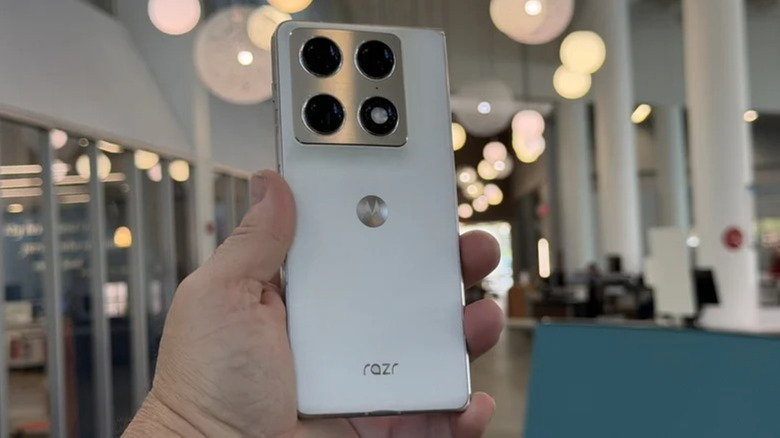
As feature-packed as the iPhone 17 is, there’s no denying that it is a pretty boring smartphone, especially in a world where foldables, gaming phones, and other experimental form factors also exist. This is why the $800 Motorola Razr 2026 is a breath of fresh air, considering the only other mainstream flip-style phone being sold in the U.S. — courtesy of Samsung — costs $1,100. The Motorola Razr does cut a few corners to hit this price point. Most notably, the MediaTek Dimensity 7450X is a mid-range chip that’s not meant to go head-to-head with the Apple A19 or Snapdragon 8 Elite Gen 5.
The Razr, however, trades a bit of performance for a design that’s definitely going to be a conversation starter. When unfolded, you get a 6.9-inch 120Hz AMOLED display with support for Dolby Vision and HDR10+, and a peak brightness of 3,000 nits. The outer display is a smaller 3.6-inch AMOLED panel that can hit a refresh rate of up to 90Hz. The Motorola Razr offers a dual 50-megapixel rear camera setup, comprising a wide and an ultrawide shooter.
The phone comes in four unique colors and finishes
It’s also packing in a surprisingly large 4,800 mAh battery with support for up to 30W of wired charging. In this space where every manufacturer keeps shoving AI features in our faces, the fact that the Razr’s outer screen can serve as a quicker way to interact with Gemini Live actually seems useful.
4. RedMagic 11S Pro
The A19 chip that powers the iPhone 17 is no slouch. It can handle your everyday set of apps just fine, as well as some very graphically demanding titles. Paired with its 120Hz refresh rate, it’s a decent buy if you’re a smartphone gamer. Those looking to get competitive, though, should consider the RedMagic 11S Pro. It’s a dedicated gaming smartphone that delivers maximum power while also bundling in unique hardware features, like liquid cooling, that make longer gaming sessions more sustainable.
It’s powered by the Snapdragon 8 Elite Gen 5 SoC, 12GB of RAM, and 256GB of fast UFS 4.1 Pro storage. Its predecessor, the RedMagic 11 Pro, currently tops AnTuTu’s benchmark rankings among Android smartphones. At 6.85 inches, it is noticeably larger than the iPhone 17 — though it is in a class of its own with a 144Hz refresh rate and a touch sampling rate of nearly 3,000Hz. This translates to a gaming experience that feels extremely responsive and fluid. What’s even cooler is that the display is completely notchless, with the front-facing camera hidden behind the panel.
You also get capacitive shoulder triggers that certain games can take advantage of. The phone packs in a duo of 50-megapixel wide and ultrawide lenses. The 7,500 mAh silicon-carbon battery is another highlight. It can be topped up wired or wirelessly at the same 80W charging speed. Pricing starts at $850, which is extremely competitive given the phone’s raw horsepower.
5
iPhone 17 Pro Vadym Plysiuk/Getty Images If you’re already fond of everything the iPhone 17 does well, then its elder sibling is perhaps the easiest to recommend. The iPhone 17 Pro is designed for the power user. It’s rocking Apple’s most powerful smartphone chip, the A19 Pro. You get a flagship triple-camera setup on the rear with support for Dolby Vision and ProRes recording. With 12GB of RAM compared to 8GB on the iPhone 17, you are also set to receive the more powerful version of Siri AI with iOS 27.
At $1,100, the iPhone 17 Pro is considerably more expensive than the base iPhone 17. The inclusion of an 8x telephoto lens means the iPhone 17 Pro captures noticeably better-looking zoomed-in shots. It also adds the LiDAR scanner, which does have its uses in niche applications like Measure and Apple Clips.
If a smartphone with a great display and a capable camera system is all you’re looking for, then paying extra for the Pro doesn’t make much sense. However, if you want the best that Apple has to offer and care enough about having the best performance, camera, and battery life, then the iPhone 17 Pro is an easy sell. You can also pick up the flashy new iPhone Air that we reviewed at $1,000, but it actually trades an ultrawide camera and a bigger battery for a slimmer form factor.