
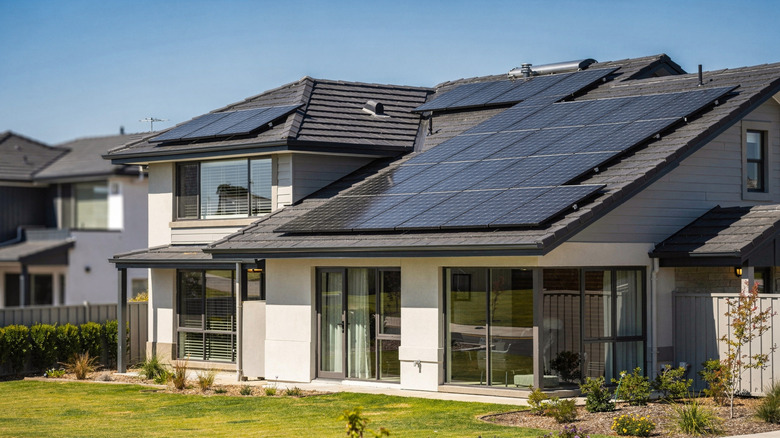
What’s The Difference Between Bifacial And Monofacial Solar Panels?
Unless your electric bill is included in your rent, you’ve probably noticed <a href="https://jordangazette.com/5-features-the-macbook-air-has-that-the-macbook-neo-doesnt/”>that electric rates have been steadily increasing over the last several years. According to the U.S. Energy Information Administration, rates have increased faster than inflation since 2022. On average, rates increased by 13% between 2022 and 2025, but some areas of the U.S. saw even higher price hikes. If you cringe every time you see your electric bill in the mailbox, you may be considering solar panels.
Solar requires an upfront investment, and it can be difficult to calculate how much you’ll save. You should talk to a few local companies for estimates on both installation costs and potential savings. EnergySage, an online comparison marketplace, estimates that you could save between $37,000 and $154,000 over 25 years. Once you start researching solar panels or talking to experts, you’ll probably come across two terms you may not have heard before: bifacial and monofacial.
Monofacial solar panels only absorb sunlight from the front side. These types of panels have been around for decades and are still the most commonly used. Bifacial panels, on the other hand, absorb sunlight from both sides of the panel. The back side captures light reflecting from the roof, ground, or even nearby surfaces. Selecting the right solar panel option for your home can make a world of difference when it comes to energy production and return on investment, so here’s what you should know.
The pros and cons
Like with most things in life, there are advantages and disadvantages to both types of panels. Monofacial solar panels are typically less expensive to install, while bifacial panels are more expensive, at least at first, averaging about 15% to 25% more upfront. When you take a closer look at overall savings over the life of the panels, however, bifacial panels come out ahead. The levelized cost of electricity (LCOE) over 25 years is about 25% lower for bifacial panels than monofacial systems.
Monofacial solar panels are typically easier to install and tend to weigh less than bifacial panels, which have a more complicated installation process and require more elevation and spacing to more easily capture reflected light. Bifacial panels also work best on light-colored roofs, whereas monofacial panels can be installed on any type of roof. Both types of panels are typically very durable, though the glass-on-glass design of bifacial panels is more resilient. Bifacial panels also typically have slightly longer power and product warranties than monofacial panels.
When it comes to performance, monofacial solar panels are very predictable, while bifacial panels are more dependent on reflectivity. These types of panels may be best if you have limited space, a bigger upfront budget, and long-term goals. Monofacial panels work better on large rooftops and are a great choice if you have a more limited budget.