Britain’s drive to establish itself as a global artificial intelligence powerhouse is heading for a direct confrontation with its legally binding climate commitments, after planning documents revealed that the country’s first “nationally significant” data centre would be fired by gas rather than clean energy.
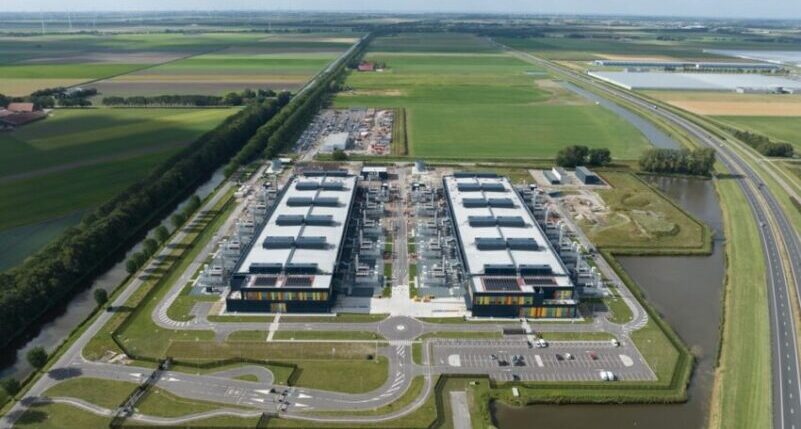
The £2 billion Wapseys Wood development in Buckinghamshire, backed by SDC Capital Partners, would consist of up to three hyperscale data centre buildings, each drawing as much as 100 megawatts of power. Crucially, it would also feature an on-site gas turbine energy generation centre capable of producing between 270 and 350 megawatts, which developers describe in submitted documents as necessary to deliver a “resilient and reliable power supply”.
The scheme is the first data centre proposal to be accepted for consideration under the government’s nationally significant infrastructure regime, a designation that hands the final decision to the communities secretary, Steve Reed, rather than the local authority. If waved through, it would rank among the ten largest sites of its kind in the UK, with its promoters claiming the development would create 400 jobs and deliver roughly 5 per cent of domestic computing demand over the next five years.
The row over Wapseys Wood reflects a wider bottleneck that is reshaping the economics of Britain’s digital infrastructure. With grid connection queues stretching for years, developers are increasingly bypassing the electricity network altogether and turning instead to on-site generation, or to the gas grid.
Figures from Future Energy Networks, the trade body representing pipeline operators, show that 113 applications have been lodged by data centre developers over the past two years, with enquiries in 2025 running at roughly three times the level of the previous year. Seven of those applications have already secured agreements to connect. Should every one of them proceed, they would collectively consume enough gas to heat 1.3 million homes.
Toby Perkins, the Labour MP who chairs the environmental audit committee, warned that the scale of the demand merits serious political attention. “That a small number of centres could demand the same energy as millions of homes should give us pause for thought,” he said. “Data centres may well play an important role in growing our economy, but we should be careful about approving projects that put the net zero transition at risk.”
Critics argue that Wapseys Wood is merely the most visible example of an emerging trend. Donald Campbell, director of advocacy at Foxglove, a non-profit campaigning for more accountable technology policy, said the developers had made no effort to dress the project up as environmentally friendly. He cautioned that if the bulk of the pending gas grid applications were approved, “climate pollution from big tech will go through the roof”.
The shift mirrors developments in the United States, where hyperscalers have moved aggressively to secure their own generation. Meta is building seven new natural gas plants to feed its Hyperion campus in Louisiana, a site that could eventually draw up to 5 gigawatts. Microsoft, meanwhile, is working on plans for a gas-fired plant in West Texas of similar scale.
The carbon implications for Britain are material
Oliver Hayes, head of policy and campaigns at Global Action Plan, estimated that the Wapseys Wood turbine alone could emit around half a million tonnes of carbon dioxide annually, set against total UK emissions of 367 million tonnes. “Tech bosses claim the lack of grid connections threatens their AI goldrush,” he said. “But ministers must not allow them to dash for gas instead.”
Under current planning rules, any proposed new gas plant must set out a credible path to decarbonisation. The Wapseys Wood developers have pointed to a future switch to clean-burning hydrogen. Yet industry specialists are sceptical that the technology will be commercially deployable on the timescales required. Marten Ford, advisory project leader at Aurora Energy Research, said that although the current test focuses on technical readiness, it does not address cost competitiveness. “Given current market conditions, near-term conversion to hydrogen is unlikely, with feasibility more plausible later in the 2030s,” he said.
A spokesman for the Wapseys Wood project defended the proposal, saying it responded to “an urgent need for new data centres in the UK” and would bring significant economic, employment and environmental benefits. He stressed that the scheme remains at pre-application stage and that SDC Capital Partners would continue engaging with the local community, including through a second round of public consultation later this year.
The government, for its part, insisted that the AI build-out and climate targets can be reconciled. “Data centres are vital to driving growth and AI is increasingly part of the high-tech solutions that will help us solve environmental challenges,” a spokesman said, adding that the AI Energy Council is actively seeking investment in new clean power sources and that ministers are working to accelerate grid connections and curb energy costs for eligible projects.
For Britain’s small and mid-sized technology businesses, the stakes of the debate are significant. Cheap, abundant computing capacity is increasingly the raw material of enterprise innovation, and delays to new infrastructure risk pushing AI workloads offshore. But a dash for gas, if replicated across the pipeline of pending projects, could saddle the UK with a new generation of carbon-emitting assets just as other sectors are being asked to decarbonise at pace. The Wapseys Wood decision, when it lands on Steve Reed’s desk, will offer an early indication of how Whitehall intends to balance those competing imperatives.