Saudi Arabia’s Real Estate Registry (RER) and Real Estate General Authority (REGA) sandbox platform has been described as a global first in sovereign-level tokenisation infrastructure. But beyond the headlines, the initiative signals something more structural: the digitisation of property markets at national scale.
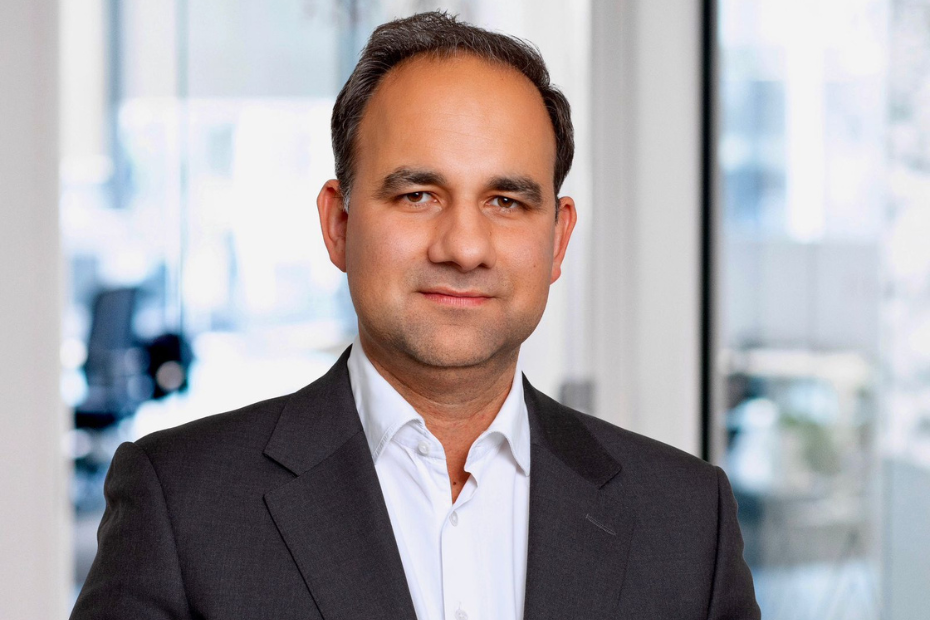
For Adam Popat, CEO of SettleMint, the infrastructure provider behind the blockchain backbone, the significance lies in the scale of the problem being addressed.
“Saudi Arabia’s RER and REGA sandbox platform tackles three structural problems in real estate at scale: trust, liquidity, and access.”
Real estate markets have long struggled with opacity, fragmented data, and inconsistent due diligence. The Saudi model aims to reset that foundation.
“By issuing every resident a digitally verified blockchain credential and assigning every property a unique on-chain identity, the system creates a transparent, tamper-proof ownership and compliance layer,” Popat explains.
The result, he says, is a reduction in fraud and a standardisation of due diligence processes. Trust, often assumed but rarely systematised, becomes embedded into infrastructure.
“Powered by SettleMint DALP (Digital Asset Lifecycle Platform), the infrastructure runs on a secure, high-performance, scalable blockchain layer, integrating with government and banking systems while using smart contracts to automate settlement and compliance.”
At scale, Popat is clear that this is not experimentation
“At scale, this is not merely a sandbox, it is a production-grade national digital backbone for real estate, already powering live, regulated transactions in a controlled environment and redefining how property markets operate.”
In an ecosystem increasingly crowded with proptech platforms offering tokenised property investments, SettleMint positions itself differently.
“SettleMint’s role is purely that of a technology provider, not an operator,” Popat says. “We deliver the production-grade blockchain stack, smart contracts, digital asset lifecycle tooling, and secure integration layers that enable tokenisation at national scale.”
The distinction is deliberate. SettleMint does not issue assets, operate marketplaces, or intermediate transactions. Instead, it provides the underlying infrastructure on which regulated players can build.
Proptech firms, by contrast, sit at the distribution layer
They onboard investors, structure offerings, and operate marketplaces. “All of this innovation remains fully aligned with REGA guidelines and operates on RER’s sovereign blockchain infrastructure,” Popat adds, noting that deployment takes place within secure, Saudi Arabia-based data centres to ensure national control and regulatory integrity.
Liquidity as structural shift
Perhaps the most transformative development is the emergence of secondary markets. A regulated secondary trading platform is now in development, a move that could fundamentally change how property behaves as an asset class.
“Secondary liquidity fundamentally changes real estate from a static, long-hold asset class into a dynamic, price-discoverable market,” Popat says.
Historically, property valuations update only when entire assets change hands. With tokenised fractional units trading in smaller denominations, price signals can emerge continuously.
“When tokenised real estate units trade in smaller denominations, market demand and supply begin to shape transparent, real-time pricing signals. This improves valuation accuracy, reduces information asymmetry, and creates more efficient capital allocation.”
For investors, the implications are significant. Fractional ownership combined with secondary liquidity reduces lock-in periods and improves portfolio flexibility.
“Structurally, this moves real estate closer to capital market behavior, but within a regulated, compliant framework,” he says.
With Dubai Land Department launching its own secondary trading platform, questions of competition naturally arise. Popat frames the development differently.
“We see these initiatives as complementary and part of a broader regional evolution rather than direct competition.”
Tokenisation at sovereign scale is not a zero-sum game, he argues. Parallel initiatives across jurisdictions may, over time, support standardisation in digital identity, compliance frameworks, and interoperability.
“Rather than competition, this represents ecosystem building at a regional scale,” Popat says, adding that harmonisation strengthens cross-border capital flows and foreign direct investment within the GCC.
Institutional readiness
While tokenisation promises faster settlement and fractional access, institutional capital remains cautious. According to Popat, three issues must be resolved.
“Tokenisation promises fractional ownership and faster settlement, but institutional capital typically looks for three things before fully committing: legal enforceability, embedded compliance, and institutional-grade custody.”
Legal enforceability requires that tokens represent rights recognised under property law and anchored to official land registries. In Saudi Arabia, that linkage is addressed through REGA’s regulatory framework and RER’s sovereign infrastructure.
Compliance, meanwhile, must be embedded directly into code. “Powered by SettleMint DALP, the platform implements an enhanced ERC 3643 framework with more than 50 interconnected smart contracts governing identity verification, transfer restrictions, investor eligibility, and lifecycle controls directly on chain.”
Custody must also meet institutional standards, with RER serving as custodian of property records within a regulated sovereign environment.
Beyond regulation, national tokenisation requires resilient technical architecture.
“A national tokenisation backbone must be cloud native, fully containerised, and orchestrated through Kubernetes to allow automatic horizontal scaling as transaction volumes grow,” Popat explains.
Load balancers, distributed node clusters, stress testing, and embedded identity verification are not optional features but architectural requirements.
Importantly, the initiative builds on systems already operating at scale, including RER’s deed management system and national platforms such as Yakeen and SADAD, which serve millions securely.
Innovation under supervision
Saudi Arabia’s regulators have adopted what Popat describes as a structured sandbox model.
“Sovereign regulators in Saudi Arabia are balancing innovation with investor protection by designing the sandbox as a controlled pathway to full scale deployment, not an unrestricted experiment.”
Participation is permissioned, compliance obligations are defined upfront, and the phased rollout allows regulators to assess market behaviour before broader scaling.
The result is innovation under real market conditions, but within clear supervisory boundaries.
Popat does not see tokenised real estate as a niche experiment
“I do not see tokenised real estate remaining a niche innovation. Over the next five years, it is far more likely to become embedded into mainstream property infrastructure across the GCC, with adoption progressing in a phased and regulator led manner.”
Tokenisation, he argues, will integrate into land registries, settlement systems, and regulated investment products. Fractional ownership and programmable compliance will increasingly become standard components of property markets.
As secondary markets mature and regulatory alignment strengthens, the GCC could become a global reference point for responsible, sovereign-scale digital asset infrastructure.
For SettleMint, the focus remains clear
“At SettleMint, we look forward to supporting governments worldwide in building digital asset platforms the right way, with security, compliance, and long term sustainability at the core.”
In an era where digital assets are often associated with volatility and hype, Saudi Arabia’s approach suggests a different trajectory — one where tokenisation is not speculative experimentation, but institutional infrastructure.