
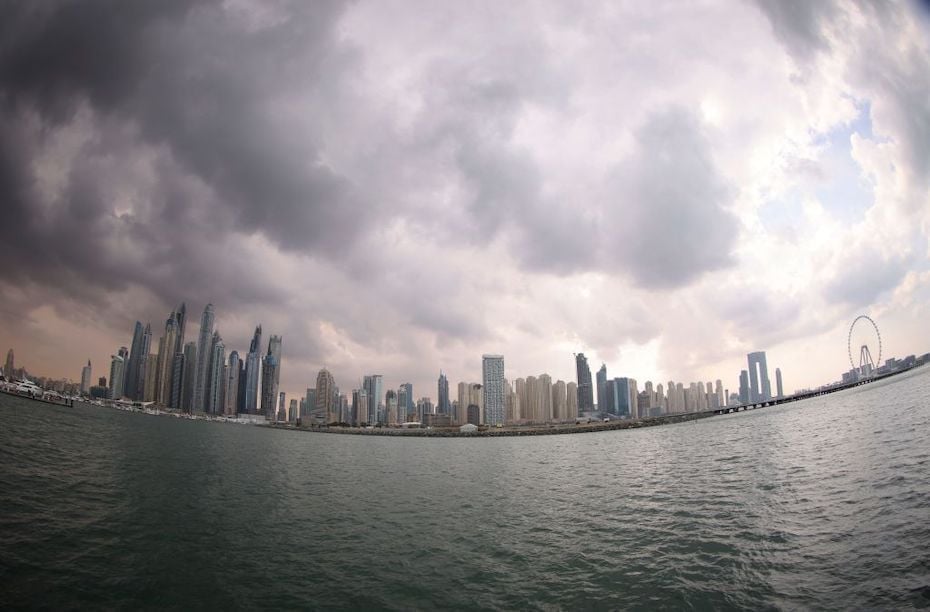
As the Holy Month of Ramadan begins in the latter half of February and continues through mid-March, residents across the UAE can expect generally moderate winter conditions, according to the National Centre of Meteorology (NCM).
In its latest forecast, the NCM said daytime temperatures will remain moderate during the first half of the fasting month, with a gradual increase expected toward the latter half. Nights are forecast to be moderate to pleasant overall, turning relatively cool during late-night and early-morning hours, particularly in inland and mountainous areas, according to a WAM report.
Read more-Humidity, rising heat: Are these the first signs of summer in the UAE?
Climatological data for this period indicates that average maximum temperatures typically range between 26°C and 32°C. However, some inland regions could see temperatures climb as high as 40°C around midday.
Meanwhile, average minimum temperatures are expected to range between 18°C and 21°C. In mountainous and inland locations, early morning temperatures could fall to near or below 0°C.
Rainfall and pressure systems
Meteorologists noted that this time of year is generally influenced by the extension of the Siberian High pressure system. While it often brings stable conditions, occasional weakening may allow low-pressure systems to move in from the west or east.
“When these systems are accompanied by an upper-level trough, they may enhance cloud formation and increase the probability of rainfall across the country,” the report stated.
Long-term forecasts suggest rainfall totals will likely be around or below the seasonal average of approximately 8mm for the month. For comparison, the highest 24-hour rainfall recorded during this period reached 287.6mm in Al Shuwaib on March 9, 2016.
Fog, humidity and winds
Humidity levels are expected to rise during nighttime and early morning hours, creating favorable conditions for fog and mist in certain areas. Average maximum relative humidity during the night and early morning is forecast to range between 70 per cent and 85 per cent, while daytime minimum levels are expected to hover between 20 per cent and 35 per cent.
Winds are typically southeasterly during the night and morning, shifting to northwesterly by afternoon and evening due to land and sea breeze circulation. The NCM warned that winds may occasionally strengthen with deepening pressure systems, potentially leading to blowing dust and sand in exposed areas.
Average wind speeds are projected at around 13 km/hr. Historically, the strongest wind gust recorded during this period reached 141 km/hr at Jebel Mebreh on February 27, 2010.
Fasting hours will begin at approximately 12 hours and 46 minutes at the start of Ramadan, gradually increasing to around 13 hours and 25 minutes by the end of the month in Abu Dhabi and nearby areas, with minor variations depending on location.