Healthcare is evolving fast in the Middle East and Africa, and technology is leading the charge. From artificial intelligence (AI) assisted triage to mobile imaging and helium-free MRI, medtech innovations are helping hospitals work smarter, reach more patients and deliver care sustainably.
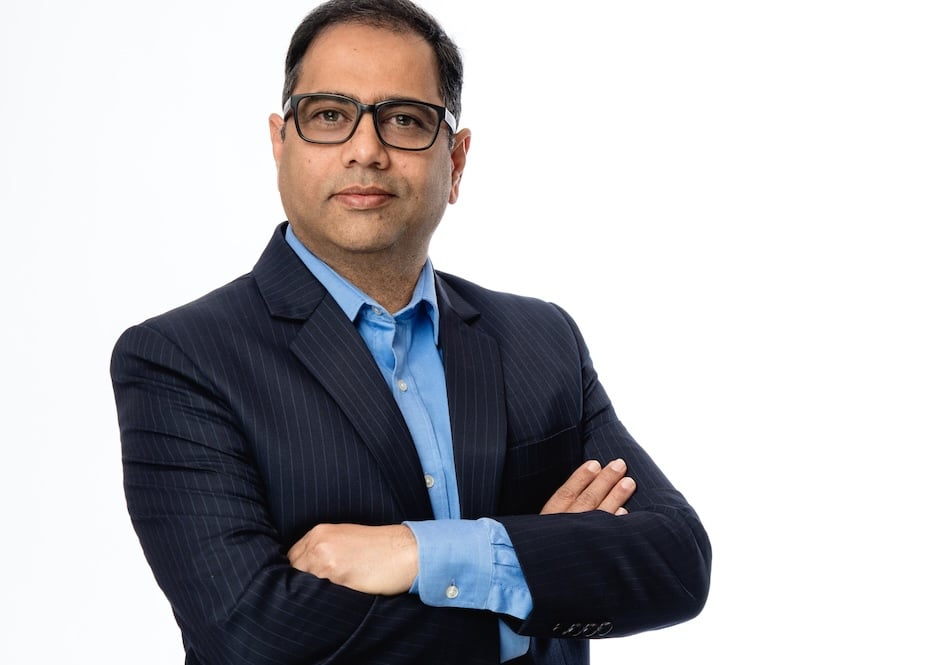
Here, Vivek Kanade, MD of Siemens Healthineers Middle East & Africa, talks to Gulf Business about how these tools are improving outcomes and also transforming healthcare into a driver of economic growth and long-term wellbeing.
Healthcare is increasingly being viewed as an economic growth driver in the GCC. How can medtech innovation directly support long-term population wellbeing while easing pressure on national healthcare budgets?
Across the Middle East and Africa, healthcare systems are facing a dual challenge: rapidly growing demand driven by demographics and chronic disease, alongside the need to manage costs sustainably. Medtech innovation plays a critical role in addressing both.
Technologies that enable earlier diagnosis, faster decision-making and more efficient care pathways help shift healthcare from a cost burden to a long-term economic investment. For example, advanced imaging combined with AI can detect disease earlier, reduce unnecessary repeat scans, shorten hospital stays and support more targeted treatment. This not only improves patient outcomes but also lowers downstream costs for health systems.
Equally important is operational efficiency. Digital tools that optimise workflows, manage imaging demand and support clinical decision-making allow healthcare providers to do more with existing resources.
In regions where budgets must stretch across large and diverse populations, this efficiency directly translates into resilience, productivity and long-term population wellbeing.
Workforce shortages and clinician burnout are becoming structural issues. How realistic is AI-driven triage in offloading clinical workloads, and what needs to change inside hospitals for it to work at scale?
AI-driven triage is not a future concept. It is already delivering measurable impact when implemented thoughtfully. Across radiology and diagnostics, AI can prioritise urgent cases, automate repetitive tasks and support faster reporting, allowing clinicians to focus their expertise where it matters most.
However, for AI to scale successfully, hospitals must move beyond viewing it as a standalone tool. Integration into clinical workflows is essential, alongside strong data governance, clinician trust and appropriate training. AI works best as a clinical assistant, not a replacement, augmenting human decision-making while preserving accountability and quality of care.
In the Middle East and Africa, where specialist shortages are particularly acute outside major urban centres, AI-enabled workflows can significantly <a href="https://jordangazette.com/uae-leaders-extend-ramadan-greetings-to-arab-and-islamic-nations/”>extend clinical capacity. The key is pairing technology adoption with organisational change, leadership commitment and a clear focus on patient outcomes.
Moving from reactive treatment to preventive care requires a different technology backbone. What infrastructure is essential to enable predictive tools such as digital patient twins, and where do regional health systems still fall short?
Predictive care depends on connected data, interoperable systems and advanced analytics. Technologies such as digital patient twins require high-quality imaging, longitudinal patient data, AI-enabled analysis and secure digital platforms that can integrate across departments and care settings.
Many health systems in the region have made strong progress in digitisation, but challenges remain around interoperability, data standardisation and scaling innovation beyond flagship hospitals. Preventive care also requires investment in population-level screening and analytics, not just acute care infrastructure.
The opportunity for the Middle East and Africa lies in leapfrogging legacy models, building integrated digital ecosystems that support prediction, prevention and personalised care from the outset, rather than retrofitting systems later.
Access remains uneven outside major cities. How can innovations like helium-free MRI and mobile diagnostics help close regional care gaps while still making economic sense for providers?
Access is one of the most pressing healthcare challenges across the Middle East and Africa. Innovations such as helium-free MRI, mobile imaging and point-of-care diagnostics are designed specifically to address this.
Helium-independent MRI systems significantly reduce infrastructure requirements, making advanced imaging viable for smaller hospitals and remote locations. Mobile X-ray and ultrasound solutions bring diagnostics directly to patients, reducing travel, delays and referral bottlenecks.
When combined with digital connectivity, including mobile labs and drone-enabled sample transport, these technologies allow providers to expand reach without duplicating high-cost infrastructure. This makes economic sense while advancing equitable access to care, particularly for underserved communities.
Sustainability is no longer optional in healthcare
How do technologies such as low-dose CT for cardiac care contribute to long-term system resilience without compromising diagnostic quality? Sustainability and clinical excellence are increasingly inseparable. Technologies such as photon-counting CT enable significant radiation dose reduction while delivering higher image quality and diagnostic confidence, particularly in cardiac and complex imaging.
Lower dose protocols enhance patient safety, reduce repeat imaging and support long-term system resilience by lowering energy use and operational costs. At scale, these efficiencies contribute meaningfully to sustainability goals without compromising clinical outcomes.
For healthcare systems under pressure to deliver more with less, sustainable MedTech innovation is not a trade-off – it is a strategic enabler of future-ready care.