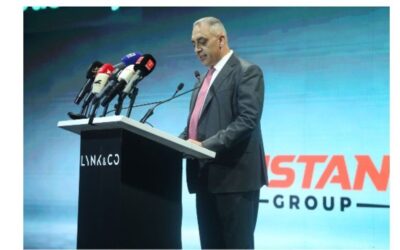
Aqaba – The strategic oil pipeline project extending from the Iraqi city of Basra to the city of Aqaba has returned to the forefront of the scene with unprecedented strength, driven by a shared will that was evident during the in-depth official talks that took place in the Iraqi capital, Baghdad, last Thursday, which brought together a ministerial delegation headed by the Minister of Industry, Trade and Supply, Yarub Al-Qudah, and including the Ministers of Energy and Mineral Resources, Saleh Al-Kharabsheh, Transport, Nidal Al-Qatamin, and Investment, Tariq Abu Ghazaleh, with the Iraqi Prime Minister, Ali Al-Zidi.
This strategic step reflects a real and deep desire on the part of the two countries to accelerate the pace of completion of one of the largest integrated energy projects in the Middle East region.
This project establishes a new and pivotal phase of shared Arab national security amidst highly delicate and complex regional and international circumstances.
These circumstances necessitate concerted efforts and a unified vision to confront escalating challenges and secure the future of coming generations through robust economic partnerships that remain resilient to unforeseen changes, thereby creating a sustainable development reality that benefits all the peoples of the region.
This intensified diplomatic and economic activity comes at a time when this vital project is acquiring increasing and multiplied geostrategic importance for Iraq, which seeks to diversify its oil export routes and reduce its historical dependence on its southern ports on the Arabian Gulf.
This is especially crucial given the ongoing rapid geopolitical shifts sweeping the region and the significant security and logistical challenges associated with maritime traffic in the Strait of Hormuz, including the closures and persistent threats.
These regional challenges have made the search for safe and sustainable export routes an existential necessity for the Iraqi economy. The Jordanian corridor across the Red Sea provides this as a secure and reliable strategic option, ensuring the uninterrupted flow of Iraqi oil to global markets, especially given the escalating global tensions.
This has compelled oil-producing nations to seek logistical alternatives that offer the security and political stability that Jordan provides.
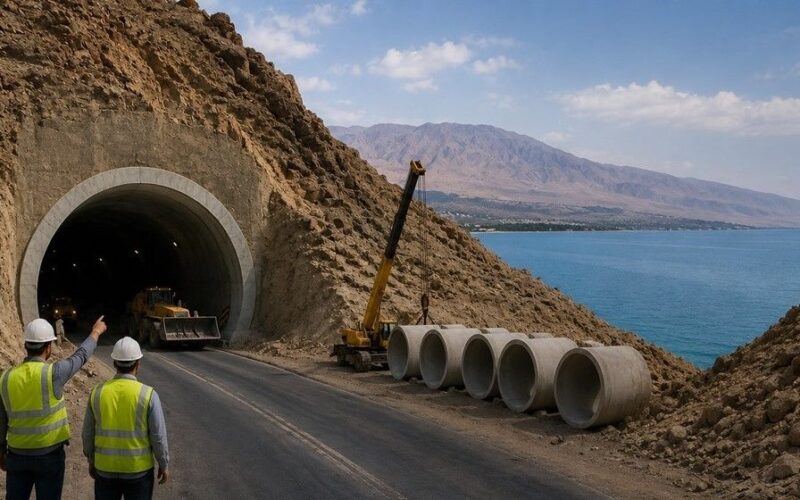
This massive economic artery stretches for approximately 1,700 kilometers, originating in the oil-rich Basra fields, passing through the strategically located Iraqi city of Haditha, and culminating at the port of Aqaba on the Red Sea coast.
The first phase of this ambitious vision aims to construct and equip the pipeline with state-of-the-art technology within Iraqi territory before completing its vital extension into Jordan.
The project’s design and operational capacity, according to the announced engineering plans, reaches approximately 2.5 million barrels per day. It also has the potential to expand Iraqi oil exports in the future through three main outlets: Aqaba in Jordan, Banias in Syria, and Ceyhan in Turkey.
This grants economic decision-makers in Baghdad exceptional flexibility in managing their oil exports and significantly reduces the catastrophic risks associated with relying on a single export outlet that could be vulnerable to any unforeseen political or security fluctuations that might disrupt international trade.
On the Jordanian side, this project represents an exceptional economic
boost and a pivotal turning point in the national economy. It will provide the Kingdom with approximately 150,000 barrels per day of crude oil under preferential contractual arrangements that will ensure the stability of the energy bill, which has burdened the general budget for many years.
Furthermore, the project will generate direct and increasing financial returns for the state treasury, stemming from transit fees, concession rights, and the establishment of massive storage and export facilities in the Aqaba Special Economic Zone.
This investment inflow also enhances Jordan’s position as a leading regional hub for energy and integrated logistics, opening the door wide to attracting huge foreign investments in the petrochemical and manufacturing sectors that benefit from the availability of raw materials at competitive prices and low transportation costs, which will positively affect the balance of payments and significantly reduce the Kingdom’s trade deficit.
In this regard, former Minister of Transport, Dr. Lina Shbeeb, emphasized to Al-Ghad newspaper the importance of the strategic oil pipeline project between Basra and Aqaba. She stated that it transcends being merely a traditional oil transport project, becoming a strategic pillar for reshaping the economic and energy cooperation system in the entire region.
She affirmed that these initiatives reflect a genuine desire to enhance regional economic integration and solidify the concept of shared Arab national security through the establishment of strategic infrastructure linking the Gulf, Iraq, and Jordan, with future extensions to European markets.
She explained the project’s contribution to diversifying energy routes and enhancing the resilience of supply chains amidst rapidly evolving geopolitical landscapes.
She positioned this strategic oil project for Jordan at the heart of a new regional energy axis, granting it a leading role as a logistical platform connecting Asia, Europe, and Africa, leveraging its unique geographical location, the Port of Aqaba, and its advanced transportation networks.
She added that the project opens the door to strengthening trilateral partnerships between Jordan and Iraq, with the potential for future expansion to include the Gulf Cooperation Council (GCC) countries.
Shbeib pointed out that one of the most important dimensions of the project is enhancing national and regional preparedness to deal with emergencies and crises by providing a safe and alternative route for oil flows in the event of any disruptions or military or security threats to shipping lanes or maritime routes.
She noted that recent events, particularly the military tensions in the region and the accompanying growing concerns about the potential closure of the Strait of Hormuz, have demonstrated the importance of having strategic alternatives that reduce reliance on a single shipping route.
She also emphasized that the project will bring about an unprecedented transformation in regional trade by reducing transportation costs, improving the efficiency of logistics services, and enhancing Jordan’s competitiveness as a regional hub for energy, storage, and re-export.
Furthermore, it will stimulate new investments in manufacturing, logistics, storage, and digital transformation, as well as develop energy-related industries, thereby boosting economic growth and providing new and sustainable sources of income for the Kingdom.
Shabib believes that Aqaba will be the primary beneficiary of this sovereign project, as it will bolster its position as a comprehensive regional logistics hub by connecting its port to regional and international transport networks and opening new horizons for import and export activity.
She noted that the impact of major infrastructure projects of this kind extends beyond the direct economic aspect, encompassing a comprehensive developmental dimension through the creation of thousands of direct and indirect job opportunities during the construction and operation phases.
Economic Interests and Strategic Integration: Expert Dr. Yasser Al-Ajlouni points out that the strategic oil pipeline project between Basra and Aqaba transcends its role as a mere oil transport project, forming a new cornerstone of Jordanian-Iraqi relations and revitalizing an Arab partnership based on economic interests and strategic integration.
He emphasized that the project represents one of the most important Arab national security projects, given its diversification of Iraqi oil export routes, its enhancement of energy security, and its reduction of risks stemming from geopolitical shifts in the region.
Al-Ajlouni added that the project holds significant economic benefits for Jordan, by enhancing the Port of Aqaba’s position as a regional energy and logistics hub, creating new investment and operational opportunities, increasing transportation, storage, and energy-related industries, and ensuring a stable oil supply for the Kingdom.
For Iraq, it provides an additional strategic outlet to the Red Sea and enhances the flexibility of its oil exports, reducing its reliance on southern ports alone.
He emphasized that current regional circumstances necessitate expediting the project’s implementation, setting aside narrow political considerations, as it represents an investment in the region’s future and a practical model for Arab economic integration.
He affirmed that the present stage presents a favorable opportunity to translate political will into a strategic project that serves the interests of both countries and promotes stability and development in the region.
For his part, strategic expert Dr. Yazan Al-Khatib affirms that the coastal city stands today on the cusp of a historic transformation that will make it one of the most important energy and logistics hubs in the Red Sea basin and the Middle East.
He explains that the arrival of the pipeline to Aqaba will be accompanied by the establishment of a massive infrastructure, including the construction of giant strategic crude oil storage tanks, the expansion and development of specialized marine berths in the ports to accommodate giant oil tankers, and the commissioning of advanced pumping stations and supporting facilities.
Al-Khatib added that this economic activity will inevitably lead to an unprecedented boom in the city’s real estate, tourism, and commercial sectors, to meet the needs of the workforce and international companies that have chosen Aqaba as their regional operations headquarters. This will place Aqaba among the world’s major economic cities and make it a prime destination for transcontinental investments.
Despite facing repeated delays and complex challenges related to the overwhelming security, financial, and technical circumstances that have plagued the region, this strategic project, whose framework agreement dates back to 2013, has witnessed rapid and promising developments today.
These developments reflect a strong and clear resurgence of the political and economic momentum supporting it, amidst a growing and firm conviction among both leaderships and peoples that this pipeline represents one of the most important Arab economic integration projects in the modern era.
The project reinforces Jordan’s secure strategic depth, linking the Levant to global trade routes, in a scenario that reaffirms the vitality and resilience of the Kingdom’s economy, its ability to adapt to changes, and its capacity to transform regional challenges into sustainable development opportunities that serve the aspirations of future generation.