
There are projects built with stone and cement, and there are projects built with a bigger idea: creating a place people want to return to.
Ayla, in Aqaba, looks like one of the experiences worth reading from this angle.
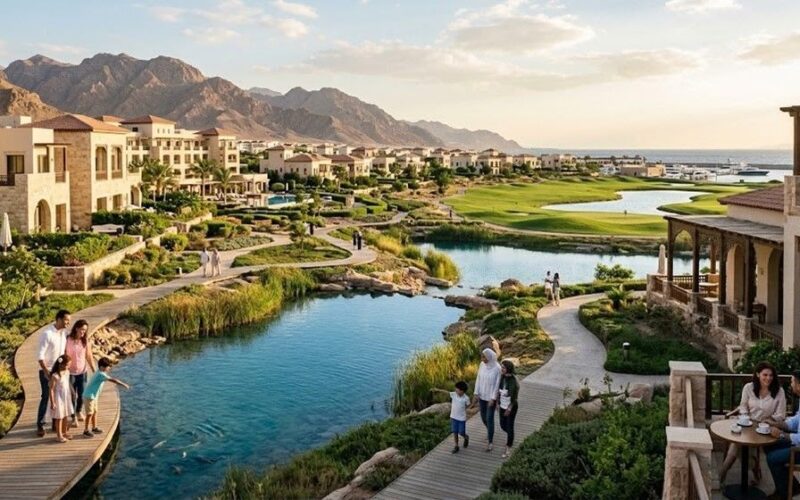
The story isn’t in the buildings, hotels, restaurants, and recreational facilities alone, nor in the lagoons, walkways, and green spaces. The story is in an integrated system that redefined the meaning of hospitality in Aqaba, linked investment to tourism, entertainment, services, and nature, and turned the place from a project into a repeatable life experience and presence.
This is precisely where the value of the Ayla experience lies.
A tourist might visit a place once out of curiosity, but returning requires something else: trust.
A family needs to trust that Aqaba will give them an experience worth the time and spending, that the visitor will find something new each time, and that the place becomes part of their memory, not just a passing stop.
Perhaps one of the most important indicators of Aqaba’s success today is that Jordanians themselves have become among its most frequent repeat visitors, and this isn’t just a tourism matter; it’s an economic one too, since domestic tourism means continuous activity for hotels, restaurants, cafés, transport, entertainment, and trade, and means the city succeeded in building a relationship with its visitor before needing to convince visitors coming from abroad.
At the heart of this equation, Ayla came to add a different model. A model that doesn’t treat the sea merely as a backdrop behind the hotel, but as part of an integrated experience, and doesn’t treat art and entertainment as just a hall and a stage, but as a spirit where feelings come together, and doesn’t view nature as a space to be consumed, but as an element that can be part of how the place itself is made.
Water features, natural spaces, and alternative environments can provide supporting elements for biodiversity, creating habitats and spaces that attract birds and wildlife, adding to the coastal and tourism scene a value that goes beyond traditional entertainment.
Here, tourism investment becomes more than hotel rooms and restaurants. It becomes an industry for life.
And this is the point we should learn from in Jordan: a successful tourism project doesn’t sell a room, it sells an experience; it doesn’t sell a view, it creates a memory; and it doesn’t wait for the tourist, it gives them a reason to return.
The economy, in the end, translates this experience into jobs, income, activity, and movement. Every repeat visitor means new spending, every event means activity, and every restaurant, hotel, and service means a chain of beneficiaries extending beyond the project’s own boundaries.
And if we add to that the growing activity in the Red Sea space, the picture becomes bigger than a single project or city; we’re looking at a region where a new economic and tourism network is forming, and Aqaba, by virtue of its location, isn’t a bystander to it, but has a real opportunity to be one of its gateways.
But behind Ayla lies a story worth pausing on: the story of believing in a place. Real investment doesn’t always begin when the opportunity is clear to everyone; it sometimes begins when the idea’s owner and the investor see what the place could become before others see it.
To put capital into a city means believing in its future, and to keep investing in it means turning the relationship from a transaction into a partnership with the place. Here I see the essence of “Made in Ayla.”
It isn’t just a marketing phrase; it’s an idea saying that investment can be made from love for a place, trust in the future, and belief in Jordan. And when investment meets love for the city, the result becomes bigger than a successful project; it becomes a more vibrant city, a more trusting visitor, a more diversified economy, and a tourism image more capable of competing.
So, perhaps the question isn’t: what did Ayla build?
The more important question is: what did Ayla make? And the answer, in my view, goes beyond the buildings; it made an experience, it made trust, and it made a reason to return.
This is the industry Aqaba and Jordan need: to make places that people don’t just visit… but long to return to.
Made in Ayla… with love for Aqaba, and with belief in Jordan.
Former Tourism and Environment Commissioner at the Aqaba Authority
Related Stories

Egg White Transformed into an Amber-Like Material

Will the Region Witness the Emergence of New Armed Groups?