One of the Arab paradoxes is that Arabs want to defeat Israel through ballot boxes in Israeli elections. This has become their upper ceiling in confronting Israel: searching for a solution among Israelis, hoping it might relieve the weary heads of Arabs.
There’s no difference between Netanyahu and Eisenkot. The former is quite clear, while the latter may try to beautify Israel’s face. But neither of them will stop the war. Those who overstate expectations will see something proving the opposite, because Eisenkot was a commander of the Israeli army and a member of the war cabinet during the early months of the Gaza war. If he forms the Israeli government, he will not withdraw from Syria, Lebanon, the Gaza Strip, or the West Bank, will not halt the war against Yemen, Iran, and Iraq, and will not declare a Palestinian state. These words are for those who hope for relief from within the Israeli establishment, to the point where delusion has reached the stage where the only priority is defeating Netanyahu, regardless of who the alternative is or who the heir is.
We are heading toward a major war, regardless of what becomes of the attempts to form an Israeli government. The war may even seem a solution for Netanyahu personally, allowing him to impose a state of security tension and confrontation that makes him the man who protects Israel and leads this phase, and dissolves Eisenkot into his agenda. In just a few days we’ll see the results of the American elections, and after that the whole region may be dragged into the “red hell,” with no deterrent.
The legal and security powers currently in place, both after the Israeli elections and the American ones, to launch a war or manage ongoing military operations belong to Donald Trump and Benjamin Netanyahu after the elections. In both the American and Israeli political systems, losing an election or entering a transitional period doesn’t strip the current executive authority of its constitutional powers to protect national security. This means Israel and Washington are on their way to war, especially given Iran’s current position.
All the military mobilization in the region confirms the war scenario. There may be readings warning of a wider explosion due to the Russian-Ukrainian file, which could drag all of Europe into a broad war. This may explain the calls in Europe and the United States to prepare and stockpile medicines and food, and this is the worst the region could face: a war erupting in a simultaneous context that reshuffles all the cards.
Some political analyses say Iran may soften its harsh conditions after the American elections as a tactic. This is merely a possibility, because information on the ground points to an Iranian plan to drown the countries of the region as long as Iran faces an attempt to drown it in the war, in a region already beginning to pay the price of this open confrontation and its political and economic repercussions.
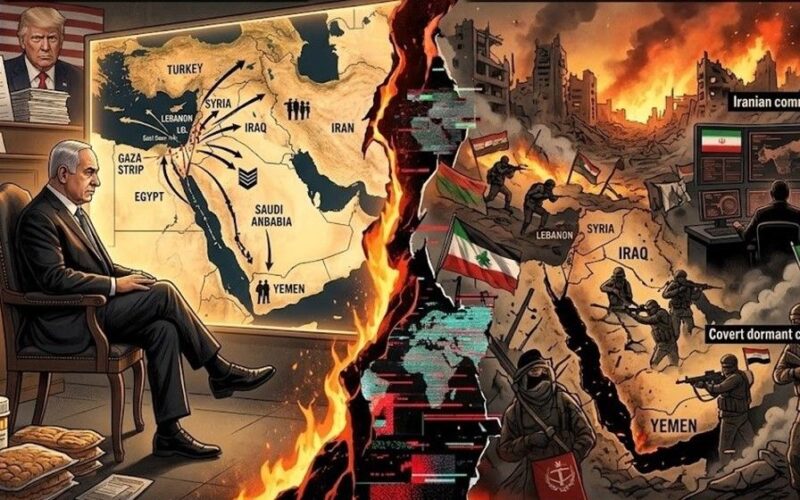
We cannot forget the worst-case scenario here: the spread of war flames to all the region’s countries, given the presence of dozens of organizations from Iraq to Syria, Lebanon, Yemen, and other countries, which will be active players across borders, or in countries where they currently appear to be dormant cells. This means security assessments must think deeply about the cost of the coming war, which is not merely air strikes.
Another title may emerge from it, namely spreading chaos within the countries themselves, or across borders, on the back of the war alignments. Then we will realize that we are not facing one war, but two wars, in which all slogans, headings, and agendas intertwine.
Related Stories

How are intelligence agencies and embassies analyzing the situation?

Will the Region Witness the Emergence of New Armed Groups?