
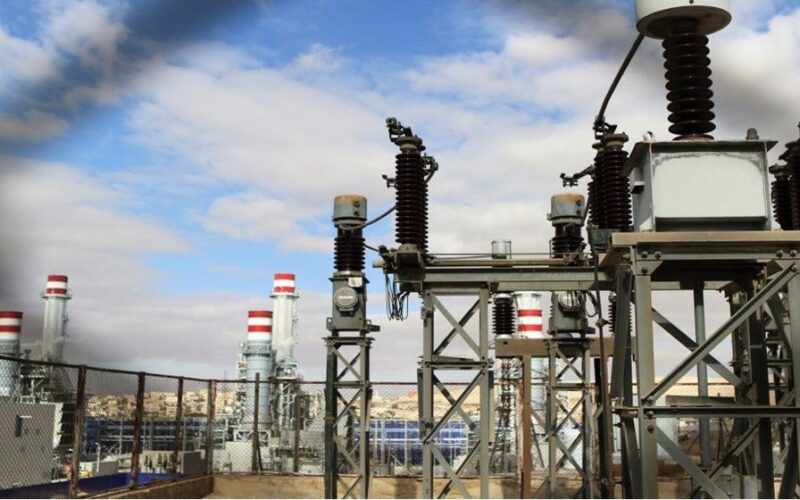
Jordan’s National Electric Power Company (NEPCO) said rising global oil prices directly affect electricity generation costs, noting that natural gas accounts for the largest share of the energy mix used for power generation and that its prices are partly linked to Brent crude under specific mechanisms in long-term supply contracts.
The company told Al Mamlaka that average generation costs are also affected by the extent of reliance on liquefied natural gas, diesel and heavy fuel oil, as well as the contribution of other energy sources to electricity generation.
According to company statistics for 2025 and through the end of August 2026 obtained by Al Mamlaka, natural gas accounted for 63% of generated electricity in 2025, compared with 56% during the first eight months of 2026. The share of renewable energy increased from 18% to 21%.
The data showed that oil shale accounted for 17% of generation in 2025, falling to 16% during the first eight months of 2026. Diesel’s share increased from 0% to 1%, heavy fuel oil from 1% to 3%, and electricity imports through the Egyptian interconnection from 1% to 3%.
NEPCO said any increase in electricity generation costs resulting from higher global fuel and gas prices is borne directly by the company, as it is the legally responsible entity for securing fuel supplies for generating companies to ensure the security and stability of electricity supplies in Jordan.
The company explained that “the gap between generation costs and the selling price is reflected in financial statements as direct operating losses and an accumulation of debt.”
NEPCO said it has contingency plans to deal with supply disruptions and ensure the continued operation of the electricity system without interruption. It added that it continuously monitors the readiness of generating plants to operate on alternative fuels and maintains adequate stocks of diesel and heavy fuel oil at the facilities.
The company also said the floating storage and regasification vessel in Aqaba gives it the option of importing liquefied natural gas when needed to meet the electricity system’s requirements and support energy security for Jordan and neighboring countries, subject to available quantities.
Regarding Risha gas, NEPCO confirmed that it is currently being used daily to generate electricity at the Risha power plant, based on the quantities available from the field and the capacity of the generating units.
The company added that it is working with the National Petroleum Company to explore the use of additional quantities in the future, alongside plans to develop and drill the field and connect it to the Arab Gas Pipeline.
Source: Al Mamlaka