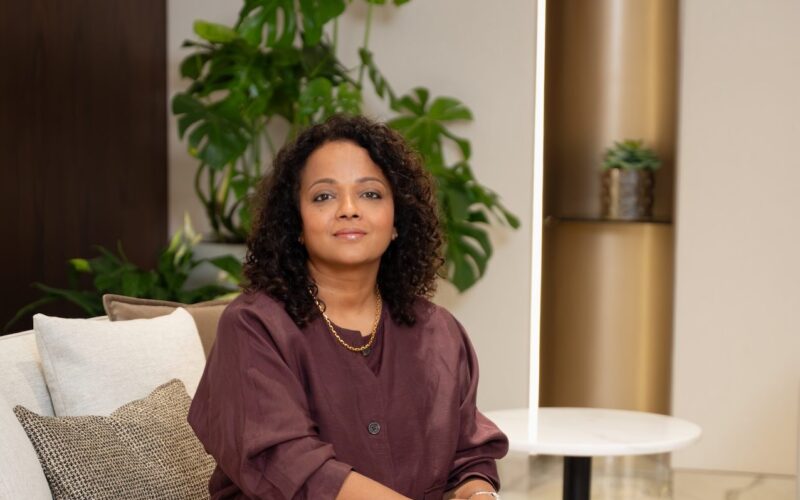
What inspired you to co-found Interspace, and what gap did you see in the market at the time?
It was circumstance and faith that brought about Interspace. I would be lying if I said it was part of some grand plan.
At the time, my Co-Founder Paul Ninan and I were both looking for something more than what we were doing professionally. We were colleagues at a firm that was in the process of shutting down, and suddenly an opportunity presented itself. Rather than overthinking it, we decided to take the leap.
What began as a leap of faith has grown into a boutique design practice that we are incredibly proud of today. Nineteen years on, the values that shaped us in those early days remain the same. We have always believed that trust, reliability, and relationships are just as important as good design, and that philosophy continues to guide everything we do.
What is your design philosophy?
For me, design has always been about people first and spaces second.
A beautiful space means very little if it does not support the way people live, work and feel. Good design should improve experiences and create comfort.
I believe the most successful spaces are those that feel natural
That flow. They should reflect the personality of the people or brands they belong to, rather than simply following the latest trend. I approach design with empathy. That’s my design philosophy.
How has working across the GCC, India, and the United States influenced your approach to design?
Working across different regions has taught me that while cultures may differ, people fundamentally seek the same things like comfort, belonging, functionality, and beauty.
The GCC taught me innovation , ambition, and attention to detail. India taught me resourcefulness, craftsmanship, and the value of storytelling through design. The United States exposed me to systems thinking and the ability to think break down design to be more adaptable. To think outside the box.
These influences have shaped a design approach that balances creativity with practicality, global perspectives with a lot of local sensibilities . UAE has been the shaping force.
Who do you work with?
Over the years, we have had the privilege of working with a diverse range of clients, from global brands and multinational organisations to private homeowners and entrepreneurs.
Our portfolio spans aviation, hospitality, corporate workplaces, retail environments, and luxury residences. Emirates Airline, VFS Global, Malabar Gold and Diamonds, Hilton & Flora Hotels to name a few. Many of our client relationships have lasted for well over a decade, which is something we are particularly proud of. “For me, lasting relationships are built on trust, transparency, and showing up consistently over time.”
What services do you offer?
We provide end-to-end design and project delivery services, including:
- Architectural Design (Villas only)
- Interior Design
- Space Planning
- Design Development & Technical Documentation
- Procurement Support
- Project Management
- Quality Control
- Client Representation
- Bespoke Furniture Design and Procurement
Our strength lies in managing the entire journey from concept through completion while maintaining a consistent design vision throughout.
You have successfully built Interspace over the past 21 years. How has your vision for the business evolved over the past two decades?
The vision Paul and I started with has remained remarkably consistent over the years.
We aspired to create meaningful spaces and build lasting relationships. And to grow to be a business that people sought out.
What has evolved is our understanding of the impact design can have. In the early days, success was largely measured by completing projects and having satisfied clients. Today, we think much more broadly about the experiences we create, the wellbeing of the people using our spaces, and the long-term value good design can bring.
We’ve also become more selective about the work we take on. After nearly two decades in the industry, we’re fortunate to be in a position where we can focus on projects where we know we can make a real difference and work with clients who value thoughtful design and collaboration.
What continues to inspire you after three decades in the industry?
I am constantly inspired and intrigued by this fast-moving world, be it design or technology or wellbeing awareness. The learning and challenges keep evolving my perspective. Seeing a space evolve from an idea into something that positively impacts people’s daily lives never gets old. That moment when a client walks into a completed space and sees their vision brought to life is still incredibly gratifying.
If you could leave one lasting legacy through your work, what would you hope it to be?
I would hope to be remembered for creating spaces that genuinely improved people’s experiences and for demonstrating that design is not a luxury; it is a powerful tool that can influence how we feel, connect, perform, and live.
Beyond the design itself, I hope people remember Interspace as a company that cared. Cared about its clients, cared about its work, and always tried to do the right thing. At the end of the day, projects come and go, but the relationships you build and the people who have impacted your life matter a great deal to me.
What emerging trends do you believe will shape the future of luxury interior design?
I think we’re seeing a very welcome shift in the definition of luxury. For a long time, luxury was associated with abundance and exclusivity, especially here in the Gulf. Today, people are looking for something deeper. They want spaces with soul, spaces that tell a story and reflect who they are.
There is a growing appreciation for craftsmanship, authenticity, and the human touch. Clients are becoming more conscious about what they bring into their spaces, where it comes from, who made it, and the story behind it. That makes design far more meaningful.
I also see a renewed interest in local artisans, heritage crafts, and bespoke pieces. In a world where so much is mass-produced, people are craving individuality and connection. The imperfections of something handmade often carry more beauty than something perfectly manufactured.
For me, the future of luxury is not about having more. It’s about having things that matter. Spaces that evoke emotion, create a sense of belonging, and feel deeply personal to the people who inhabit them.
What advice would you give entrepreneurs building businesses in creative industries?
Stay true to your values and focus on building genuine relationships. Talent may get you noticed, but trust builds a lasting business.
Most importantly, do work you genuinely care about
People can always tell when your heart is in it.
What is next for you and Interspace?
We are entering an exciting phase of growth and evolution. We look forward to getting into more experimental and interesting opportunities. To also build on our strength in the global market.
Where can readers connect with you and find out more?
Readers can learn more about Interspace and our work through our website and social media platforms:
https://www.linkedin.com/in/melani-sabhaney/
https://www.linkedin.com/company/interspace-interiors/
https://www
instagram.com/interspaceinteriors/