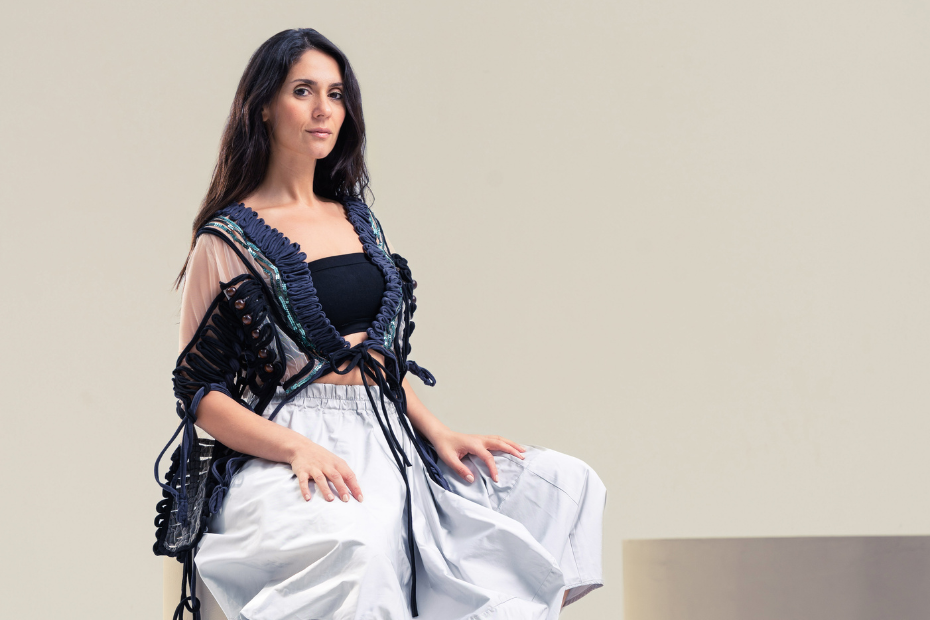
In a city often defined by speed and scale, Mahsa Gholizadeh chose a different path. The Iranian-born, Australian-educated founder of DBM Studio built her award-winning interior design practice in Dubai organically — without investors, without rapid expansion, and without compromising creative identity.
At a time when many studios pursue aggressive scaling strategies, DBM’s trajectory has been deliberately steady. For Gholizadeh, slow growth was not a constraint but a strategic decision.
“One of the biggest challenges in building DBM organically was ensuring that we had the right resources and team in place to deliver the level of work we were entrusted with, especially in the early years,” she says.
Dubai, she adds, made that journey possible
“I feel very fortunate to have built the company in Dubai and the UAE. This is truly a land of opportunity. Once you have the will and the desire, the government creates an environment where it is possible to grow a business even without external funding.”
Choosing foundation over scale
For Gholizadeh, growth without clarity was never an option.
“For me, the decision to grow slowly was very intentional. I wanted to make sure that every step was steady and thoughtful. Even if I had access to large funding, I believe I would still have chosen a gradual path.”
That meant investing heavily in market understanding and relationships before expanding headcount or footprint. It also meant significant personal sacrifice.
“One of the real challenges was building a team that could meet my standards and deliver the quality I envisioned, while working with limited financial resources. In the first few years I had to be very hands-on and involved in every detail… There was very little work-life balance during that period.”
Because her name sits above the door, the responsibility felt personal. “My focus was always on building trust and long-term relationships, so that clients would return and grow with us.”
Gholizadeh’s design philosophy reflects her multicultural background. “Being Iranian-born and Australian-educated, and now operating in the Middle East, has had a profound influence on both my design philosophy and my leadership style.”
From Iran, she draws narrative depth and craftsmanship. “From my Iranian background, I carry a deep appreciation for storytelling, craftsmanship, and emotional connection in design… For me, design is never just about aesthetics — it is about creating spaces with soul, memory, and identity.”
Australia grounded her creativity in technical discipline
“My education in Australia added another essential dimension. It grounded my creativity in technical knowledge, sustainability, and real-world execution.”
Operating in the UAE further sharpened adaptability and collaboration. “The region is incredibly dynamic, diverse, and forward-thinking. It has taught me adaptability, cultural sensitivity, and the importance of collaboration.”
The result is a studio that seeks to bridge tradition and innovation. “Ultimately, this combination of cultures allows me to bridge different worlds — art and technology, tradition and innovation, emotion and strategy.”
Protecting identity in commercial environments
Large hospitality and mixed-use projects often force studios to balance creative ambition with commercial reality. For Gholizadeh, that tension is addressed structurally rather than emotionally.
Before launching DBM, she led the design department of a fit-out company — an experience that shaped her pragmatic approach.
“I saw many beautiful concepts that were visually strong but not buildable or aligned with the client’s budget. That experience shaped my approach very early on.”
Today, DBM integrates technical and commercial oversight from the outset. “We have an in-house quantity surveyor and estimator, and while we are developing the concept, they are already studying materials, obtaining quotations, and understanding lead times.”
This eliminates late-stage compromises. “It eliminates the need for value engineering later, which is often where design identity gets compromised.”
Rather than treating budget as a limitation, she reframes it
“We see it as a framework that guides creativity.”
In an industry increasingly influenced by metrics and analytics, Gholizadeh continues to trust instinct.
“DBM was built organically, and in many ways, it grew through intuition rather than a rigid business plan or purely analytical strategy.”
While she values data, final decisions often come from a deeper place. “The final decision often comes down to intuition — how something feels at a deeper level. I usually ask myself whether a decision makes me feel expanded or contracted.”
For her, entrepreneurship is more than commercial performance
“Business is not just about metrics. It is also a human and emotional journey.”
That mindset influences hiring and client relationships alike. “While experience and portfolio are important, they are not the first filter for me. I pay close attention to people’s energy, their mindset, and how aligned they feel with our culture and values.”
Dubai’s market is often associated with aggressive expansion. Gholizadeh offers a different definition of sustainability.
“For me, sustainable growth is about clarity, consistency, and intention rather than simply expanding as quickly as possible.”
DBM remains a boutique studio by choice, even while delivering complex large-scale projects. “Our clients care more about results and quality than the size of the studio.”
In a city that rewards speed, she believes the real challenge is maintaining identity. “In a city like Dubai, the real challenge is not speed, it’s maintaining identity while moving fast.”
As DBM gained international recognition, Gholizadeh’s role evolved beyond design.
“In the early years, I was deeply involved in every creative detail. But as the studio grew, I realised that the biggest impact I could have was not only through design, but through building the right structure, culture, and vision for the business.”
Letting go of control was one of the hardest lessons
“As designers, we are trained to be perfectionists, so trusting others with your vision is not always easy.”
She also had to strengthen commercial discipline. “In the early stages, I sometimes lost the balance between creativity and the commercial aspects of a project… Over time, I learned that for a business to grow in a healthy and sustainable way, projects also need to be commercially viable.”
Today, she sees design excellence and business discipline as mutually reinforcing. “The biggest lesson has been that design excellence and business discipline are not separate — they strengthen each other.”
Building creative endurance
Burnout remains a pressing issue in creative industries. Gholizadeh speaks openly about experiencing it herself.
“Burnout is something I experienced myself in the early years while building the business, so I am very conscious of it.”
Studio culture, she says, must prioritise psychological safety and shared ownership. “Creativity cannot exist in a stressful or fearful environment. It needs trust, psychological safety, and a sense of purpose.”
Authorship and recognition are also central. “I believe that every project is a collective effort, and I always try to give credit to the team.”
Long-term viability, she argues, applies to careers as much as buildings. “I want the people who join DBM to see a future here.”
As DBM enters its next phase, hospitality sits at the centre of its ambitions
“We are particularly drawn to boutique hotels and design-led destinations that have character, narrative, and a strong sense of identity.”
She sees a global shift toward experiential travel. “People are increasingly looking for meaningful and memorable experiences rather than generic luxury.”
For DBM, the future lies in immersive, storytelling-driven environments. “The opportunity to create storytelling-driven hotels — spaces that feel immersive, layered, and emotionally engaging — is incredibly exciting.”
In a region defined by rapid transformation, Gholizadeh’s approach offers a counterpoint: growth grounded in identity, creativity aligned with discipline, and expansion built on intention rather than momentum.
Read: Dubai Design District reveals ambitious plan for expansion