
For the past decade, “smart city” has been one of the most overhyped phrases in technology, and one of the most disappointing. From Toronto to Singapore, top-down projects have crashed against the same wall: cities are not blank slates. They are alive, chaotic, and resistant to master plans.
But there is another way. It starts not with a master plan, but with everyday life, with the routines people repeat without thinking. You build services that slip into those routines, removing friction and adding a little more convenience each time. One service at a time, one problem at a time, each new layer sitting on the foundation of the last. You’re not imposing a smart concept on a city. You’re earning a place inside it, gradually, as people start relying on you.
This is what the Yango Group does. It comes with ride-hailing, something people need right now. From there, it earns trust, listens, and lets the city tell it what to build next. Over time, that collection of services starts to look less like an app and more like a foundation, a layer of digital infrastructure that runs underneath daily life. An operating system for the city.
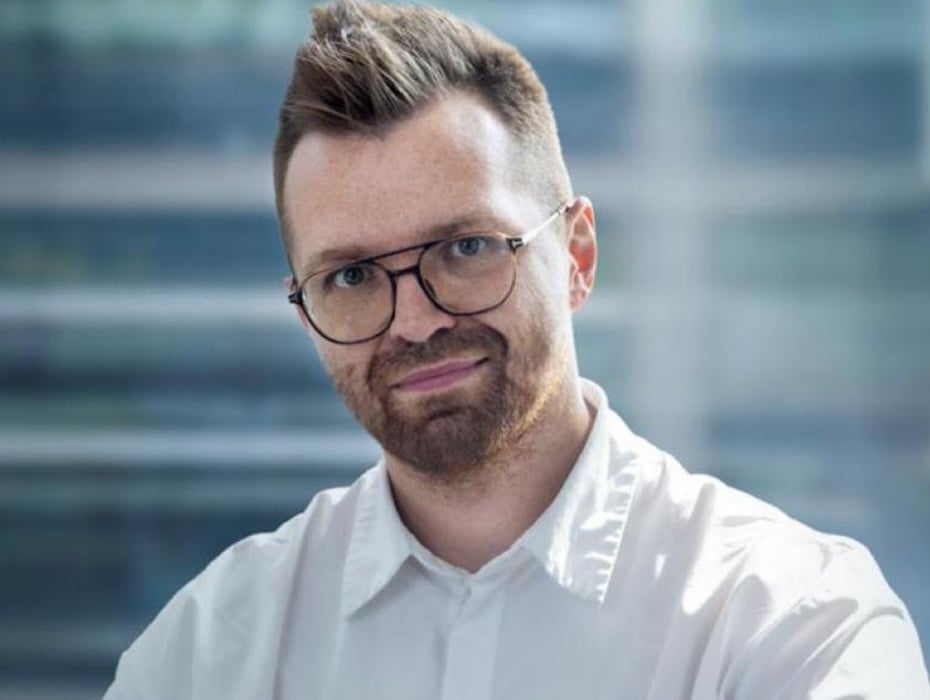
Daniil Shuleyko, the 37-year-old CEO of Yango Group, thinks about cities from the street up. “You can’t design a city in a boardroom,” he says. “You have to go where people actually live.”
Read the story in GB Leaders, here.
From big stone to big dreams
The first thing you notice about Shuleyko is his presence. No handlers, no carefully managed persona. Walking through Yango Group’s headquarters earlier, I’d passed an open floor buzzing with energy, a young team, Yango’s delivery robots ready to go, and Yasmina smart speaker boxes stacked for distribution. Later, sitting across from me, he mentions he still gives his personal phone number to taxi drivers in the Yango network. “If you don’t talk to them, you don’t understand the city,” he says.
It’s a small thing, but it tells you everything about how he builds.
Shuleyko grew up in a village so small its name translates as “Big Stone.” He studied engineering, and that training still shapes him. “Engineers think in systems,” he explains. “You don’t start with the roof. You start with the foundation, then you layer.” That logic, foundation first, then ecosystem, became Yango’s strategy.
“The most mind-changing moment was the birth of my first daughter,” he says, voice softening. “When you hold your child, you want to give them the whole world. Not just to build a company, to build infrastructure that actually changes how people live.”
Building the foundation of everyday urban life
Yango began as a ride-hailing company. Not because mobility was glamorous, but because it was necessary. “Ride-hailing is always the icebreaker,” Shuleyko explains. “Mobility is something people need daily. It builds a large user base quickly. That becomes the foundation.”
But a ride gives you something else too: data about real movement, not theoretical models. A network of drivers and couriers on the streets. And most importantly, trust. “When a passenger trusts you with their journey, and a driver trusts you with their livelihood, you have something to build on.”
The evolution wasn’t planned in a boardroom; it emerged from listening.
“Passengers kept asking us: Can you add delivery? Can you improve the maps?” Shuleyko recalls with a laugh. “And the drivers asked for the same: can you add the possibility to deliver packages, not only people? We started to deliver their requests one after another.” As those requests accumulated, a pattern became clear. Yango wasn’t simply adding features; it was responding to the same underlying need: better, more connected everyday services.
Layering the operating system
“Over time, we realised we weren’t just launching new products. We were gradually digitising the essential urban services people use every day.”
“Daily is the keyword. We’re not interested in something you use once every five years. But if it’s part of your everyday city life — transport, delivery, navigation — that’s where we can make a real difference.”
Once that foundation is running well, expansion becomes logical rather than accidental. Delivery, commerce, entertainment, loyalty, autonomous delivery — each new service reaches an audience that is already there and already trusts the platform. You’re not starting from zero with every vertical. By the second week after entry, more than half of new users already engage with at least two services — and this share continues to grow, reflecting increasing ecosystem stickiness and deeper cross-service usage over time. That’s what makes the ecosystem model fundamentally different from launching standalone apps.
This is the opposite of the “smart city” approach, which often begins with a grand plan and works down. “That works when you have a blank slate and unlimited resources,” Shuleyko acknowledges. “But most cities aren’t blank slates. They’re alive. They’re messy. An operating system doesn’t try to redesign them — it learns to read them. It grows into their patterns.”
A system that adapts “We have a slogan,” Shuleyko explains
‘Go Global, Go Local’. And local is much more important than global.”
This isn’t empty talk. Yango treats each city as its own puzzle, assembling what Shuleyko calls “building blocks” from a shared technological base — maps, routing, dispatch systems, demand forecasting — to address local needs. The technology layer remains consistent across markets, but the way it’s assembled and applied varies from place to place.
The system only works because of the people operating it in each city. Yango builds strong, independent local teams and gives them real power to adapt products, partnerships and strategy. “This distributed structure is more resilient than a centralised one,” Shuleyko says. “When decisions are made close to the ground, the system adapts faster.”
“For us, a market is not a country, it’s a city,” he says. “Côte d’Ivoire as a country wasn’t an obvious priority when we were looking at the map. But Abidjan, the population density, internet penetration, young demographics, and growing economic activity stood out immediately.”
The results across regions bear this out
In Latin America, Yango’s newest major commitment, Colombia, more than doubled across all key metrics in 2025 — growth built city by city, from Bogotá to Medellín. In Central Asia, the company has built what Shuleyko calls “probably our deepest ecosystem anywhere” — multiple services, strong cross-usage, continuous expansion across the region’s urban centres. In Africa, one of the company’s oldest markets, Yango has become a leader in several countries; in Ethiopia, rides grew several-fold year on year.
But the most telling example of how an operating system layers onto daily life might be in the MENA region. Here, the company launched Yango Play, an entertainment service built on top of the mobility foundation. Yasmina, its Arabic-speaking AI assistant, now records an average of 22 interactions per user per day, with peak days reaching 44. That’s not a user opening an app once a week. That’s a service woven into the rhythm of daily life.
Building with the city, not in it
That kind of depth doesn’t happen by accident. It happens when local teams truly understand their city, and when they build with the people who already run it.
For these local teams, the first question when entering a new city is never “how do we replace what exists?” It’s “who’s already here, and how do we work with them?” Yango operates a marketplace connecting local supply — drivers, restaurants, small businesses — with digital demand. “We invest in the digital layer so they don’t
have to,” Shuleyko explains. “A restaurant owner should focus on their food, not on building an app.”
By bringing demand together and coordinating it at the city level, the platform creates scale. A small restaurant gets customers it couldn’t reach. A taxi cooperative gets dispatch tools without inventing software. “They plug in, they grow. And when they grow, we grow with them.”
The Oman story shows how this works. Yango Group partnered with Otaxi, a local taxi player, and ITCHA Group, an investment company focused on developing the country’s tech sector. Together, they expanded the market, introducing new technologies, launching additional services, and building a more integrated model on top of what was already there. “Otaxi knew their drivers, their streets, their regulations,” Shuleyko says. “We brought the digital infrastructure. The combination made both of us stronger.”
In Bogotá, the logic was the same. Yango partnered with Taxis Libres, the city’s largest taxi company. For Yango, it opened access to more than 25,000 traditional drivers through a network they already trusted. For Taxis Libres, this meant integrating dispatch tools and data capabilities into daily operations without building them from scratch.
The human in the machine
“Everyone is talking about AI,” Shuleyko says. “But people don’t care about technology. They care whether a product works better than before. What matters is a good product.”
At Yango Group, AI sits inside the operational core, routing, dispatch, pricing, and demand forecasting. Small improvements compound: a better route means shorter wait times, a more accurate demand model means fewer idle drivers.
“You can’t just add AI somewhere,” he explains. “You have to rethink the process from the beginning.”
In some markets, Yango uses field scouts to recruit drivers. The company began analysing those conversations with AI to understand what worked. The system became a continuous loop: AI analysed, humans tested, successful patterns fed back. “We turned it into a game: who is better, AI or human? If a human improves the algorithm, they get paid. Because that algorithm will work forever.”
Yet for all the automation, Shuleyko insists the company cannot afford to lose sight of the people behind the data. He tells me about a moment several years ago when the company realised it was pushing out driver app changes without fully considering how they would affect people’s earnings.
“We were deploying updates quite unprofessionally,” he admits
“So we hired a chief driver and courier happiness officer to review every driver-facing release.” “It’s not about numbers on a dashboard,” he says. “It’s about people. A bad update can cost someone half a day’s earnings. Thousands lose money they were counting on. Maybe it’s someone’s daughter’s birthday, and they needed that extra for a present. In those moments, we failed them.”
Building the next generation
As Yango Group expands its digital infrastructure across markets, the company has increasingly focused on the people who make that infrastructure meaningful.
“Technology alone doesn’t create a digital economy,” Shuleyko says. “People do.” Digital systems only matter if people know how to use them — and if some of them know how to build on top of them. Drivers need to feel comfortable with digital tools. Young engineers need pathways into tech. Founders need access to capital and networks. Without that layer, infrastructure remains just infrastructure.
In March 2025, Yango launched Yango Ventures, a $20m fund backing early-stage startups across Sub-Saharan Africa, Latin America, and MENAP. “We don’t need to build everything ourselves,” Shuleyko explains. “If someone understands a local problem better than we do, it makes more sense to support them.”
The investments have already begun: BuuPass, a Kenyan mobility startup; Zanifu, a Kenyan lending platform; Trukkr, a Pakistani logistics fintech. Each represents Yango’s bet on local entrepreneurs solving local problems with global technology.
Alongside the fund, Yango runs education initiatives like the Yango Fellowship, supporting young technical specialists and expanding digital literacy across its markets.
The long view
As our conversation winds down, I ask Shuleyko about 2026 and beyond. “Every year I make the same mistake,” he says. “I overestimate what we can do in one year, and underestimate what we can do in three or four. Somehow, the longer horizon always wins.”
Still, he has some ideas. The company’s next chapter, he suggests, won’t be defined by a single product launch, but by how its digital layer continues to expand. Maps and navigation are about to change fast as AI opens up possibilities that weren’t there three years ago. New ways to get around are coming — not just self-driving cars, but intercity options and shared services built for specific places. Content and streaming, too, are being reshaped through local partnerships.
Yango’s advantage lies in the infrastructure it already operates
“These technologies don’t live in isolation,” Shuleyko says. “They need data, maps, and real traffic flows. If you don’t operate that layer, it’s very hard to scale anything new.” In Kazakhstan, they’re testing autonomous taxis. In Dubai, robot delivery already runs with Noon.
But as that digital layer thickens, a question emerges. “When you become part of the daily fabric of a city — when people rely on you to move, to eat, to find their way — at what point do you stop being a business and become critical urban infrastructure? Like electricity. Like water.” There’s no easy answer. “Infrastructure isn’t something you impose,” he says. “It’s something you earn the right to become.”
The ambition is one billion users within a decade. But Shuleyko frames that as an outcome, not a strategy. Outside the windows of One Central, Dubai’s skyline keeps rising, cranes moving in slow arcs against the afternoon light. It is a city that refuses to stand still. “Dubai implanted part of its DNA in us,” Shuleyko reflects.
“What you made yesterday is already not enough. Tomorrow it will be outdated. You need to run faster than everyone.” But speed, for him, is not chaos. It is repetition. Iteration. Discipline.
“You compete only with yourself,” he says
“With your yesterday, your previous week, your previous month. If you optimise every single aspect of the business, if you take tiny steps forward every day, one day you will become great.”
There is no grand manifesto. No dramatic prediction. Just a system built city by city, service by service, improvement by improvement. And if that philosophy holds, the next billion users will not come from chasing scale for its own sake, but from doing one thing better tomorrow than it was done today.
Leadership lessons with Daniil Shuleyko
“YOU COMPETE ONLY WITH YOURSELF. With your yesterday, your previous week, your previous month. If you improve even a little every day, over time, you become great. That’s the only competition that really matters.”
“YOU NEED TO RUN FAST. But speed without responsibility is dangerous. Behind every percentage point on a dashboard, there are real people. If we make a mistake, someone might lose a day of income. You have to remember that.”
“IT’S NOT ABOUT NUMBERS ON A DASHBOARD, it’s about people
When you realise that, your decisions change.”
“GO GLOBAL, GO LOCAL. Global strategy is important, but local reality is everything. There is no such thing as one continent as a single market. There are cities, cultures, and citizens. You have to build for them, not for a presentation.”
“YOU SHOULD GIVE LOCAL TEAMS THE POWER to adapt products, partnerships and strategy. Headquarters cannot fully understand how people live in every city.”
“A LEADER MUST LIVE ON TWO LEVELS. You need the helicopter view, but you also need to go deep into operations, marketing, technology, and talk to partners. If you only look at presentations, you forget the real world.”
“PEOPLE HAVE A SUPERPOWER
They can ask. But the harder skill is to listen. Real progress starts when you do both.”
“IF SOMETHING FAILS, REBUILD IT PROPERLY. Don’t just add AI or add a feature because it sounds good. Start from scratch if needed, combine human expertise with technology, and create a loop that improves itself.”
“WHEN SOMETHING BAD HAPPENS, do something positive immediately. Shift your state. And when you succeed, don’t reward yourself too much. Success is already the reward.”
“DREAM BIG, BUT STAY ROOTED. Ambition and grounding must live together. That balance is what keeps you moving forward.”