
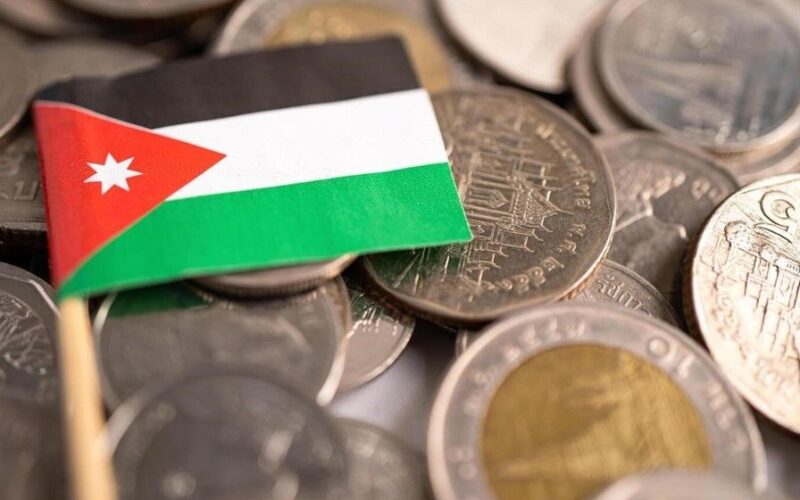
Anyone who follows the reports issued by the International Monetary Fund, the World Bank, and credit rating agencies will find that they all agree on one characterization, which is that the Jordanian economy is robust, resilient, and capable of facing shocks.
These international testimonies come at a very important time, as the region is experiencing a state of political and economic uncertainty, starting with the Corona pandemic and disruptions in global supply chains, to the aggression on Gaza, regional tensions that affected trade, transportation and investment, the US war on Iran and the closure of the Strait of Hormuz, despite this, Jordan was able to maintain its financial and monetary stability, and was able to achieve economic growth of 2.7 percent during the first quarter of this year, with expectations that it will rise to about 3.1 percent During the coming period.
It is true that these percentages are still below national ambitions, but they acquire exceptional importance when compared to the surrounding conditions and the economic performance of many countries in the region and the world, as the most important indicator is not only the size of growth, but also the ability of the economy to continue to achieve growth amid a turbulent regional environment, which confirms that the Jordanian economy has succeeded in building a good immunity against crises.
The most important thing is that international institutions no longer view Jordan as an economy that seeks only to maintain stability, but as an economy that has real opportunities for growth and expansion, as recent geopolitical changes have redrawn the map of transportation and trade in the region, which has given Jordan a more important position as a strategic corridor that connects the Gulf countries and Iraq to European markets through Syrian and Turkish territory, and this geographical advantage can turn into an engine of economic growth if it is properly invested.
In this context, major national projects that are being worked on or planned, especially the National Water Carrier Project, railway projects, the development of the transport system, energy and gas projects, land ports and shipping hubs, are strategic cross-government investments capable of changing the structure of the national economy and raising its competitiveness for decades to come.
Jordan also has an important opportunity to maximize the added value of its natural resources, especially phosphate and potash, by expanding the manufacturing industries associated with them instead of just exporting raw materials.
However, maintaining stability indicators also requires addressing some structural imbalances, foremost of which is supporting small and medium-sized enterprises (SMEs), which make up more than 98 percent of the total enterprises operating in the Kingdom, while their share of banking facilities does not exceed 10 percent, compared to between 20 and 25 percent in similar economies.
In conclusion, the international consensus on the robustness of the Jordanian economy is an acknowledgement that the Kingdom has succeeded in passing through a very difficult phase witnessed by the region with the least possible losses, but the real challenge in the next stage lies not only in maintaining stability, but also in transforming this stability into higher growth, greater investments, and more job opportunities, so that the positive indicators that international institutions talk about are reflected directly and tangibly on the lives and living standards of citizens.
Related Stories

What No One Wrote About the King’s Visit to China

We Need a Fund for Those in Financial Distress, Prime Minister