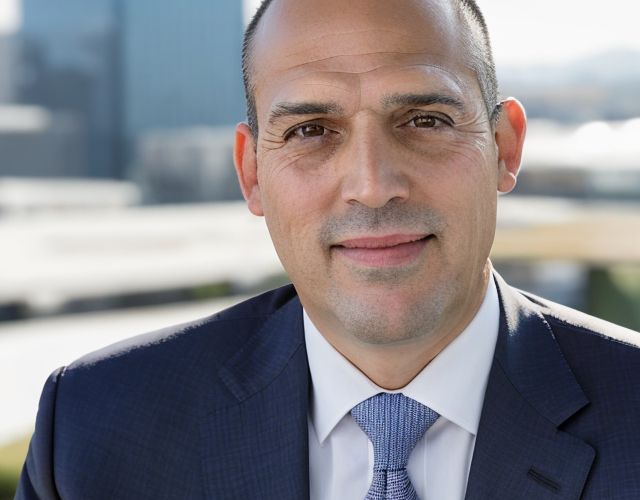
What is DynamiCOO and why did you build it?
DynamiCOO was created to solve a problem I saw repeatedly across large institutions, growing companies, and founder led businesses: strategy is usually not the hard part. Execution is. Most organizations know what they want to do. The difficulty is turning decisions into coordinated action, maintaining control as complexity grows, and making sure the business actually runs the way leadership believes it runs.
DynamiCOO is an execution and operational control platform for the AI era. It combines senior operating experience, structured governance, process discipline, and AI enabled execution support. The objective is simple: help organizations operate with more clarity, accountability, speed, and resilience.
The thinking behind DynamiCOO comes from real operating environments, not theory. My background includes institutional roles across Goldman Sachs, Barclays, and JPMorgan, as well as direct entrepreneurial and small business operating experience. That combination matters because the challenges of a global financial institution and a founder led company are different in scale, but often similar in nature. Both need clarity. Both need controls. Both need accountability. Both need execution rhythm.
The opportunity now is that AI allows us to bring a level of operating support, monitoring, coordination, and execution discipline to companies that historically could not access institutional grade infrastructure.
How is AI reshaping how organizations execute, govern, and scale?
AI is changing organizations in a more fundamental way than many people understand. It is not just another software tool. It changes the cost, speed, and availability of work. Research, drafting, analysis, reporting, monitoring, workflow coordination, and repetitive execution can now be supported at a speed that was impossible only a few years ago.
That creates a major opportunity, but also a serious management challenge
If AI is introduced without governance, it can create more noise, more fragmentation, and more uncontrolled activity. The winners will not simply be the companies using the most AI. The winners will be the companies that operationalize AI properly.
That means connecting AI to real workflows. It means defining who is accountable. It means knowing what the AI can do, what it should not do, where human judgment is required, and how leadership maintains visibility and control.
In my view, AI is making intelligence more abundant. Execution will become more scarce. That is why operating models, governance, and management discipline matter more now, not less.
Why is operational execution becoming more important in the AI era?
Because AI dramatically increases the speed of activity inside a business
More analysis can be produced. More documents can be drafted. More customer communications can be generated. More ideas can be tested. More data can be reviewed. But speed without operating control can become chaos.
Many companies are already drowning in tools. They have email, spreadsheets, CRMs, accounting systems, messaging apps, project management tools, and now AI on top of all of it. The issue is not a shortage of software. The issue is a shortage of operational clarity.
Execution is the bridge between ambition and results. It is the daily discipline of making sure the right people are doing the right work, with the right information, under the right controls, at the right time. AI can support that, but it cannot replace leadership judgment or accountability.
The companies that understand this will move faster and safer. The companies that do not will mistake activity for progress.
What makes DynamiCOO and dCOO
ai different?
Our difference is that we start from operations, not from technology. Many AI providers begin with a tool and then look for a use case. Traditional consultants often begin with analysis and recommendations. DynamiCOO begins with execution. What does the business need to get done? Where is control weak? Where are decisions getting stuck? Where is work falling between people, systems, and departments?
dCOO.ai is the AI enabled operating layer within that broader DynamiCOO model. It is designed to support execution, coordination, visibility, reporting, and operational follow through. But the philosophy is very clear: humans decide, AI executes, humans control.
We are not trying to replace management. We are trying to make management more effective. We are not trying to remove judgment. We are trying to protect judgment from being buried under administrative overload, fragmented communication, and poor visibility.
The best way to describe the model is institutional operating discipline combined with AI native execution capability.
How does DynamiCOO help SMEs and founder led businesses?
SMEs and founder led businesses are massively underserved. Large companies can spend millions on consultants, transformation programs, technology stacks, risk teams, finance teams, and operating infrastructure. Smaller businesses often cannot. They are expected to compete in the same world, but without the same operating backbone.
That creates a structural disadvantage. Founders are often carrying too much in their own heads. Processes are informal. Reporting is inconsistent. Decisions are made reactively. Good people are overwhelmed because the business has outgrown its original operating model.
DynamiCOO helps by creating clarity around how the business actually works
We look at execution rhythm, leadership structure, reporting, accountability, controls, cash discipline, workflow, decision rights, and technology use. Then we help build a practical operating layer that allows the business to scale without losing control.
The goal is not to make SMEs look like bureaucratic corporations. The goal is to give them the operating strength of a larger institution without killing their speed, culture, or entrepreneurial energy.
Why do SMEs need institutional grade operational infrastructure?
Because complexity arrives before most businesses are ready for it. A company may start with a founder, a small team, and a simple operating model. Then customers increase, employees increase, suppliers increase, compliance obligations increase, cash pressure increases, and suddenly the business becomes much harder to control.
At that point, informal management stops working
The founder cannot be the operating system for the entire company forever. There must be rhythm, reporting, delegation, escalation, controls, and visibility.
Institutional grade does not mean slow or bureaucratic. It means disciplined. It means the business knows where money is going, who owns each process, what risks are building, what work is delayed, and what decisions need attention.
AI makes this even more important because it allows smaller companies to punch above their weight. But to do that safely, they need structure. Otherwise they simply automate confusion.
Why are the UAE and Middle East strategically important to your vision?
The UAE is one of the most interesting markets in the world because it has speed, ambition, infrastructure, capital, and policy direction moving in the same general direction. That is rare.
Many markets talk about innovation, but move slowly. The UAE has shown a willingness to build, attract talent, modernize regulation, and position itself as a global hub for entrepreneurship, technology, finance, logistics, and AI adoption. For a company like DynamiCOO and dCOO.ai, that matters.
We see the UAE not only as a market, but as an operating hub. It connects East and West. It attracts founders, investors, family offices, SMEs, and international businesses. It is also a place where companies are thinking seriously about how to scale beyond legacy models.
Our work sits directly inside that transformation. As businesses in the region grow more cross border, more digital, and more AI enabled, the need for execution discipline, governance, and operational clarity will only increase.
How do you see AI native organizations evolving over the next decade?
AI native organizations will not simply be companies that use chatbots or automation tools. They will be organizations designed around a different relationship between humans, systems, and work.
In a traditional organization, people carry a large amount of administrative burden. They chase updates, write summaries, prepare reports, reconcile information, coordinate tasks, and spend enormous time converting activity into visibility for management. In an AI native organization, much of that support layer can become continuous, intelligent, and largely automated.
But the human role becomes more important in the right places. Leadership, judgment, ethics, accountability, culture, trust, and strategic decision making remain human responsibilities. AI should carry more of the workload, not more of the ultimate authority.
Over the next decade, I believe the strongest organizations will be those that learn to manage both human teams and AI enabled execution systems. That will require new governance models, new operating rhythms, and new expectations of leadership.
What is your core AI philosophy?
Our core philosophy is simple: humans decide, AI executes, humans control.
AI is incredibly powerful, but it should not become an uncontrolled actor inside the organization. It should be deployed with purpose, governance, and clear accountability. Used properly, AI can reduce administrative drag, improve visibility, accelerate execution, and help leadership make better informed decisions. Used poorly, it can produce noise, false confidence, weak controls, and reputational risk.
We believe AI should strengthen the organization, not confuse it
It should make the business more transparent, not more opaque. It should support leadership, not replace responsibility.
That is why we focus on operational integration. The question is not simply, what can AI do? The better question is, where should AI sit inside the operating model so that the business becomes faster, safer, and more effective?
What is your long term vision for DynamiCOO and dCOO.ai?
Our long term vision is to help build the operating layer for modern business. We believe organizations will increasingly need a combination of human leadership, AI enabled execution, governance frameworks, and real time operational visibility.
As AI commoditizes access to information, analysis, and even creativity, the value of trust, judgment, leadership, and execution will rise. The world will not have a shortage of ideas. It will have a shortage of disciplined operators who can turn ideas into controlled, scalable reality.
DynamiCOO is being built for that world. dCOO.ai is part of that infrastructure. The goal is to help organizations operate continuously, intelligently, globally, and with much stronger control than traditional models allow.
Our simplest expression of that vision is: Where Work Never Sleeps.
Where can readers find out more?
Readers can learn more at www
dynamicoo.com and www.dcoo.ai. They can also connect with me directly on LinkedIn under Jassen Trenkow.
We are actively building the DynamiCOO and dCOO.ai platform across the United States, the United Kingdom, the UAE, and other international markets, with a particular focus on founders, SMEs, investors, and organizations that need stronger operational execution in the AI era.