Tell us about yourself and your career journey
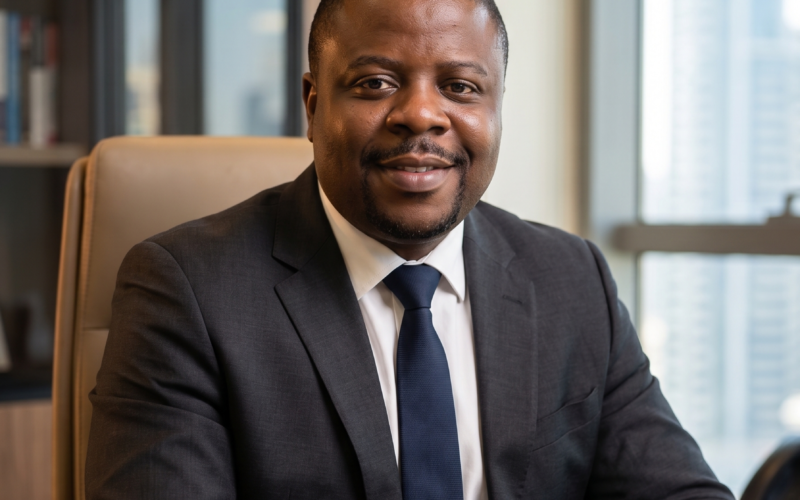
I am a Chartered Accountant and Corporate/Group Finance Controller with just over two decades of experience across Africa and the Middle East, currently working in fintech and subscription-based consumer technology services. My journey has taken me from a blue-chip manufacturing group in Zimbabwe, through senior finance roles in South Africa, to my current role in the Gulf, where I focus on building finance functions that support rapid, tech-enabled growth.
Early in my career, I joined a large multinational manufacturer as a Finance Trainee, starting in the smallest business unit and earning rapid promotion to head office roles, which gave me a strong grounding in operations, cost discipline, and performance management. Over time I deliberately stepped into unfamiliar industries and geographies, which forced me to grow as both a professional and a leader and ultimately led me into fintech and the broader technology ecosystem.
I hold dual professional designations (FCCA and ACMA CGMA), a Master’s in Professional Accountancy from the University of London, and I completed the Oxford Strategic Executive Management Programme with Saïd Business School, which has helped me to operate comfortably at the intersection of finance, strategy, and technology. Today, my focus is on helping high-growth businesses scale responsibly—building systems, teams, and governance that can withstand the pressures of rapid expansion without losing sight of customers or culture.
How did you get started in finance and wealth management?
I came into finance through a very practical route: I was fascinated by how numbers explain real-world performance, and I wanted to understand how businesses create value, not just report it. That curiosity led me into management accounting and corporate finance rather than traditional audit, because I enjoy being close to decision-making and operations.
Over time, my work has been more focused on corporate finance, FP&A, and strategic finance than on personal wealth management in the narrow sense. However, I have always seen a strong link between the two: when you help organisations allocate capital wisely, manage risk, and grow sustainably, you are ultimately impacting the wealth and security of employees, customers, and investors at scale.
In emerging markets especially, finance leaders wear many hats—we are business partners, educators, and, at times, “translators” between founders, boards, and investors. That blend of technical depth and human impact is what hooked me early on, and it continues to drive my commitment to the profession.
What have been your biggest career successes?
I measure success less by job titles and more by the quality of teams and systems I leave behind. One highlight has been building finance capabilities that helped businesses expand across borders while still maintaining control, discipline, and investor confidence.
In my current and recent roles, I have been part of leadership teams that scaled tech-enabled models in fast-moving markets, contributing to stronger reporting, tighter unit-economics, and improved fundraising narratives as companies attracted significant institutional capital. Another proud moment was being recognised externally for my leadership journey on two fronts: as a Finance Visionary leadership award winner in 2025 and consecutively nominated and shortlisted in 2025 and 2026 for the International Finance Leader of the Year by the prestigious GENCFO organization in the UK, which validated years of deliberate work on personal growth, not just technical excellence.
I am also proud of the mentorship side of my career. Many of the people I trained or coached early on are now in senior roles across Africa and the Middle East, and seeing their progression is as satisfying to me as any personal accolade or transaction.
What is your current focus in your role at Zension Technologies?
Zension is a high-growth device services and subscription company that is rethinking how people access and own technology—through protection plans, extended warranties, guaranteed buy-back, and device subscriptions that support a circular economy in tech. As corporate finance controller, my focus is to ensure that the financial backbone of the business can support that ambitious mission.
Practically, this means strengthening FP&A, cash-flow forecasting, and scenario planning so that we can scale programs like Zaam—our subscription device offering—while managing risk and capital efficiently. It also means working closely with product, data, and operations teams to ensure our pricing engines, customer analytics, and portfolio performance metrics are tightly integrated into financial decision-making.
Because Zension operates across Saudi Arabia and the UAE, and works with major retailers and telcos, the finance function has to be robust enough to satisfy sophisticated investors while remaining agile enough to support new product experiments and expansion. My role is to help create that balance—disciplined, investor-grade reporting on one side, and entrepreneurial flexibility on the other.
How do you support businesses in building systems that endure rapid scaling?
The starting point is always clarity: clarity on the business model, value drivers, and risk profile. Once that is defined, I help build finance systems that make these drivers visible in real time—through meaningful KPIs, dashboards, and forecasting processes that founders and operators actually use.
I am a strong believer in designing processes that are “simple but scalable”: lean workflows, automation where it truly adds value, and controls that are embedded into everyday tools rather than bolted on as policing mechanisms. In practice, this often means working with cross-functional teams to automate data flows from core systems into the finance tech stack, reducing manual work and error risk as transaction volumes grow.
Finally, systems are only as strong as the people who run them. I invest heavily in building finance teams that understand both the numbers and the business narrative, so they can partner with leadership on strategy, capital allocation, and risk management as the organisation moves from startup to scale-up and beyond.
What trends are currently reshaping finance in the UAE?
Several trends stand out
First, the continued rise of fintech and embedded finance is changing expectations around speed, convenience, and customer experience—both for consumers and for B2B finance functions. Companies are under pressure to provide real-time insights and seamless digital journeys, and finance teams must adapt their systems and skills accordingly.Second, there is a strong emphasis on sustainability, ESG, and the circular economy, supported by both regulators and investors in the region. Businesses are being asked to demonstrate not just profitability, but also responsible resource use and long-term impact, which is very relevant in device-heavy sectors like ours.Lastly, the UAE continues to attract international capital and talent, which raises the bar on governance, transparency, and investor-grade reporting. Finance leaders here must be comfortable speaking the language of global investors while still navigating the nuances of regional markets.
How do you see AI impacting corporate finance?
AI is already reshaping corporate finance in three major ways: automation, insight, and foresight. On the automation side, AI-driven tools are streamlining processes such as reconciliations, anomaly detection, and repetitive reporting, freeing finance teams to focus more on analysis and partnership.
On the insight side, AI allows us to mine large operational and customer datasets for patterns that influence pricing, credit risk, customer lifetime value, and portfolio performance—insights that are particularly valuable in subscription and device-as-a-service models. In my environment, linking these insights into our forecasting and capital allocation decisions is critical to scaling profitably.
The most exciting shift, however, is foresight: AI-enhanced forecasting and scenario modelling will increasingly allow finance leaders to anticipate outcomes rather than just explain what already happened. The role of the finance leader will move even more toward strategic adviser and less toward “reporting gatekeeper,” provided we invest in the right data foundations and governance.
For these reasons above, this is why I recently got certified in AI for Corporate Finance.
What is next for you?
First, to win that prestigious GENCFO Award on the 18th of June 2026!
Professionally, I am on a deliberate path toward a Strategic Finance role, with a focus on the FP&A and strategic finance track rather than a purely compliance-driven route. That journey includes continued learning—through certifications, executive programs, and hands-on exposure to capital markets and investor relations—as well as taking on broader leadership responsibilities within and beyond finance.
I am also deeply interested in how finance can better support technology-driven business models in emerging markets, whether through corporate roles, advisory work, or board positions. The intersection of fintech, circular economy models, and sustainable growth is where I see myself adding the most value over the next decade.
What legacy do you hope to leave?
I would like my legacy to be twofold
First, that I helped build organisations where finance was a genuine strategic partner—known for clarity, integrity, and impact—rather than a back-office function. If the companies I work with can scale across markets while maintaining strong governance, healthy cultures, and sustainable economics, that would be a legacy to be proud of.Second, I want to be remembered for the people side of leadership: for helping the next generation of finance professionals, particularly from Africa and the Middle East, to believe that they can compete on any global stage if they combine technical excellence with courage and curiosity. If some of them surpass what I have achieved, that will be the clearest sign that my impact was meaningful.
Where can readers connect with you?
The best place to connect with me is on LinkedIn, where I am active in conversations around strategic finance, fintech, and leadership in emerging markets. I also welcome thoughtful collaboration and dialogue with founders, finance leaders, and ecosystem partners who are passionate about building resilient, sustainable businesses in the region.