
The chapter on the despicable terrorists has been closed. The question on the lips of all Jordanians, as well as the families of the victims and the injured, was: When would the killers be arrested? No one ever doubted the security agencies’ ability to fulfil their promise to apprehend the terrorists and bring them to justice. The mission was accomplished with great speed and efficiency. This once again confirms that the state alone protects its people through the capabilities of its institutions and the rule of law, which safeguards everyone.
In the period ahead, many more chapters must be opened, involving challenges and difficult tasks that require unprecedented, creative and intelligent action. The unprecedented attack on Hamoud Church carries lessons that must be learned for the future.
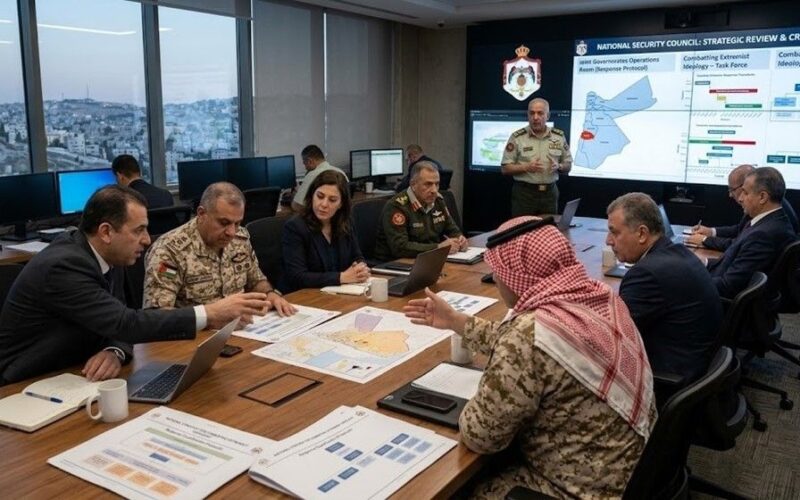
There is a strong determination at the highest levels of state decision-making to conduct a comprehensive review. His Majesty the King clearly outlined its main themes and broad parameters in his directives during his chairing of the National Security Council meeting on the day after the terrorist attack.
Among the most urgent tasks is reviewing the procedures followed by institutions and departments responsible for responding swiftly when such incidents occur. I refer here to the Civil Defence Directorate and the police agencies responsible for the initial response. Equally important is the response of medical personnel and their administrations to ensure that the injured receive care quickly and professionally, and that specialist doctors are available to handle critical and complex injuries.
It is clear that we have not sufficiently tested our capacity to respond to this type of security incident, in which responsibilities overlap in the field. This calls for a joint operations room established in advance, operating according to a predetermined protocol in every governorate, particularly during critical periods such as holidays.
Such a predefined level of organisation has a decisive impact on the lives of the injured and how quickly they can be rescued, as the recent terrorist attack clearly demonstrated. Shortcomings in procedures for situations requiring a rapid response must be identified. For the injured, time can mean the difference between life and death.
In the immediate short term, the relevant security institutions must assume responsibility for managing investigations into the terrorist attack, pursuing those involved and anyone who assisted them or facilitated their mission, dismantling affiliated cells and apprehending individuals who sympathise with them. The scope of these pursuits must also be expanded to include those across the country who support the terrorists’ ideology.
The most complex and difficult task, however, is developing a new national strategy to combat extremist ideology. I fear that we are still thinking with the same old tools and going around in the same traditional cycles, relying on superficial, routine measures that fail to address the core of the problems realistically and objectively. We have previously adopted plans and strategies to combat extremism, most of which failed. Yet we have conducted no genuine review or assessment of their outcomes because, fundamentally, we lack precise measurement tools to determine which objectives have been achieved and which have not.
As a result of this serious failure, we have reached an alarming level of danger, making the task of confronting extremist ideology extremely difficult. We are, in fact, in a critical situation. The massacre at the church in the town of Hamoud, despite all the pain, grief and loss of loved ones it has caused, and the deep wounds it has left in people’s hearts, represents a major turning point. It was a harsh shock to institutional and public awareness at the national level.
I believe this tragedy can serve as a starting point for developing new approaches to the national strategy we need. We must acknowledge from the outset that, in Jordan’s circumstances, we should not expect rapid results, except in areas where progress can genuinely be made through security measures. On other fronts, the confrontation will require patience, sustained effort and intelligent policies that gradually reduce levels of extremism, which have exceeded normal limits.
The unity and solidarity Jordanians have demonstrated in the aftermath of the massacre give us hope that our country can fundamentally change course.
Related Stories
Growth from a Productive Base
Gaza Between Disarmament and Reconstruction