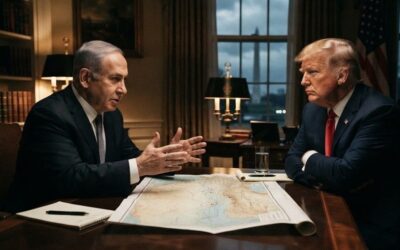
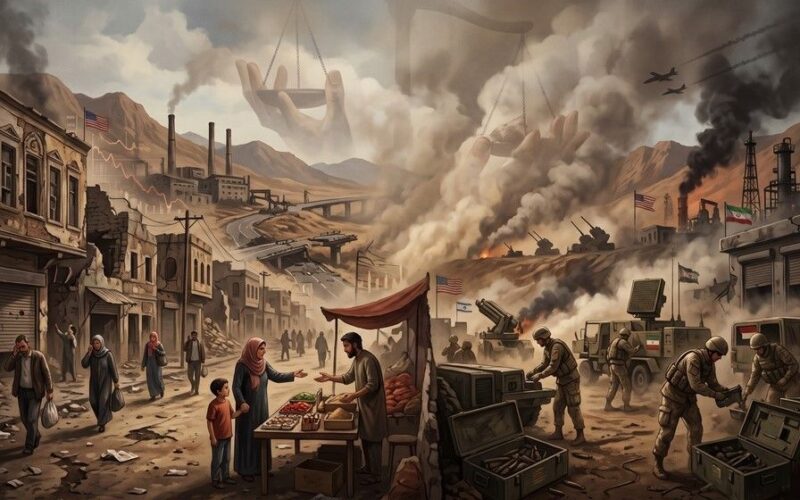
The slow killing of the region continues through the unresolved war between the United States, Israel and Iran. Because it is slow, many people do not feel it, but its cost may be higher than the military war itself.
Let us speak in the language of numbers. The region is bleeding financially and economically, and this will produce larger aftershocks in the coming years. Every country in the region is paying the price of this war. Analysing the figures in Egypt and Jordan, for example, reveals direct economic impact on tourism, investment, trade, transit and other areas that continue to be affected in these countries.
As for the Arab Gulf states, institutions such as Allianz Trade estimate that the cost of physical damage and economic losses suffered by the Gulf states as a result of the attacks and fallout from this war exceeds $200 billion. The region’s states are under financial pressure linked to energy prices, securing navigation, and repairing damage to vital facilities and infrastructure.
Damage to Arab states will also have a direct effect on Arab economies that the Gulf states help, and on Arab citizens living in those countries. All these estimates are likely to rise, because of the damage to oil exports, imports at high prices and other factors. The numbers may be much higher, especially as the destruction and drain continue and have not stopped to this day.
As for Iran, it is suffering widespread destruction of its military infrastructure, its stockpiles of missiles and drones, and its defensive and underground capabilities, due to the continuing American and Israeli air strikes. The Iranian budget has also been sharply eroded, amid stalled negotiations, restrictions on exports, and the damage inflicted on its productive and oil capacities.
Some figures suggest Iran’s economic losses could reach $144 billion, of which $53 billion has so far come from the blockade on oil exports, plus $91 billion for replacing military assets and equipment. An Iranian estimate, however, puts losses at $270 billion so far. These figures could all rise. In addition, billions of Iranian funds frozen because of sanctions may exceed $120 billion.
The United States, for its part, saw Pentagon spending exceed $47 billion by October 2026. This includes more than $29 billion in munitions replenishment and around $6 billion for replacing military equipment. In addition, the use of expensive missiles such as THAAD and Tomahawk is estimated to cost roughly $3 billion a month, with projections suggesting the total long-term burden could rise sharply if the conflict continues.
All these figures are probably understated, because the losses of individuals are greater, as are the losses of projects and companies. If every Arab state, Iran and Turkey examined the scale of current economic and strategic losses, or looked ahead to what would happen if these conditions continued, we would all discover that the region is being destroyed gradually and slowly, its wealth plundered, its peoples impoverished, and its future erased too.
Although this is not just a numbers game, there are also figures on the losses of the Israeli occupation, Europe, China and other countries. On top of this is the suffering of individuals because of higher prices for energy, medicines and food, everywhere from the United States to Europe, the Arab states, Australia and Canada.
We are all paying the price every day. Because we do not hear the missiles or see the drones, we think we are not paying, but it is a cumulative price that sinks its fangs into the backs of the people of this region first. A moment may come when everyone wishes for the military war to end this harsh reality for the region and its people, at the hands of Washington in particular, which does not care about what is happening. What we see means ending the future before its time has come. I am fully confident that the figures are larger than what is mentioned in analyses, both current and strategic. We are almost ready to say to Washington: end the indirect war, because it costs more than the direct one.
We are facing two options: the continuation of the slow killing, or self-destruction in a military war. The questions remain hanging: is there a third option? Is there a future? Will the world be able to bear paying the price any more?
Related Stories
What future for Jordanian-Israeli relations?

A Structural Shift in Global Energy Security Management