
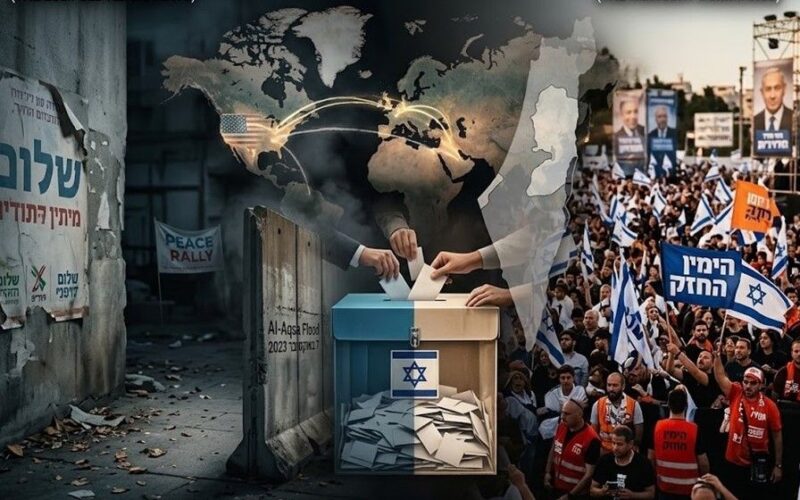
All Arab slogans have gradually collapsed. For seven decades, we called for the liberation of all of historic Palestine, only to find ourselves today preoccupied with liberating Areas A and B of the West Bank.
The West Bank accounts for 21% of historic Palestine. Area A represents around 18% of the West Bank, while Area B accounts for 22%. This means that Areas A and B combined make up approximately 8.4% of all historic Palestine.
This is not merely about the shrinking geographical scope of slogans and political programmes. Above all, it is about erasing demography, identity and memory. Geography without people is merely expanses of land. Even the sanctity of land is tied to the people who inhabit it; without them, holy sites become nothing more than archaeological structures whose spiritual life depends on human presence.
Have we been fed poison in instalments, as our demands have gradually receded amid a region that tears itself apart day and night? Every country in the Arab and Islamic worlds tells us that Palestine is not its cause, claiming that most Arab and Islamic countries are preoccupied with spreading Islam, development, prosperity, advancing human rights, distributing resources and fighting corruption. Yet we know that the disastrous state of affairs in each country stems from internal factors. Perhaps Palestine has been spared being turned into an excuse for the ruin of this vast world, which has somehow become a place with no future and no collective cause.
Even the right of return has been redefined, and no one speaks of it anymore not official Arab governments, nor popular and political movements. Ironically, we have begun talking about the need to prevent displacement. Instead of calling for Palestinians to return, we now hope that no more Palestinians will be forced to seek refuge in countries across the Arab and Islamic worlds. We have moved from the right of return to the right to prevent displacement.
To be fair, the project of liberating Palestine has also faced significant pressures. Arab countries have been constrained by their interests and fears, pushed towards the easiest option: gradually abandoning the Palestinian cause. The same curse has afflicted the Palestinians themselves. They once raised slogans calling for the liberation of all Palestine, only to end up demanding international protection, the removal of checkpoints in the West Bank, or even the entry of wheat and medicine for the people of Gaza. All this has unfolded amid a costly division and mutual recriminations over which path to pursue: armed resistance, who should wage it, or a gradual, institutional political process on which no one can agree.
Palestine has fallen victim to numerous factors, and perhaps thousands of pages would be needed to explain the reasons behind the consequences it faces today. More important, however, is that the bitter reality reflects dangerous changes that have established the principle of negotiating over everything. As I mentioned, we once demanded the liberation of all Palestine, but today we bargain over two areas of the West Bank. We also once demanded that the sanctity of Al-Aqsa Mosque be preserved. Today, all we hope for is that Saturday will not be designated exclusively for Israelis, as though we are trapped in a losing negotiation that takes us a thousand years backwards or even further back than they intend.
This proves that concepts such as pragmatism, negotiation and strategic patience, among others, have contributed to the loss of Palestine. These concepts have no value when fundamental rights are being lost. It has also become clear that making concessions for the first time is difficult and painful, but eventually those concessions turn into a political doctrine, pursued without anguish, remorse or a troubled conscience.
May God’s curse be upon strategic patience and all that it has brought upon us.
Related Stories

Dinosaur Blood Preserved Inside an Insect in Jordanian Amber
The Greatest Mission: Shaping the Mind
