All indicators suggest that the coming period will be difficult, with not a single piece of information pointing to stability not only in the Middle East, but across countries worldwide. It is as though the Earth is preparing for changes that will leave nothing untouched.
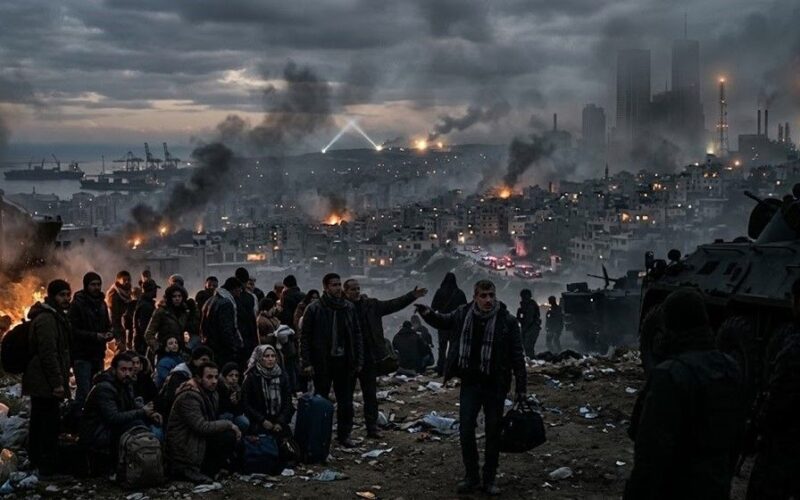
Protests in Europe, cost-of-living demonstrations everywhere, rising prices in the United States, setbacks in Canada and Australia, and a Middle East sitting atop a volcano, awaiting the scheduled dates of wars if not this month, then the next. Ethnic, sectarian and religious clashes are taking place in countries around the world, accompanied by feelings of hostility and hatred. It feels as though every place has been struck by a curse, leading to an even more alarming conclusion: that the international and regional order may be nearing collapse.
These military, economic and political conditions can only lead to a new reality. Yet some people remain in a state of denial, believing that the current period can be compared with previous ones. Perhaps this is because the changes are not happening rapidly; instead, they are slow and gradual and appear disconnected on the surface. In reality, however, we are facing a second kind of globalisation. An oil tanker unable to pass through the straits of the Arab world can bring a factory in China to a halt and drive up the prices of goods in Brazil. This is one of the defining features of this period, in which the world has become a small village where every decision affects other countries.
No party appears to be making any serious effort to stop these collapses or ease the tensions. Instead, it is increasingly clear that the world’s major powers are preparing to strike at one another. Even those seeking to avoid crises or maintain neutrality are failing, because the effects of these crises cannot be stopped. No one will be able to confine them to a single country or continent.
Political and military experts, along with those who forecast the future through their analyses, tell us that the world is facing a scenario in which a third world war has already begun. It is unfolding against the backdrop of specific conflicts and familiar wars that have left a humanitarian and economic toll, only for their effects to spread rapidly across the rest of the world.
If this assessment is literally correct, then leaving conflicts unresolved and failing to extinguish the fires of limited or bilateral crises will inevitably lead to a complete loss of control. All the rules governing the global and regional orders will collapse, and those rules will not be rebuilt without a confrontation that grinds countries and peoples down. This would lend considerable credibility to the most extreme scenario of a third world war.
The world cannot continue in this manner. Consider the scale of global debt, which has devastated countries and peoples and placed an enormous strain on their lives. According to reports by the Global Debt Monitor issued by the Institute of International Finance, global debt exceeded $365 trillion in the first half of 2026. This is a staggering and shocking figure, made even more burdensome by these crises and the struggle for resources. We may eventually reach a point at which war becomes a solution, a way out and a remedy for countries and individuals seeking to escape this bleak reality one that humanity can no longer endure much longer, as the events unfolding these days demonstrate.
This is the paradox: war kills people and destroys countries, yet in this case it becomes a lifeline for nations and peoples because it creates an opportunity to settle scores, shed burdens and start anew.
As for us in the East, we have no option but to be patient.
Related Stories
A State Is Sometimes Seen Through a Bus Window

Debating a Diplomat's Narrative