
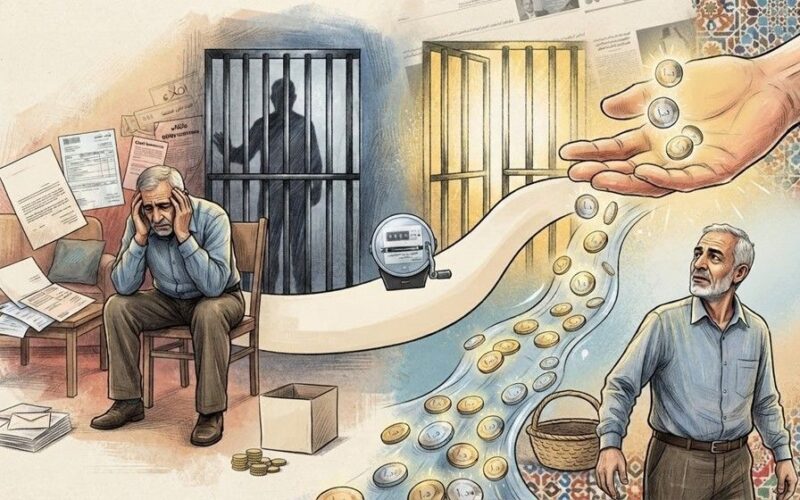
All indicators and figures point to overcrowding in prisons, largely due to various cases, most notably arrests over unpaid rent and property leases, as well as alimony cases.
The enforcement of arrest warrants against those wanted in such cases is contributing to prison overcrowding.
Thousands of people remain wanted for judicial enforcement over similar cases but have not been located, placing additional pressure on law enforcement agencies. We can only imagine what would happen if all those wanted decided to turn themselves in to the authorities at the same time.
Perhaps, at that point, the authorities themselves would ask them to flee.
We hear of cases in which people are detained over rent or alimony debts that may start at JD 1,000, more or less. When we calculate the cost of detaining an individual, we find that it can reach around JD 700 per month, according to estimates covering everything from electricity and water in prisons to security, food, medical care, transportation and other burdens on the state budget.
On top of that are the additional financial burdens placed on prisoners’ families, including their need for assistance from the National Aid Fund.
If we were to conduct a proper cost-benefit assessment, we would discover that, in many cases, the state paying off these debts would actually cost less than detaining people, releasing them and then seeing them return to prison, with all the resulting strain and expenses.
I call on the Prime Minister and his team to launch an innovative initiative based on transparent criteria to assist people in financial distress from the two categories mentioned above: a fund for those in financial hardship, or a social solidarity fund.
Part of the prison budget and part of the National Aid Fund’s budget could be allocated to it, along with a monthly one-dinar contribution on every electricity meter.
Jordan has more than 2.5 million electricity meters, which would generate more than JD 30 million for the fund in its first year, and potentially more, particularly if part of traffic fines were allocated to it, or a tax were imposed on cigarettes, among other possible ideas.
Economic conditions are difficult, job opportunities are scarce, and available jobs often provide limited incomes.
Thousands of families are struggling and are forced to move from one rented home to another. In some cases, a man is imprisoned because he cannot pay alimony even though he is unemployed, while his ex-wife and children are also suffering.
Here, we have the right to ask: Will imprisoning such people actually solve the problem, or will it only deepen the very serious social impact on families when they lose their breadwinners, or when a father is pursued because he cannot pay alimony or rent? In such cases, children are deprived of financial support and emotional care at the same time, while the father is given no opportunity to resolve his situation, seek a new job, repay his debts or arrange a repayment schedule.
If this fund were launched along these lines and also supported by the private sector, it could help protect thousands of families across Jordan. However, it would require transparent safeguards to prevent fraud and false claims, ensuring that assistance goes only to those who genuinely deserve it.
Financial ceilings could be established for repeat cases, while assistance for a first-time case could cover the full amount, so that the fund does not become a means of evading legitimate financial obligations.
The fund could also be used to assist debtors facing financial cases, within specific financial limits, particularly given that tens of thousands of people are struggling with financial claims, perhaps involving amounts of less than JD 1,000, or accumulated water and electricity bills and other financial hardships we face.
This is an innovative solution. A society that speaks day and night about the virtues of Islam and its values of charity and solidarity should not object to contributing one dinar a month through the electricity meter. Every society in the world has its own values of charity and social solidarity.
Instead of looking on helplessly at those suffering in the country, we should help them, because helping them is far better than lecturing them or proposing ineffective solutions, especially in a country where economic hardship is increasingly having a dangerous impact on families and their members.
If I were a decision-maker, I would impose a one-dinar monthly charge on electricity meters to support people in financial distress, and perhaps a second dinar to support university students instead of leaving them to borrow money to pay their tuition fees.
Anyone who objects should first prove to us that they do not spend JD 100 a month on cigarettes, waste fuel driving aimlessly around the country, or rack up hundreds of dinars in traffic fines.
Related Stories

A gift from the sky for Netanyahu
What a Former Interior Minister Has to Say