The global sukuk market is being reshaped, and the
opportunity for Jordan has never been clearer.
Despite persistent geopolitical uncertainty, global
sukuk issuance is on track to reach roughly $280 billion in 2026, broadly
matching last year’s total. Issuance hit approximately $130 billion in the
first half alone, with Gulf issuers expected to return more actively to the
market in the second half.
But volume is not the real story here.
The deeper shift is structural: sukuk are evolving
from a specialized Islamic financing instrument into a mainstream pillar of
global capital markets.
Governments use them to diversify funding sources.
Banks use them to diversify their funding base. Corporates are stepping in as
active issuers. And investors, including those outside traditional Islamic
finance circles , are paying closer attention than ever.
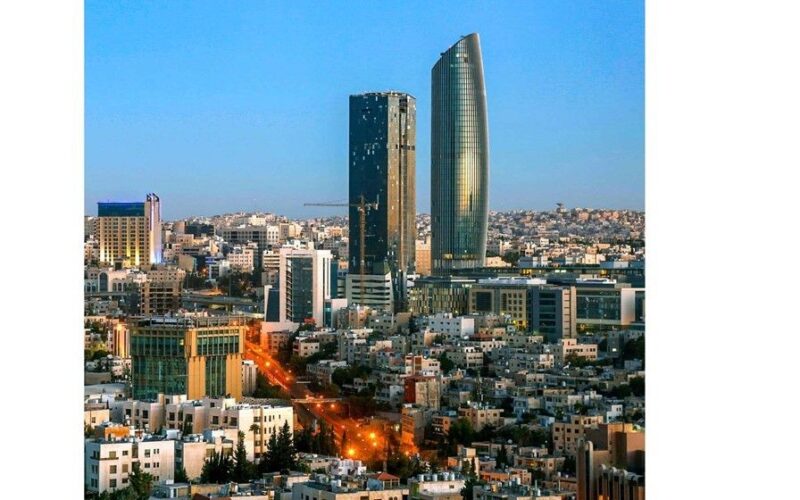
For Jordan, this raises a pointed question: can
Amman convert its existing sukuk framework into a genuine regional Islamic
capital-market hub?
The opportunity is
bigger than issuance
A thriving sukuk market cannot be built by simply
issuing more paper. It requires an entire ecosystem , clear regulation,
credible Shariah governance, transparent disclosure, reliable settlement, a
broad investor base, and, critically, secondary-market liquidity.
Investors don’t just ask what a security will earn
them. They ask whether they can exit it when they need to. Recent international
data underscores this: Fitch reported that liquidity across most of its rated
sukuk was moving closer to pre-war levels, though the recovery has been uneven
across countries, currencies and sectors.
The lesson is unambiguous: a strong sukuk market is
not an issuance market. It is a functioning capital market.
Jordan already has the
building blocks
Jordan is not starting from zero. Its regulatory
framework already provides a solid foundation for Islamic finance instruments,
and recent activity signals real momentum.
The Jordan Securities Commission has flagged Islamic
finance sukuk, and the activation of the secondary market, as central to
developing the country’s capital market.
The government has already issued
nearly JD2 billion in sukuk, with returns paid on schedule.
This track record matters because market development
is, at its core, a credibility exercise. Investors need certainty: that rules
are clear, disclosure is reliable, settlement is efficient, and securities can
actually trade.
Jordan’s task now is to move from having a sukuk market to
building a market around sukuk, a meaningful distinction, and the one that
separates issuance-driven markets from durable ones.
The investor must become
part of the strategy
Sukuk have historically served governments, banks and
institutional investors. Retail participation could change that dynamic
entirely.
A retail sukuk investor isn’t simply a saver , they
become a participant in the capital market itself, driving a powerful
transition:
Saving → Investing → Capital-market participation
For Jordan, retail sukuk could therefore function as
more than a financing product; they could become an engine for broadening
financial participation and cultivating an investment culture. The
prerequisites are practical, not exotic:
reasonable minimum investment
thresholds, digital distribution, simple disclosure, and genuine investor
education ,with the goal of making investment more accessible without diluting
investor protection.
From Gulf capital to
regional opportunity
International experience shows that successful sukuk centers
are built on domestic depth, not imitation.
Malaysia remains a dominant source
of sukuk supply. Saudi Arabia has built substantial issuance around sovereign
financing, bank funding and corporate activity.
The UAE has proven that Islamic
finance can reach a broad, sophisticated investor base.
Jordan doesn’t need to replicate any of these models;
it can define its own. Amman is positioned to connect Gulf capital, Levantine
opportunities and Islamic finance through a market centered on infrastructure,
corporate financing, investment funds and sustainable projects.
Done right,
this positions the city not merely as a place where sukuk are issued, but as a
platform where capital meets opportunity.
Green sukuk: an
underused lever
Green and sustainable sukuk represent a further avenue
worth pursuing, even though global issuance in this category fell sharply in
the first half of 2026.
Moody’s attributed the decline to geopolitical
uncertainty and weaker international investor participation, particularly
across GCC markets.
The underlying case remains intact. Jordan has clear
investment needs in renewable energy, water, transportation and energy
efficiency.
A credible green sukuk market could channel investor appetite ,
both Shariah-compliant and sustainability-focused , directly toward these
needs.
Credibility, again, is the precondition. Green sukuk
demand clear eligibility criteria, measurable outcomes and transparent
reporting.
Handled well, a rigorous regulatory framework becomes a competitive
advantage rather than a compliance burden.
The strategic choice
The real question isn’t whether Jordan can match
Riyadh, Dubai or Kuala Lumpur on scale.
It’s whether Amman can build a
distinctive regional proposition around five pillars:
●Regulatory certainty
●Investor protection
●Secondary-market liquidity
●Retail and institutional participation
●A credible pipeline of investable projects
Developed together, these pillars would let sukuk do
far more than finance government spending.
They could give companies
alternative capital sources, give investors more choice, deepen the domestic
capital market, and create a channel through which regional capital reaches the
real economy.
The bigger question
The global sukuk market is expanding even as investors
navigate geopolitical headwinds.
Moody’s expects underlying demand to stay
firm, driven by sovereign financing needs, bank funding diversification and
rising appetite for Shariah-compliant products.
Jordan should treat this not as a trend to watch from
the sidelines, but as a market opportunity to seize. The country already has
the regulatory foundations, an established financial sector, a functioning
capital market, and growing sukuk experience.
What’s missing is strategic integration. Jordan
doesn’t need sukuk merely to raise money ,it can use sukuk to build a deeper
capital market.
Which brings us back to the real question: can
Amman become the Middle East’s next sukuk capital?
The answer won’t hinge on a single large issuance. It
will depend on whether Jordan can build the institutions, liquidity, investor
base and investment pipeline a functioning market requires.
The
opportunity isn’t simply to issue more sukuk. It is to build a market around
them.