
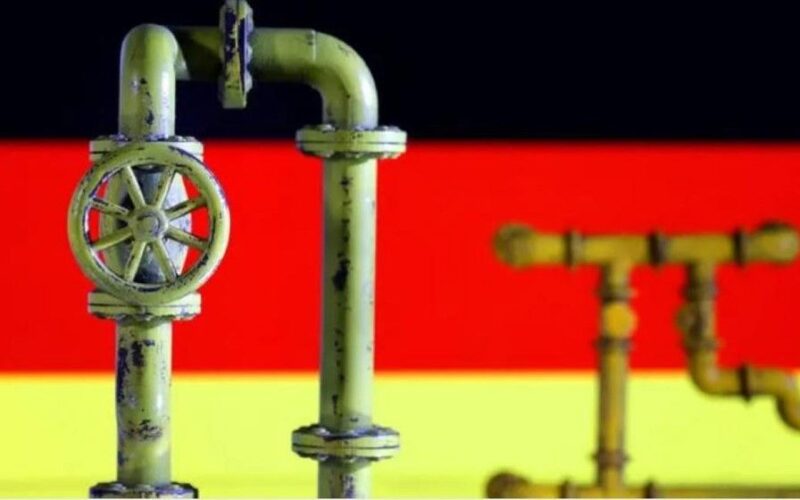
Germany’s Federal Network Agency has sought to ease concerns over whether the country’s gas reserves will be sufficient to meet demand during the coming winter.
Klaus Müller, president of the agency, said: “We already have slightly more gas in storage than the amount we withdrew from reserves throughout the entire winter half of last year. There is still time in the coming weeks to continue filling the storage facilities.”
Gas storage facilities currently hold around 136 terawatt-hours (TWh), equivalent to slightly more than 55% of total storage capacity. According to the Federal Network Agency, around 134 TWh were withdrawn during the whole of last winter.
Compared with previous years, however, current gas storage levels remain low. This has raised concerns in recent days that available reserves may not be sufficient to last until next spring. The possibility of the government ordering additional gas purchases has also been discussed, although such a move could prove costly.
The Initiative Energie Speichern (INES), an association representing gas storage operators, recently described current storage levels as “historically low” and called for changes to the rules to make gas storage economically viable again.
A direct comparison between current storage levels and those of previous years is not entirely appropriate, as Germany now has liquefied natural gas (LNG) terminals along its coastline, allowing additional supplies to be imported from global markets relatively quickly. The country also has pipeline connections, including those supplying gas from Norway.
Müller also pointed to the possibility of importing LNG, saying that Germany’s LNG terminals are currently operating at around 45% capacity and that sufficient capacity remains available to import additional gas supplies.
Like the German Economy Ministry, Müller currently opposes government intervention and is instead relying on market forces.
“It is the traders’ task to fill the storage facilities,” Müller said, noting that traders have contractual obligations to supply local utilities and industrial companies.
He added that traders can meet those obligations through pipeline deliveries, LNG imports or withdrawals from storage facilities. Since they are required to fulfill their supply commitments, he said, they are taking the necessary precautions.
“Government intervention will be costly in any case,” Müller said.
Source: dpa