
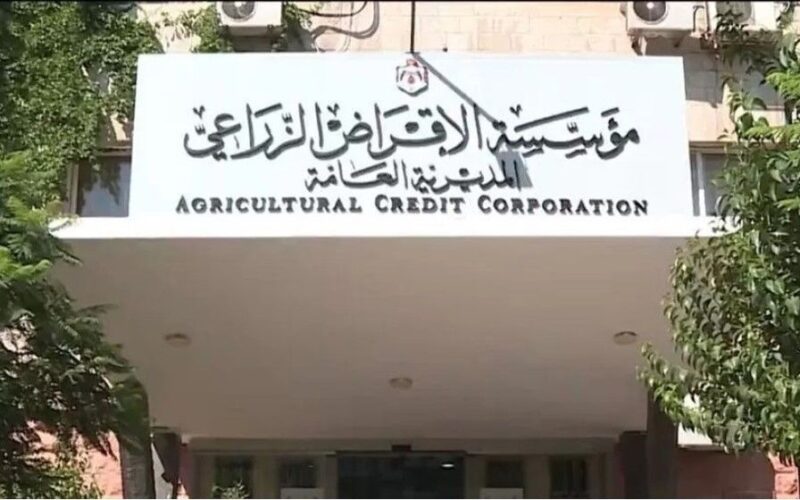
Jordan’s Agricultural Credit Corporation has provided JD45 million in agricultural financing to 8,278 borrowers across the Kingdom in 2026, as part of its annual financing plan totaling JD70 million.
Director General Mohammad Dujan said the corporation continues to implement its financing plan and expand its reach to an increasing number of beneficiaries, reflecting sustained lending activity and its ability to maintain financing levels that support various agricultural and productive activities.
Dujan told Al Mamlaka that the corporation is adopting a new approach to developing its operations and strengthening its developmental and financing role in supporting the agricultural sector. The approach focuses on moving toward a more flexible and participatory model, expanding partnerships with relevant stakeholders, and leveraging technology, digital transformation and innovation to develop financing tools and services for beneficiaries.
He said the corporation is working to simplify procedures, accelerate service delivery, improve decision-making efficiency and strengthen management of its financing portfolio, with a focus on projects using modern technology, smart agriculture, water-saving technologies, agricultural mechanization, food processing and other value-added activities.
During the current year, the corporation expanded its network of agreements and partnerships to reach new groups and sectors. These include cooperation with the Ministry of Labor through an addendum to an agreement financing small and medium-sized enterprises, targeting young Jordanians and agricultural and rural associations while supporting employment and entrepreneurship.
According to Dujan, financing provided under the agreement with the Ministry of Labor reached approximately JD180,000 in 2026, benefiting 22 borrowers.
As part of efforts to develop financing instruments, Dujan said the corporation has adopted modern financing models through a blended finance agreement with the UN Food and Agriculture Organization (FAO). The initiative aims to support the transition to climate-smart agriculture and food processing in the Deir Alla District and finance around 53 sub-projects.
He explained that the mechanism combines loans, grants and beneficiaries’ own contributions. The corporation provides 60% of the financing, while 30% is provided in grants and beneficiaries contribute the remaining 10%.
To support small agricultural and rural income-generating projects, Dujan said the corporation allocated JD1 million under a “Healthy Villages” agreement with the Ministry of Health. The interest-free financing provides loans of up to JD5,000 per project, with repayment periods of up to five years.
The corporation’s partnerships also include the Petra Development and Tourism Region Authority, supporting small-scale farmers and productive households and financing agricultural and home-based projects. It has also cooperated with the General Syndicate of Olive Press Owners and Olive Producers to develop the olive pressing and processing sector.
Dujan said financing for olive pressing and processing includes expanding olive presses, adding modern production lines and upgrading technology, with financing of up to JD500,000 per project.
On linking financing with capacity building, he said the corporation has strengthened its partnership with the Zaha Cultural Center to connect training and qualification programs with financing opportunities for small productive projects, particularly those led by women and young people and those seeking employment.
The partnerships have also expanded to the Kufrsoum Agricultural Cooperative for pomegranate producers, Badr Al-Asayel Charitable Society, the Jordanian Beekeepers Association and the Jordanian Women Producers Association. These partnerships enable the development of financing programs tailored to the needs of different sectors, while linking financing with training, technical support, marketing and capacity building.
Dujan stressed that this approach represents a shift from traditional lending toward an integrated development financing system that goes beyond providing loans to include partnerships, training, capacity building, technical assistance, marketing, innovation and technology.
He said the corporation aims through this approach to empower farmers, women and young people, support small and medium-sized enterprises, strengthen agricultural value chains and food processing, and expand access to rural areas and pockets of poverty. The approach is also aligned with the priorities of Jordan’s Economic Modernization Vision in supporting investment and production, creating jobs and increasing the agricultural sector’s contribution to the national economy.
Source: Al Mamlaka